
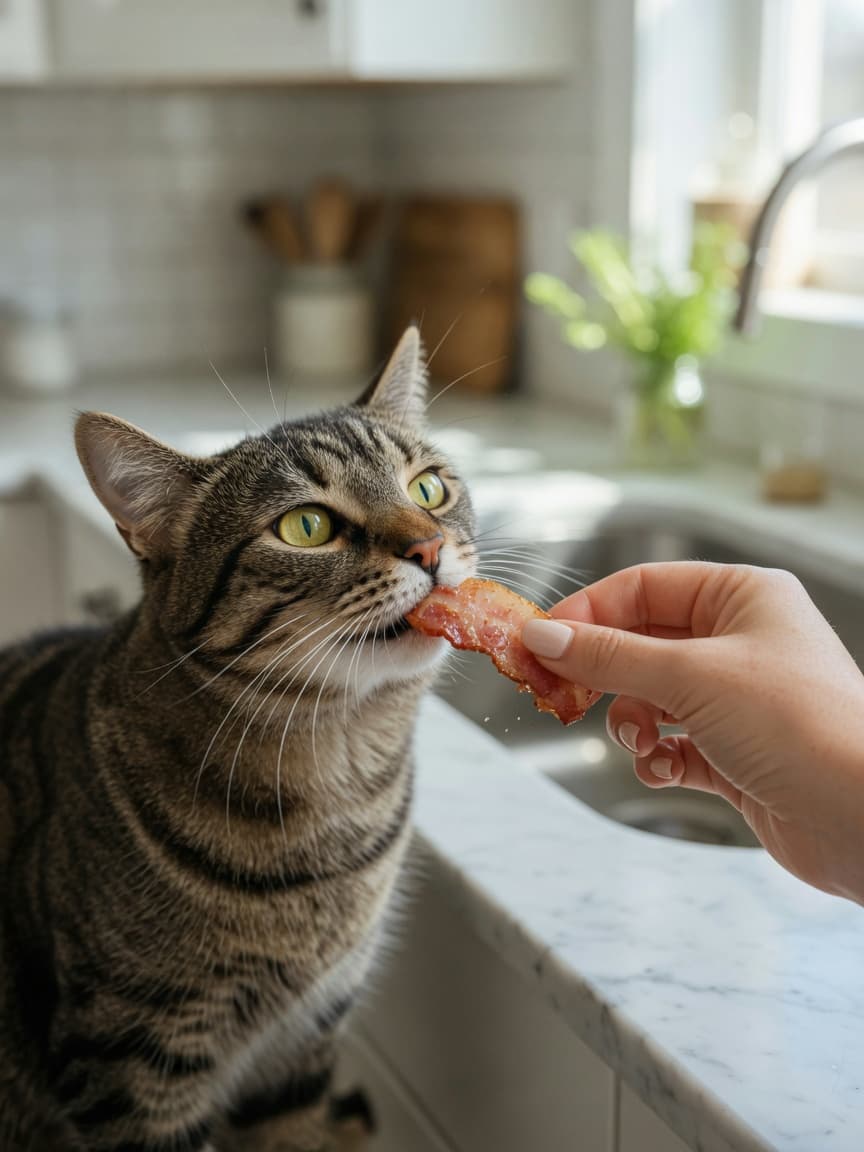
Can cats eat bacon?
The short answer is: yes, cats can eat a small amount of bacon, but it requires caution. Whilst bacon is a meat product and cats are obligate carnivores, the way bacon is typically prepared makes it unsuitable as a regular treat. Understanding the risks and how to offer it safely is important if you want to give your cat this occasionally appealing food.
Why bacon is risky for cats
Bacon poses several health concerns for cats, even though it comes from an animal source. The primary issue is salt content. Bacon is cured and smoked using significant amounts of salt and other preservatives, which can be harmful to cats. Cats have low tolerance for sodium, and excessive salt intake can lead to dehydration, electrolyte imbalances, and potentially contribute to kidney and heart problems over time.
Fat is another concern. Bacon is extremely fatty, and whilst cats do need some fat in their diet, the saturated fat content in bacon is disproportionately high. Feeding fatty foods regularly can lead to obesity, pancreatitis, and digestive upset in cats. Some cats may experience vomiting or diarrhoea even from small amounts of bacon fat.
Bacon also often contains smoke flavouring, nitrates, and nitrites—preservatives linked to potential health issues with long-term consumption. Whilst a tiny piece occasionally is unlikely to cause immediate harm, these compounds are best avoided as part of a cat's regular diet.
Safe preparation and portion size
If you do decide to offer bacon to your cat, preparation is essential. Never give your cat raw bacon. Cook bacon thoroughly until it is fully cooked. More importantly, remove as much fat as possible by blotting it with kitchen paper. The leaner the bacon piece, the safer it is.
Portion size must be minimal. A cat should only receive a small piece—roughly the size of a postage stamp—and only very occasionally (perhaps once a month or less frequently). This should be plain, cooked bacon with no added seasonings, sauces, or toppings. Never give bacon that has been seasoned with garlic, onion, or spices, as these ingredients are toxic to cats.
Which cats should avoid bacon entirely
Certain cats should not eat bacon at all. Cats with existing heart disease, kidney disease, or high blood pressure should avoid bacon completely due to its salt and fat content. Similarly, cats prone to pancreatitis, obesity, or digestive sensitivities should not be offered bacon. Kittens and senior cats may also be at higher risk of complications from rich, salty foods. If your cat has any underlying health condition, consult your vet before offering any human foods.
Warning signs to watch for
After your cat eats bacon, monitor for signs of digestive upset. Vomiting, diarrhoea, loss of appetite, or abdominal discomfort may occur within hours or days. In rare cases, if a cat consumes a large amount of bacon (such as finding an unattended plate), signs of pancreatitis—including lethargy, vomiting, and abdominal pain—may develop. Contact your vet immediately if you notice these symptoms.
Better alternatives for treats
Rather than bacon, consider healthier treat options that satisfy your cat's carnivorous needs without the risks. Plain, cooked chicken breast (unseasoned and without skin) is an excellent alternative. Cooked turkey, beef, or fish also provide protein without excessive salt or fat. Many veterinary-approved commercial cat treats are formulated specifically for feline nutritional needs and are much safer choices.
The bottom line
Bacon is not a recommended treat for cats. Whilst a tiny morsel of plain, well-cooked, fat-trimmed bacon poses minimal risk to a healthy adult cat, the salt, fat, and preservatives make it unsuitable for regular consumption. The risks outweigh any benefits, and better alternatives exist. If your cat has eaten bacon accidentally or you wish to offer it, err on the side of caution and discuss it with your vet, particularly if your cat has any health concerns. Your cat's long-term health is best supported by a balanced, species-appropriate diet rather than human foods.