
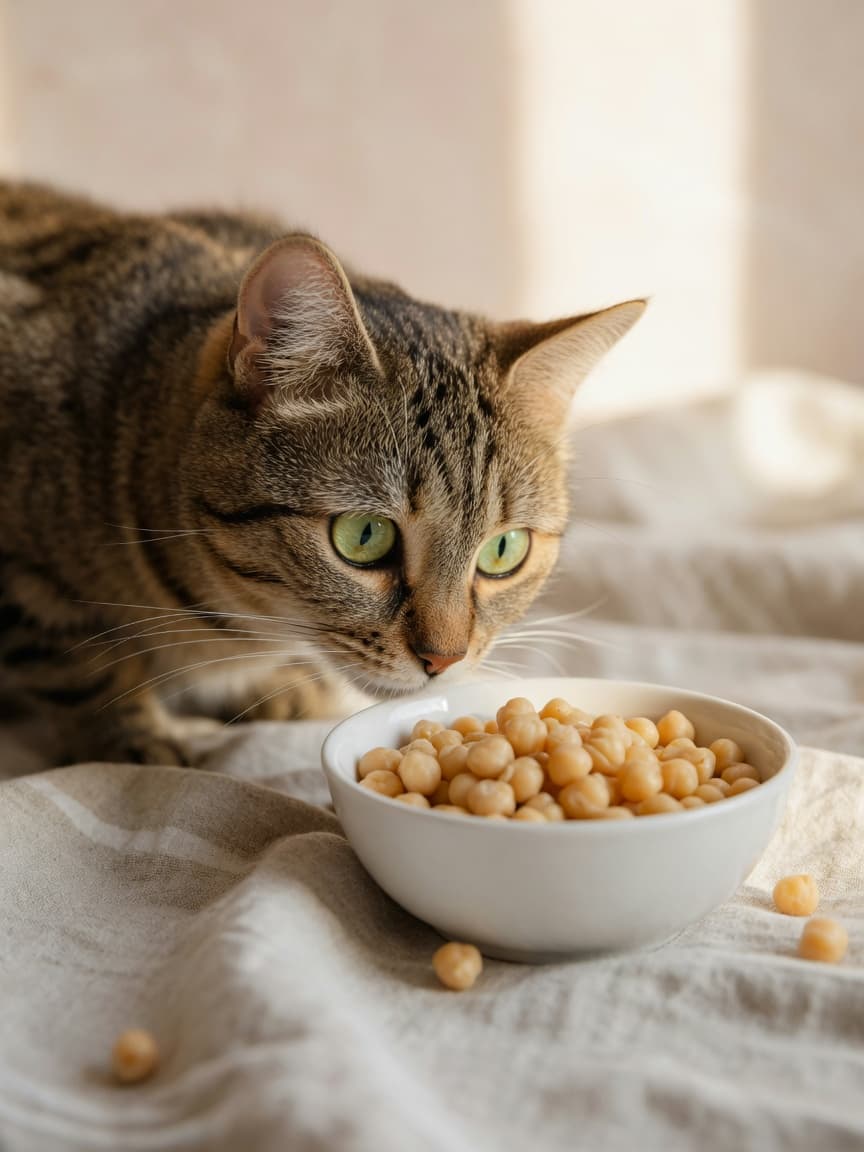
Can Cats Eat Chickpeas?
Yes, cats can eat chickpeas in moderation. Chickpeas are generally safe for cats and can be offered as an occasional treat, though they should never replace a cat's regular meat-based diet. If you're considering adding chickpeas to your cat's meals, it's worth understanding both the benefits and limitations of this legume for feline nutrition.
Understanding Your Cat's Nutritional Needs
Cats are obligate carnivores, meaning they have evolved to derive most of their nutritional requirements from animal protein. Unlike dogs or humans, cats have a limited ability to process plant-based foods efficiently. Their digestive systems are designed primarily to break down and absorb nutrients from meat, fish, and poultry. This is why chickpeas and other plant foods should only ever be a minor part of your cat's diet, if included at all.
Potential Benefits of Chickpeas
Despite cats being meat-eaters, chickpeas do offer some nutritional value. They contain plant-based protein, fibre, and various vitamins including B vitamins and minerals such as iron and manganese. For cats that occasionally enjoy variety or those recovering from certain health issues, small amounts of chickpeas may provide a gentle supplement to their regular meals. Some cats also enjoy the texture, which can make them a stimulating occasional snack.
How Much and How Often?
If you decide to offer chickpeas to your cat, moderation is essential. A few chickpeas once or twice per week is a reasonable guideline, rather than offering them as a daily treat. A small spoonful mixed into your cat's regular food is sufficient. The key is ensuring that chickpeas never compromise the overall balance of your cat's diet, which should remain centred on high-quality animal protein.
How to Serve Chickpeas Safely
Always serve chickpeas plain and cooked. Tinned chickpeas from the supermarket should be rinsed thoroughly to remove excess salt. Salt, garlic, onions, and spices are all potentially harmful to cats, so ensure any chickpeas you offer are seasoning-free. Raw chickpeas are difficult to digest and should be avoided entirely.
Cooked chickpeas should be soft enough to break apart easily, reducing any choking risk. You can mash them slightly before offering to your cat. Alternatively, you can cook dried chickpeas from scratch—simply boil them until tender, cool completely, and serve in small portions.
Signs Your Cat Enjoys or Tolerates Chickpeas
Not all cats will show interest in chickpeas, and that's perfectly normal. Some cats are indifferent to plant foods, whilst others may show curiosity. Watch your cat's reaction when you first introduce a small amount. If your cat simply ignores them, there's no need to persist. If your cat shows digestive upset—such as vomiting, diarrhoea, or constipation—discontinue offering chickpeas immediately.
Important Caveats and When to Avoid
Never feed chickpeas to cats with certain health conditions, particularly those with diabetes, kidney disease, or digestive issues. The carbohydrate content in chickpeas, whilst modest, may not be suitable for all cats. If your cat has any underlying health concerns, consult your veterinary surgeon before introducing new foods, including chickpeas.
Avoid tinned chickpeas packed in brine with added salt or sugar. Always check the label to ensure no garlic or onion powder has been added—both are toxic to cats. Similarly, avoid hummus and other chickpea-based spreads, which often contain garlic, lemon, and salt.
The Bottom Line
Chickpeas can be a safe, occasional treat for most healthy adult cats, provided they are plain, cooked, and offered in very small amounts. However, they should never form a significant part of your cat's diet. Your cat's primary nutrition should always come from high-quality commercial cat food or fresh meat recommended by your veterinary surgeon. If you're unsure whether chickpeas are appropriate for your individual cat, your vet is the best source of personalised advice.