
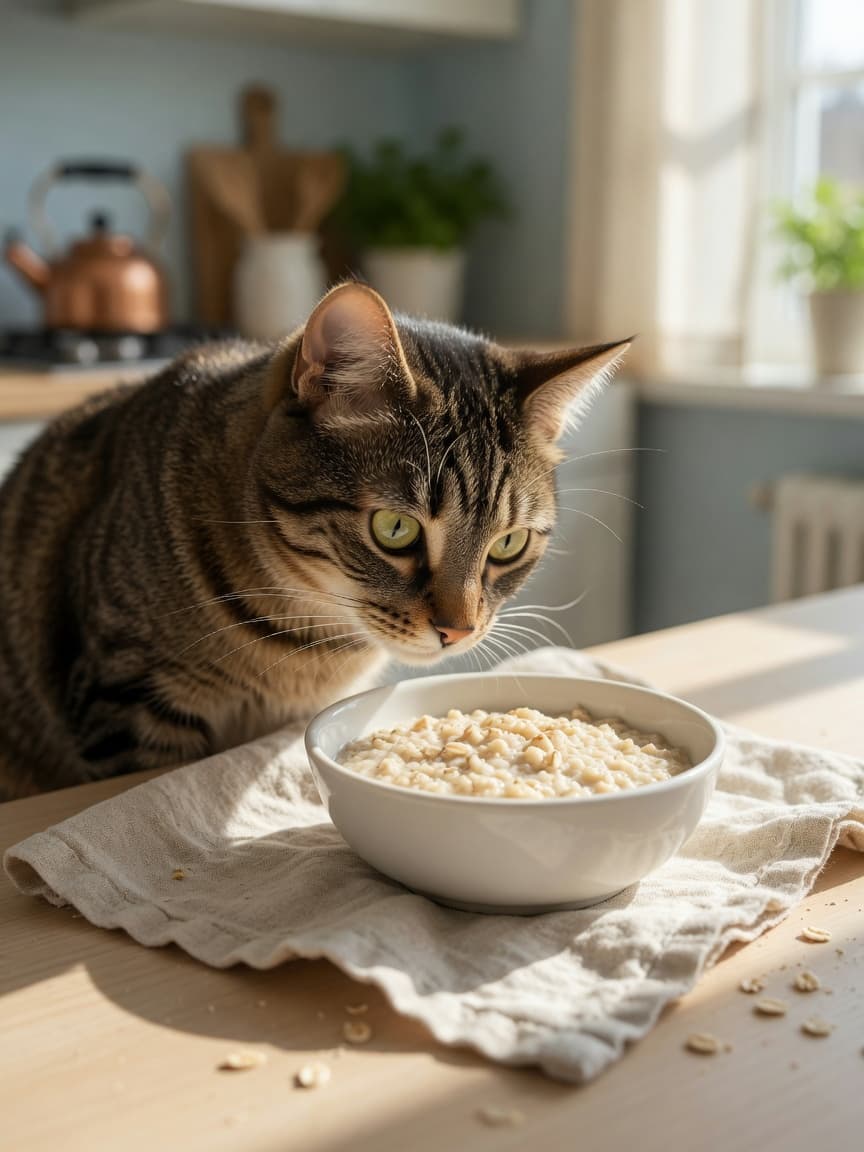
Can cats eat oatmeal?
Yes, cats can eat oatmeal in moderation. However, it should only be offered as an occasional treat and never as a replacement for their regular diet. Whilst oatmeal is not toxic to cats, it's important to understand both its potential benefits and limitations when it comes to feline nutrition.
Understanding your cat's dietary needs
Cats are obligate carnivores, which means their bodies are designed to thrive on meat-based proteins. Unlike humans and some other animals, cats have specific nutritional requirements that are best met through animal proteins and fats. Their digestive systems are adapted for processing meat, and they lack certain enzymes that would help them derive maximum nutrition from plant-based foods like grains.
Whilst oatmeal contains some beneficial nutrients, it should never form part of your cat's regular diet or be considered a meal replacement. Your cat's main nutrition must always come from high-quality cat food formulated to meet their specific dietary needs.
Potential benefits of oatmeal for cats
When given in very small amounts, oatmeal can offer some minor nutritional benefits. It contains fibre, which may help support digestive health in some cats. Oatmeal also provides B vitamins and minerals such as magnesium and zinc, though your cat will obtain these nutrients more effectively from their regular diet.
Some cats with digestive sensitivities or constipation issues may benefit from a tiny amount of oatmeal, as the fibre content can aid digestion. However, if your cat has persistent digestive problems, consult your veterinarian before introducing any new foods.
How to serve oatmeal safely
If you decide to give your cat oatmeal as an occasional treat, preparation is important. Always serve plain, cooked oatmeal with no added ingredients. Never give oatmeal that contains:
- Sugar or sweeteners (especially xylitol, which is toxic to cats)
- Salt or seasoning
- Honey
- Dried fruit such as raisins or sultanas
- Chocolate
- Cinnamon or other spices
Cook the oatmeal with water only, allow it to cool completely, and serve just a small amount—roughly a teaspoon or less. Most cats will not be interested in oatmeal, and that is perfectly normal and healthy. Never force your cat to eat it.
Portion guidance
Treats, including oatmeal, should make up no more than 10% of your cat's daily calorie intake. For most cats, this means oatmeal should be an extremely rare treat—perhaps once every few weeks rather than regularly. The majority of your cat's nutrition must come from complete and balanced cat food.
Potential concerns
Whilst plain oatmeal is safe for most cats, some individual cats may experience mild digestive upset when given new foods. If you introduce oatmeal and notice vomiting, diarrhoea, or loss of appetite, discontinue it immediately and contact your veterinarian.
Cats with specific health conditions, such as diabetes or obesity, may need to avoid treats altogether. If your cat has any existing health concerns, always check with your vet before introducing new foods.
Some cats may also have grain sensitivities or allergies, though this is less common than many pet owners believe. If your cat has a diagnosed grain sensitivity, oatmeal should be avoided.
The bottom line
Oatmeal is generally safe for cats as an occasional, plain treat in very small amounts. However, it offers no significant advantage over proper cat nutrition and is entirely optional. Most cats will do perfectly well without ever eating oatmeal, and their health will not suffer for it.
Your cat's wellbeing depends on consistent, high-quality commercial or veterinarian-recommended cat food that meets all their nutritional needs as an obligate carnivore. If you have any questions about your cat's diet or are considering introducing new foods, always consult your veterinarian for personalised advice.