
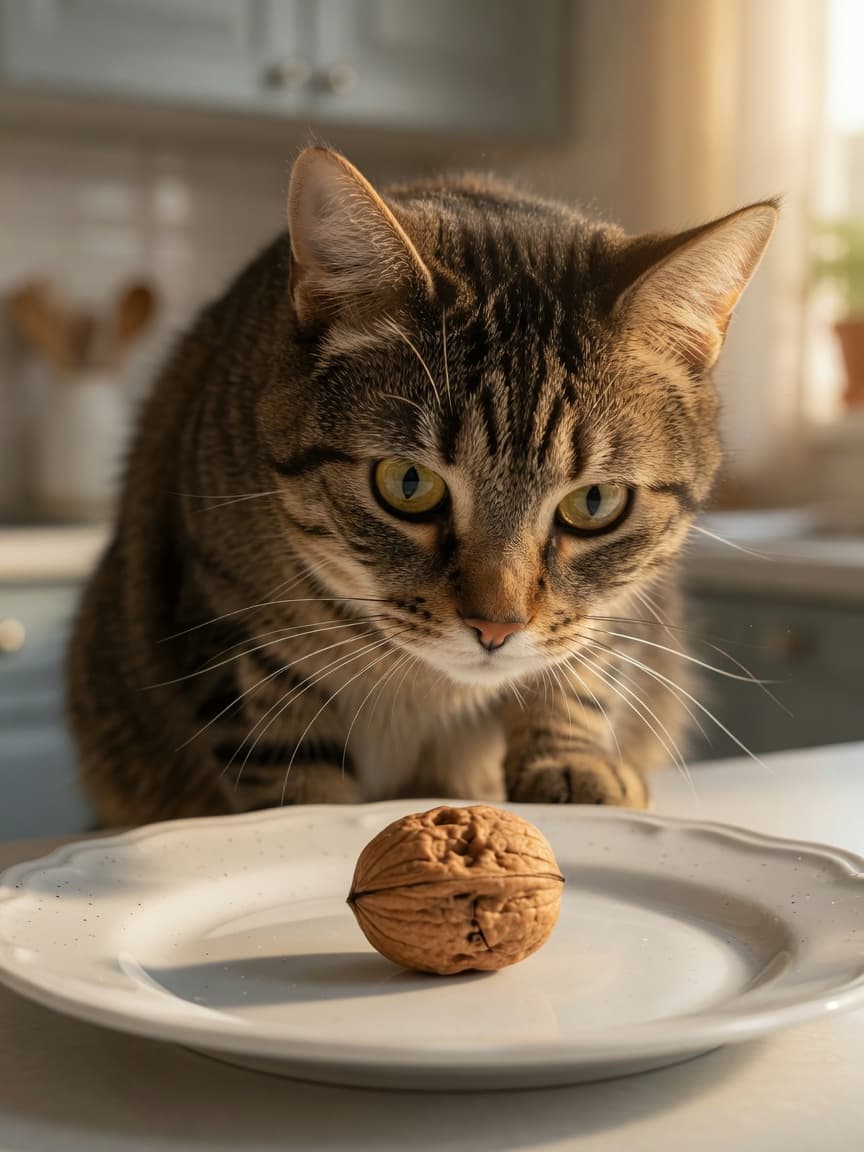
Can cats eat walnuts?
The short answer is yes, cats can technically eat walnuts in very small amounts, but caution is strongly advised. Walnuts are not toxic to cats in the way that, say, chocolate or grapes are, but they do present real risks that make them an unnecessary and potentially problematic food choice for your feline companion. If you're wondering whether to offer walnuts to your cat, it's worth understanding what those risks are and why moderation—or avoidance altogether—is the safer approach.
Why caution is needed
Cats are obligate carnivores, meaning their bodies are designed to digest and thrive on meat-based proteins. Their digestive systems are quite different from ours, and they have limited ability to process plant foods like nuts. Walnuts are high in fat and fibre, neither of which cats need in significant amounts, and both of which can cause digestive upset if consumed.
The main concerns with walnuts for cats are:
High fat content: Walnuts contain around 65% fat. Fatty foods can trigger digestive upset, including vomiting and diarrhoea, and may contribute to pancreatitis—an inflammation of the pancreas that is serious and sometimes life-threatening in cats.
Choking and obstruction risk: Walnuts are hard and irregular in shape. Cats may try to swallow pieces whole or incompletely chewed, creating a choking hazard or potential intestinal blockage, especially in younger or particularly enthusiastic eaters.
Mould contamination: Walnuts stored in warm, damp conditions can develop mould that produces aflatoxins and other mycotoxins. Whilst this is a broader food-safety issue affecting humans too, cats have no nutritional reason to eat walnuts, so the risk is entirely unnecessary to take.
Upset stomach from fibre: The fibre content in walnuts can cause digestive upset in cats, whose gut flora is optimised for animal protein rather than plant material.
Safe preparation and portion size
If you have accidentally dropped a walnut and your cat has consumed a tiny piece—or if you're considering offering an extremely small amount out of curiosity—the absolute maximum would be a fragment no larger than a pea, and only very occasionally. It should be:
- Raw or unsalted (never roasted and salted, or coated with sugar or chocolate)
- Completely nut-free of any shell pieces
- Mashed or crushed into fine particles rather than a whole nut
- Offered only as an absolute rarity, not a regular treat
To be frank, there is no genuine nutritional benefit to offering walnuts to your cat, so "safe" amounts are really only relevant if accidental ingestion has occurred. Your cat will not miss walnuts from their diet.
Cats that should definitely avoid walnuts
The following cats should never be offered walnuts:
- Kittens and very young cats (immature digestive systems)
- Cats with a history of pancreatitis or digestive upset
- Cats with known food sensitivities
- Overweight or obese cats (walnuts are calorie-dense)
- Senior cats with delicate digestion
- Cats taking medications that affect digestion
Warning signs to watch for
If your cat has consumed walnuts and you notice any of the following, contact your vet promptly:
- Vomiting or retching
- Diarrhoea or loose stools
- Loss of appetite or lethargy
- Abdominal pain (crouching, sensitivity to touch)
- Difficulty defecating or constipation
- Choking, gagging, or drooling excessively
The bottom line
Walnuts require caution because whilst they're not inherently toxic, the risks—digestive upset, pancreatitis, choking, and potential mould exposure—outweigh any benefit. Cats have no nutritional need for walnuts and cannot properly digest them. There are many safer, species-appropriate treats available for your cat. If your cat has accidentally eaten a small piece, don't panic, but monitor them closely. If you're looking to add variety to your cat's diet, chat with your vet about safe alternatives that actually suit their carnivorous nature.