
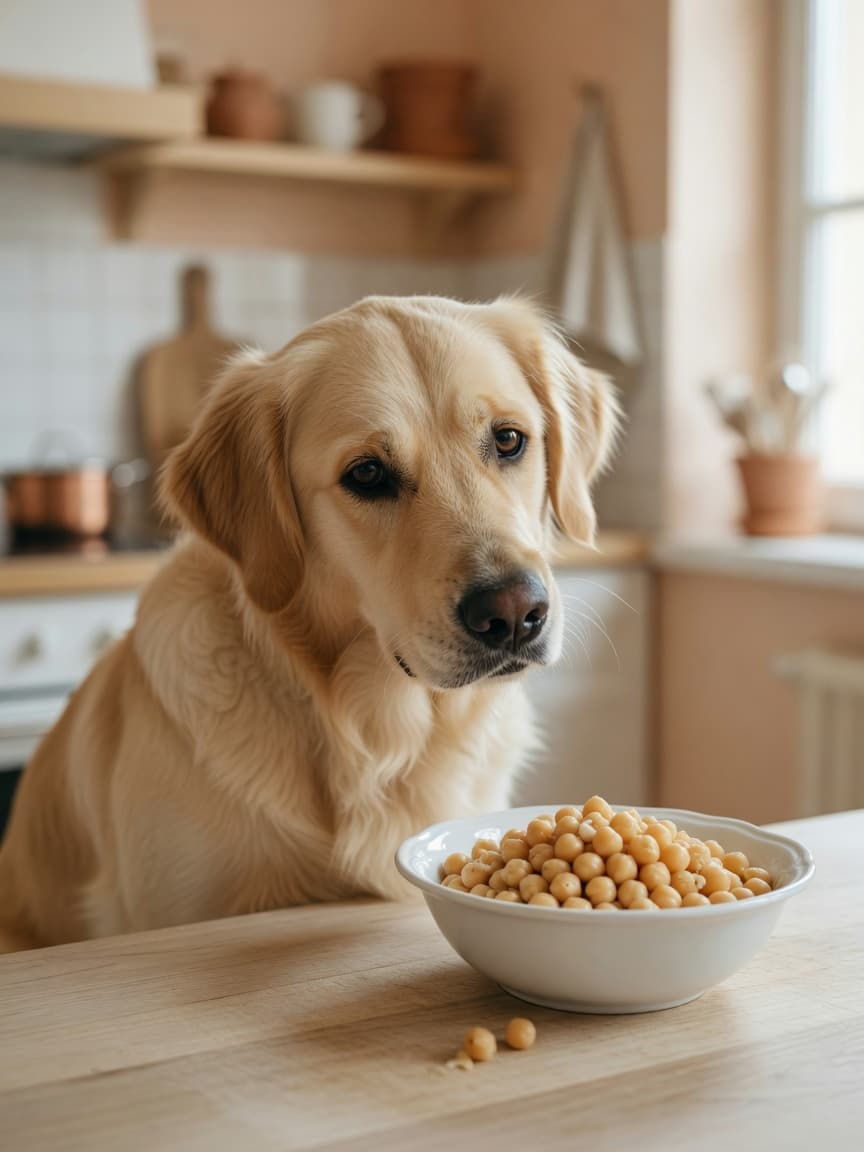
Can dogs eat chickpeas?
Yes, dogs can eat chickpeas in moderation as an occasional treat. Chickpeas are generally safe for most dogs and can even provide some nutritional benefits when given appropriately. However, they should never replace a balanced, complete dog food and shouldn't become a regular part of your dog's diet.
Nutritional benefits of chickpeas for dogs
Chickpeas contain several nutrients that can be beneficial for dogs in small amounts. They're a source of plant-based protein, fibre, and various vitamins and minerals including folate and manganese. The fibre content may support digestive health in some dogs, though this varies from one dog to another. For dogs with certain dietary restrictions or as part of a varied treat rotation, chickpeas can be a wholesome option compared to many commercial dog treats.
How much can you give your dog?
Treats, including chickpeas, should make up no more than 10% of your dog's daily calorie intake, with the remaining 90% coming from their regular, balanced dog food. For most dogs, this means just a small handful of chickpeas as an occasional treat—perhaps once or twice a week at most. For smaller dogs or toy breeds, even fewer chickpeas are appropriate. Always introduce new foods gradually and in small quantities to monitor for any digestive upset.
How to serve chickpeas safely
Plain, cooked chickpeas are the safest option for your dog. Boil them without salt, garlic, onion, or any spices, as these can be harmful. If you're using tinned chickpeas, rinse them thoroughly under running water to remove excess sodium, which can be problematic in large quantities. Never give your dog chickpeas that have been seasoned, roasted with salt, or prepared as hummus, as hummus often contains garlic and lemon juice, both of which can upset your dog's stomach or cause other issues.
You can serve them whole (though check they're soft enough that your dog won't choke), mashed, or mixed into their regular food. Some dogs may find them easier to digest if lightly mashed. Always supervise your dog while eating to ensure they chew properly and don't experience any choking hazard.
Potential concerns and caveats
While chickpeas are generally safe, there are a few considerations. Some dogs have sensitive digestive systems and may experience bloating, gas, or loose stools from legumes. If your dog has a history of pancreatitis, digestive issues, or is on a restricted diet prescribed by your vet, check with your veterinary surgeon before introducing chickpeas. Additionally, chickpeas are relatively high in calories for their size, so they shouldn't be given to dogs that are overweight or on a calorie-controlled diet without adjusting their main meals accordingly.
Dried, uncooked chickpeas should never be given to dogs, as they can expand in the stomach and cause serious blockages. Always ensure chickpeas are thoroughly cooked and soft before serving.
Chickpeas for cats
Unlike dogs, cats are obligate carnivores and have little nutritional need for plant-based foods like chickpeas. Whilst a very small amount of cooked, plain chickpea occasionally is unlikely to cause harm, they offer no significant benefit to cats and shouldn't be offered as treats. Cats thrive on meat-based nutrition, and their treats should reflect this. Always prioritise feline-appropriate snacks for your cat.
The bottom line
Chickpeas can be a safe, occasional treat for dogs when prepared properly—boiled plain, without seasoning, salt, or additives. They're best viewed as a rare addition to your dog's diet rather than a regular feature. Always introduce them slowly, watch for any signs of digestive upset, and remember that they should never replace balanced, complete dog food. If you have any concerns about your individual dog's ability to tolerate chickpeas, or if your dog has existing health conditions, consult your vet before adding them to the treat rotation.