
Can Dogs Eat Rotisserie Chicken? Vet-Approved Benefits, Risks, & FAQ — Dogster
Rotisserie chicken is a beloved convenience food for busy families, and it's natural to wonder whether you can share this tasty meal with your furry companion. The good news is that plain rotisserie chicken can be a nutritious treat for dogs—but there are important guidelines you need to follow. As a certified animal nutritionist, I'm here to explain what makes rotisserie chicken safe (or unsafe) for your dog, how to prepare it properly, and answer the questions dog owners ask most frequently.
The Nutritional Benefits of Rotisserie Chicken for Dogs
Plain rotisserie chicken is an excellent source of high-quality protein, which is essential for maintaining your dog's muscle mass, supporting immune function, and keeping their coat healthy. A single serving of unseasoned chicken breast provides around 26 grams of protein per 100 grams, making it comparable to premium commercial dog foods.
Beyond protein, rotisserie chicken contains B vitamins, selenium, and phosphorus—all nutrients that support your dog's overall health. Many veterinarians recommend chicken as part of a balanced diet, and it's frequently used as a key ingredient in commercial dog foods.
Potential Risks You Must Know About
Not all rotisserie chicken is created equal when it comes to canine safety. The primary concern is how the chicken is seasoned and prepared:
- Garlic and onion: Both are toxic to dogs and can damage red blood cells, leading to anaemia. Many rotisserie chickens are seasoned with garlic powder and onion powder.
- Excessive salt: High sodium levels can cause dehydration and electrolyte imbalances in dogs.
- Spices: Paprika, cayenne, and other spices may irritate your dog's digestive system.
- Bones: Cooked bones become brittle and can splinter, causing choking hazards or intestinal blockages.
- Skin: The fatty, crispy skin can trigger pancreatitis, especially in sensitive dogs.
How to Safely Feed Rotisserie Chicken to Your Dog
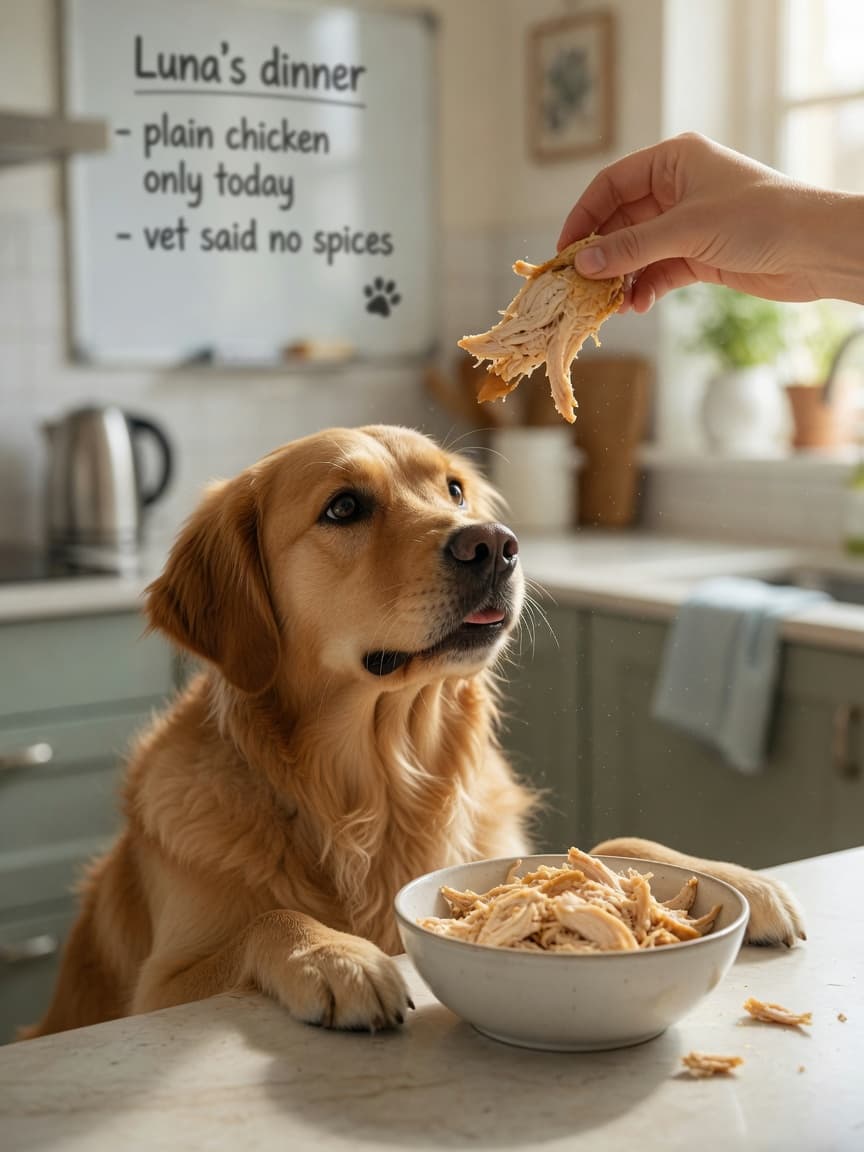
If you've confirmed your rotisserie chicken is plain and unseasoned, follow these preparation steps:
- Remove all bones carefully—check thoroughly for small fragments
- Discard the fatty skin entirely
- Shred or dice the plain meat into appropriate-sized pieces
- Offer small portions as a treat, not a meal replacement
- Monitor your dog for any digestive upset over the next few hours
As a general guideline, rotisserie chicken should comprise no more than 10% of your dog's daily caloric intake. For a medium-sized dog weighing 25kg, this equates to roughly 30-50 grams of plain chicken per day.
Rotisserie Chicken for Different Life Stages
Puppies: Plain rotisserie chicken can be introduced from 12 weeks of age, but only in tiny amounts and as an occasional treat alongside their puppy formula.
Adult dogs: Healthy adults can enjoy rotisserie chicken 2-3 times weekly without concern.
Senior dogs and those with health conditions: Consult your veterinarian before introducing rotisserie chicken, particularly if your dog has pancreatitis, kidney disease, or heart conditions that require sodium restriction.
Frequently Asked Questions
Can I give my dog rotisserie chicken from a supermarket? Only if it's labelled as plain or unseasoned. Always contact the retailer if you're unsure about ingredients.
What if my dog accidentally ate seasoned rotisserie chicken? Don't panic. Unless your dog consumed a large quantity or shows signs of distress, monitor them for vomiting, diarrhoea, or lethargy. Contact your vet if symptoms develop.
Is rotisserie chicken better than kibble? No. Rotisserie chicken should complement, not replace, a complete and balanced commercial or veterinary-prescribed diet.
Key Takeaways
Plain, unseasoned rotisserie chicken is safe and nutritious for most dogs when prepared correctly. Always remove bones and fatty skin, confirm the chicken contains no garlic, onion, or excessive seasoning, and offer it in moderation. When in doubt, consult your veterinarian—they know your dog's individual health needs best. With these precautions in place, you can confidently share this protein-rich treat with your beloved companion.
```