
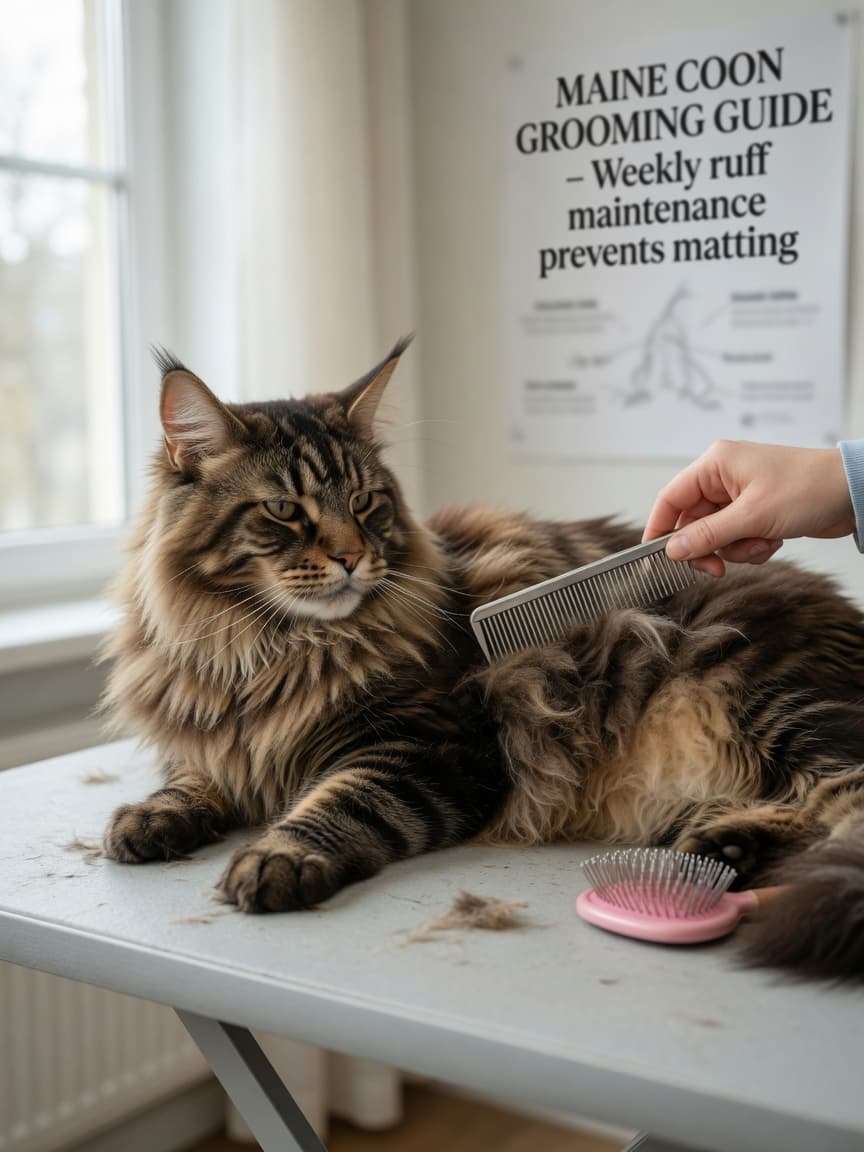
Understanding the Maine Coon's Semi-Longhaired Coat
The Maine Coon is one of the largest domestic cat breeds in the world, and their coat is as impressive as their size. Unlike fully longhaired breeds such as the Persian, the Maine Coon has a semi-longhaired coat that varies in length across the body. The fur is shorter on the shoulders and longer on the stomach, flanks, and tail, with a distinctive shaggy, uneven appearance that gives the breed much of its wild, forest-cat charm.
One of the most defining features is the magnificent mane and ruff — a thick collar of fur around the neck and chest that resembles a lion's mane. The tail is heavily plumed, and tufts of fur between the toes (known as "snowshoe" tufts) help protect the paws in cold conditions. This coat evolved for the harsh winters of North America and is surprisingly resilient, but it still requires regular human intervention to stay in good condition.
According to the Maine Coon Club UK, the breed's coat should never be trimmed or clipped under normal circumstances, as the layered structure plays an important role in temperature regulation and waterproofing. Instead, the goal of grooming is to keep the coat clean, tangle-free, and free from debris.
How Often Should You Brush a Maine Coon?
The minimum recommended brushing frequency for a Maine Coon is two to three times per week, though many experienced owners and breeders recommend daily sessions during seasonal coat changes — typically spring and autumn. Maine Coons shed more heavily during these periods, and without regular brushing, shed fur can work its way into the undercoat and form dense mats that are painful to remove.
Establishing a grooming routine from kittenhood is strongly advised. Young Maine Coons who are handled regularly for grooming grow into adults who genuinely enjoy (or at least tolerate) the process. Keep early sessions short and positive, offering treats and praise throughout.
Essential Grooming Tools
Having the right tools makes all the difference when grooming a Maine Coon. You will need:
- A wide-tooth comb: This is your primary tool for working through the longer sections of the coat, particularly the belly, ruff, and tail. It glides through the fur without pulling and is excellent for detecting early-stage tangles before they become mats.
- A slicker brush: Ideal for the shorter sections of the coat and for general tidying after combing. A slicker brush removes loose fur efficiently and helps distribute natural oils along the hair shaft, giving the coat a healthy shine.
- A de-shedding tool: During heavy shedding periods, a de-shedding rake or undercoat tool can remove loose dead fur from deep within the coat without damaging the top layer.
- A detangling spray: A light, pet-safe detangling spray can be misted onto problem areas to ease the comb through tangles without causing discomfort.
Zooplus stocks a wide range of grooming tools suitable for longhaired breeds, including wide-tooth combs, slicker brushes, and de-shedding rakes from trusted brands such as Trixie and FURminator. Ordering online is convenient if you are based in the EU or UK.
Tackling the Mane, Ruff, and Belly
The mane and ruff area around the neck is particularly prone to tangling because the fur here is dense and the cat's own movements — rubbing against furniture or rolling on the floor — can work it into knots. Always approach this area gently, using your fingers to loosen visible tangles before introducing a comb.
The belly is another high-risk zone. Many cats are sensitive about having their stomach touched, so earn trust gradually. Begin by combing the sides and working inward. If you discover a mat that cannot be gently teased apart, do not attempt to cut it out with scissors unless you are experienced — it is far too easy to nick the skin. A professional groomer or your vet is the safer option.
The tail should be combed from base to tip, separating the plume gently. Avoid vigorous brushing here, as the tail fur can break and lose its impressive fullness.
Bathing a Maine Coon
Unlike many cats, Maine Coons often have a notable fascination with water and can be bathed with relative ease once they are accustomed to the process. Most owners find bathing every six to eight weeks is sufficient to keep the coat clean and reduce grease build-up, which can make the fur appear lank and attract more debris.
Use a gentle, cat-specific shampoo and ensure the water is lukewarm rather than hot. Wet the coat thoroughly, lather gently from neck to tail (avoiding the face), rinse completely, and then towel-dry before using a pet hairdryer on a low, warm setting. Always fully dry a Maine Coon after bathing to prevent chilling and to stop damp fur from matting as it dries.
Ear Cleaning and Nail Trimming
Maine Coons have large, tufted ears that can accumulate wax and debris. Check the ears weekly and clean them as needed using a cotton ball moistened with a veterinarian-recommended ear cleaning solution. Never insert anything into the ear canal. If you notice a dark, crumbly discharge, an unpleasant smell, or your cat scratching at their ears frequently, consult your vet, as these can be signs of ear mites or infection.
Nail trimming should be done every two to three weeks. Use sharp, cat-specific nail clippers and trim only the clear, hooked tip of each claw — avoid the pink quick, which contains blood vessels and nerves. If your cat resists, try trimming one paw per session across several days rather than attempting all four at once.
Preventing Mats Before They Start
Mat prevention is far easier than mat removal. The key strategies are consistent brushing, keeping the coat clean, and monitoring areas of friction such as under the armpits, behind the ears, and around the collar (if your cat wears one). Some owners choose to put a light leave-in conditioning spray on the coat after brushing to reduce static and make future sessions easier.
A well-maintained Maine Coon coat is one of the most beautiful sights in the feline world. With the right tools, a calm routine, and a little patience, grooming time can become a bonding ritual that both you and your cat look forward to.