
Why Do Cats Sleep So Much?
If you share your home with a cat, you have almost certainly noticed that sleep appears to be their primary occupation. Most domestic cats sleep between 12 and 16 hours every day, and older cats or kittens can push that figure closer to 20 hours. Before concluding that your cat is simply bone idle, it is worth understanding the deep evolutionary logic behind this behaviour.
Cats are obligate carnivores and, in the wild, highly specialised ambush predators. Unlike grazing animals that spend most of their waking hours eating, a cat's hunting strategy is based on short, explosive bursts of speed and strength followed by long periods of rest. Catching prey — even a mouse — demands significant muscular effort and precise coordination. The body must fully recharge between hunts, and sleep is the most efficient way to do that. Domestic cats retain this biological blueprint almost entirely intact, regardless of whether their food arrives in a pouch rather than at the end of a chase.
Crepuscular Predators: The Timing of Cat Sleep
Cats are crepuscular, meaning they are naturally most active around dawn and dusk. This is when their prey species — small rodents and birds — are also on the move, making it the most productive time to hunt. The long sleep periods in between are not laziness but strategic energy conservation.
This crepuscular rhythm explains why many cat owners find their pet suddenly energetic and sociable at five in the morning, then utterly unresponsive for most of the afternoon. Your cat is not being contrary; they are simply operating on an ancient biological schedule that served their ancestors extremely well.
How Cat Sleep Cycles Differ from Human Sleep
Human sleep cycles last roughly 90 minutes, with REM (rapid eye movement) sleep — the stage associated with dreaming and memory consolidation — occurring relatively infrequently. Cat sleep cycles are far shorter, typically around 30 minutes, and cats move between light sleep and REM much more rapidly.
During light sleep, which makes up the majority of a cat's rest time, they remain partially alert. You may notice ears twitching or eyes not fully closed. This is an adaptation that allowed wild cats to spring into action the moment they detected prey or a threat. True deep sleep, when a cat is genuinely relaxed and dreaming — sometimes with twitching paws and whiskers — does occur, but it represents a smaller proportion of total sleep time than in humans.
What Your Cat's Sleeping Position Tells You
The Loaf
When a cat sits with all four paws tucked neatly beneath their body and their tail wrapped around their sides, they are in the classic loaf position. This posture conserves body heat efficiently and keeps the paws ready for rapid deployment. A loafing cat is resting but alert — they are not in deep sleep and are likely keeping a quiet eye on their environment.
Belly Up
A cat that rolls onto their back and exposes their belly is displaying a high degree of trust. The abdomen contains vital organs, and exposing it is a vulnerable posture that a cat will only adopt when they feel completely safe. If your cat sleeps belly-up near you, take it as a genuine compliment. Note that this does not necessarily mean they want their belly touched — many cats find that particular contact overstimulating even when they are relaxed.
Curled Tight
A tightly curled cat, nose tucked to tail, is conserving body heat. This is especially common in cooler rooms or during winter months. It is entirely normal and simply means your cat is comfortable and warm.
Stretched Out Flat
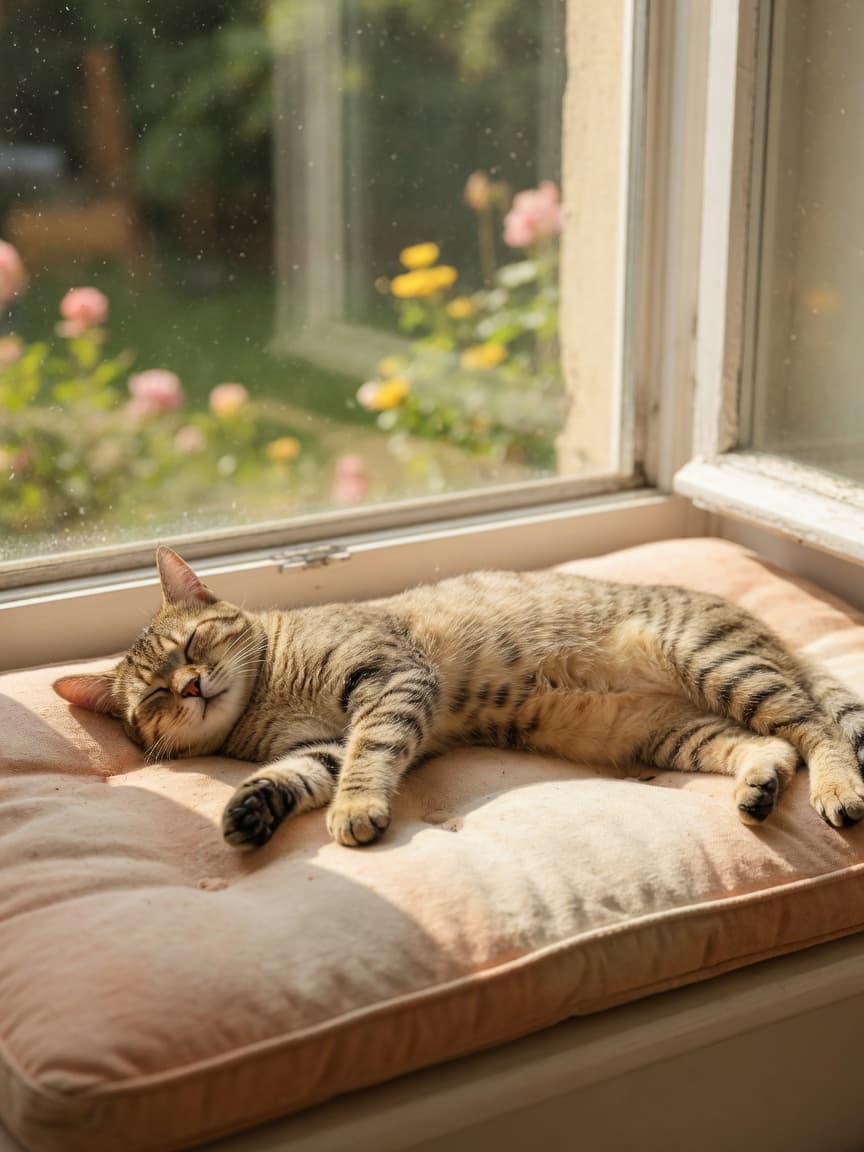
A cat sprawled in full extension is usually warm and deeply relaxed. You will often see this on sun-warmed floors or radiator covers. It signals deep comfort and a complete absence of alertness — a fully trusting, resting animal.
Seasonal and Environmental Influences on Sleep
Many cat owners notice their pets sleeping more during cold, dark winter months. This is not imaginary. Cats are sensitive to light levels and temperature, and shorter days combined with cooler temperatures encourage longer rest periods — an adaptation that mirrors the behaviour of prey animals, which are also less active in winter, reducing the need for extended hunting activity.
Indoor cats may show a less pronounced seasonal pattern because artificial lighting and central heating moderate the environmental cues, but even indoor cats often become notably sleepier in winter. Providing a warm, comfortable sleeping spot near a radiator or window in these months simply supports their natural inclinations.
When to Be Concerned About Your Cat's Sleep
Sudden Changes in Sleep Pattern
The key word when evaluating any behavioural change in cats is sudden. A cat that has always slept 14 hours a day continuing to sleep 14 hours a day is entirely normal. A cat that was previously lively and interactive and has abruptly become lethargic and disinterested in play warrants veterinary attention. Sudden increased sleepiness can indicate pain, infection, anaemia, hyperthyroidism, kidney disease, or a range of other conditions.
Sleeping in Unusual Locations
Cats are creatures of habit and tend to have favourite sleeping spots they return to consistently. A cat that suddenly begins sleeping in unusual locations — under the bed, in a cupboard, behind the boiler — may be seeking a quiet place because they feel unwell. Cats instinctively hide when they are in pain or discomfort, so a preference for unusual, secluded spots is always worth monitoring.
Lethargy Versus Normal Sleepiness
Normal sleepiness in a cat looks like peaceful, relaxed rest with normal responses when woken — stretching, blinking, perhaps a mild protest. Lethargy looks different: a lethargic cat may be difficult to rouse, may not respond to stimuli they would normally find interesting, and may be simultaneously off their food or water. If your cat cannot be engaged by their favourite toy or treat during what should be an active period, that is a meaningful signal to contact your vet.
Supporting Healthy Sleep for Your Cat
Ensuring your cat sleeps well is straightforward. Provide several comfortable, warm sleeping options at different heights — cats feel safer when they can sleep at elevation. Keep their environment stable and low-stress, as anxiety is a common cause of disrupted sleep. Regular play sessions during their naturally active dawn and dusk periods help burn off energy appropriately and support good rest cycles. And if anything about your cat's sleep habits changes suddenly or significantly, err on the side of a veterinary check — cats are masters at concealing illness, and changes in rest patterns are one of the earliest signs that something may be wrong.