
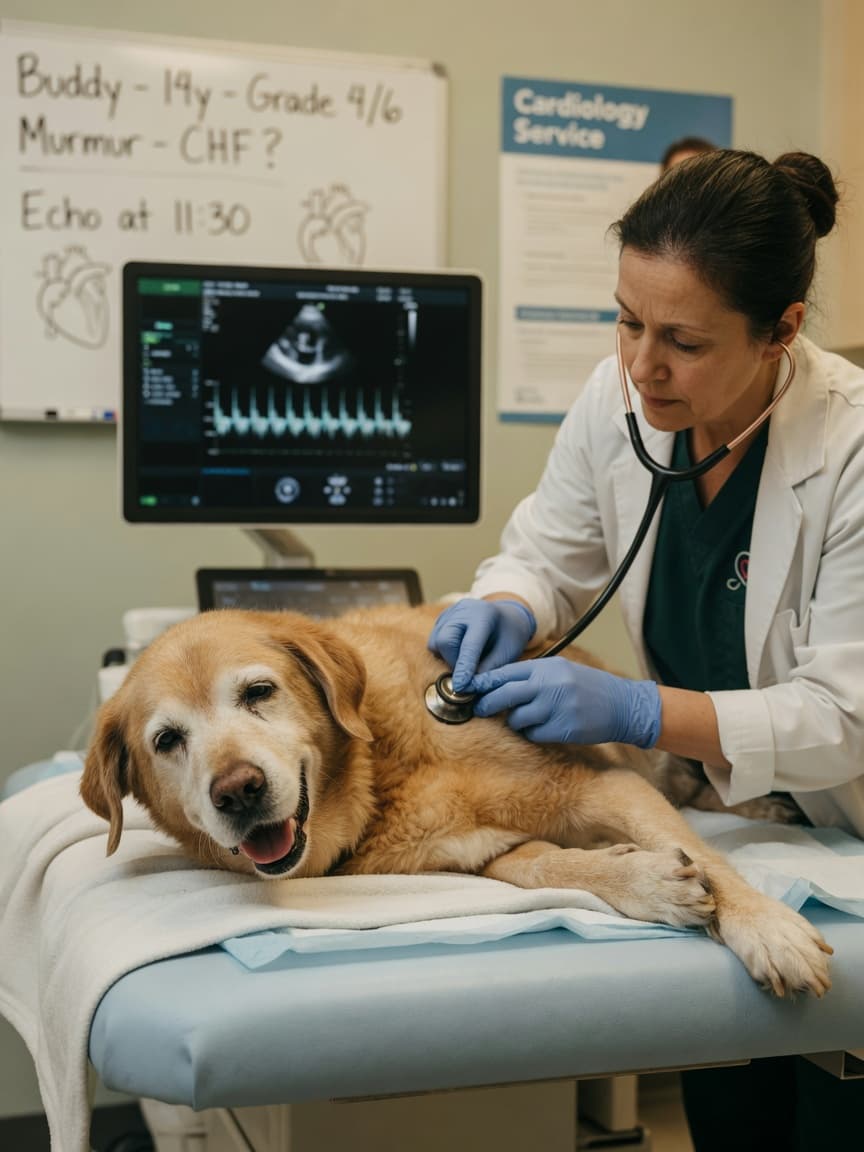
What Is Congestive Heart Failure in Dogs?
Congestive heart failure, often referred to as CHF, is not a disease in itself but rather the point at which the heart can no longer compensate for the underlying problem affecting it. Whether the root cause is mitral valve disease, dilated cardiomyopathy, or another cardiac condition, CHF represents the stage at which the heart's attempts to cope have been exhausted — and fluid begins to accumulate in places it should not be.
For dog owners, a diagnosis of CHF can feel frightening. However, with the right medication, monitoring, and support, many dogs with CHF can maintain a good quality of life for a significant period after diagnosis. Understanding what is happening in your dog's body is one of the most important steps you can take.
Left-Sided Versus Right-Sided Heart Failure
The heart has two sides, each with a different function. The left side receives oxygenated blood from the lungs and pumps it around the body. The right side receives deoxygenated blood returning from the body and sends it to the lungs. When one side fails, different patterns of fluid accumulation occur.
Left-sided heart failure is by far the more common presentation in dogs. When the left side of the heart is not pumping effectively, pressure backs up into the blood vessels of the lungs. This causes fluid to leak into the lung tissue itself — a condition called pulmonary oedema. Fluid in the lungs impairs breathing and is the reason dogs in left-sided CHF often cough and breathe rapidly.
Right-sided heart failure is less common but results in fluid accumulating in the abdomen — a condition called ascites. Owners may notice their dog developing a pot-bellied appearance, sometimes dramatically so. Fluid can also accumulate around the heart (pericardial effusion) or in the chest cavity (pleural effusion) in right-sided failure. Some dogs experience both left and right-sided failure simultaneously.
Recognising the Symptoms of CHF
The symptoms of CHF in dogs depend on which side of the heart is affected and how severely, but the following signs are the most commonly observed:
- Increased resting breathing rate — breathing more than 30 breaths per minute while sleeping or resting at home
- Coughing, particularly at night, in the early hours of the morning, or after exercise
- Reluctance to exercise or tiring much more quickly than usual on walks
- Restlessness at night, repeatedly changing position, unable to settle
- A distended, pot-bellied abdomen (in right-sided or biventricular failure)
- Fainting or collapsing episodes, sometimes during or after excitement or exercise
- Reduced appetite and noticeable weight loss
- A blue or grey tinge to the gums (cyanosis) — this is a sign of severe respiratory compromise and requires emergency care immediately
It is worth noting that some dogs in early CHF may not cough at all. The increased breathing rate is often the most reliable early indicator and is why home respiratory rate monitoring is so strongly recommended.
Treatment for Congestive Heart Failure
CHF in dogs is managed with a combination of medications, and most dogs will require several drugs working together. Your vet or veterinary cardiologist will tailor the specific regime to your dog's individual needs, but the most commonly used medications include:
- Furosemide: A diuretic that removes excess fluid from the body through increased urine production. It is typically the cornerstone of CHF management and is used to clear fluid from the lungs or abdomen. The dose is adjusted based on response and monitoring.
- Pimobendan (Vetmedin): A cardiac drug that strengthens the heart's contractions and reduces the pressure against which it must pump. It is usually started before CHF develops in susceptible breeds, but it is continued throughout the failure stage.
- ACE inhibitors (such as enalapril or benazepril): These medications work by relaxing the blood vessels, reducing the workload on the heart and helping to slow the progression of the disease.
- Spironolactone: A second diuretic that works differently from furosemide and may offer additional heart-protective benefits. It is often used alongside furosemide in more advanced cases.
In a crisis — if your dog is in severe respiratory distress — emergency treatment may involve oxygen therapy, injectable diuretics, and even physical drainage of fluid from the chest. Once stabilised, dogs are transitioned to an oral medication regime at home.
Monitoring Resting Respiratory Rate at Home
Monitoring your dog's resting respiratory rate (RRR) at home is one of the most powerful tools available to you. A normal resting respiratory rate for a dog is under 30 breaths per minute. To measure it, wait until your dog is sleeping or lying quietly. Watch the chest rise and fall — each rise counts as one breath. Count the number of breaths in 30 seconds and multiply by two.
Most cardiologists recommend checking this daily, ideally at the same time each day, and keeping a written or app-based log. Many smartphone apps are available specifically designed for this purpose. If you notice the rate creeping above 30 breaths per minute consistently, or if there is a sudden jump of ten or more breaths per minute, contact your vet without delay. This can be an early warning sign that fluid is re-accumulating in the lungs before other visible symptoms appear — and acting promptly can prevent a full crisis.
When to Call Your Vet Urgently
Certain signs should prompt an immediate call to your vet or an emergency animal hospital, regardless of the time of day:
- Breathing rate above 40 breaths per minute at rest
- Obvious difficulty breathing — the dog's sides are heaving, the neck is stretched out, the elbows are splayed
- Open-mouth breathing or gasping
- Blue, grey, or white gums
- Collapse or loss of consciousness
CHF can deteriorate rapidly, and these signs indicate that your dog needs emergency veterinary care.
End-of-Life Considerations
CHF is a progressive condition, and there will likely come a time when medication can no longer adequately control the symptoms. It is natural and important for owners to think about quality of life as the condition advances. Veterinary cardiologists often use quality of life scoring tools to help guide these conversations. Signs that quality of life is deteriorating may include persistent breathlessness despite medication, severe lethargy, loss of appetite, and the loss of interest in activities the dog previously enjoyed.
Discussing end-of-life planning with your vet early — before a crisis — allows you to make thoughtful, compassionate decisions on your dog's behalf when the time comes. Palliative and hospice care options are increasingly available and can focus on maximising comfort in the final weeks of life.