
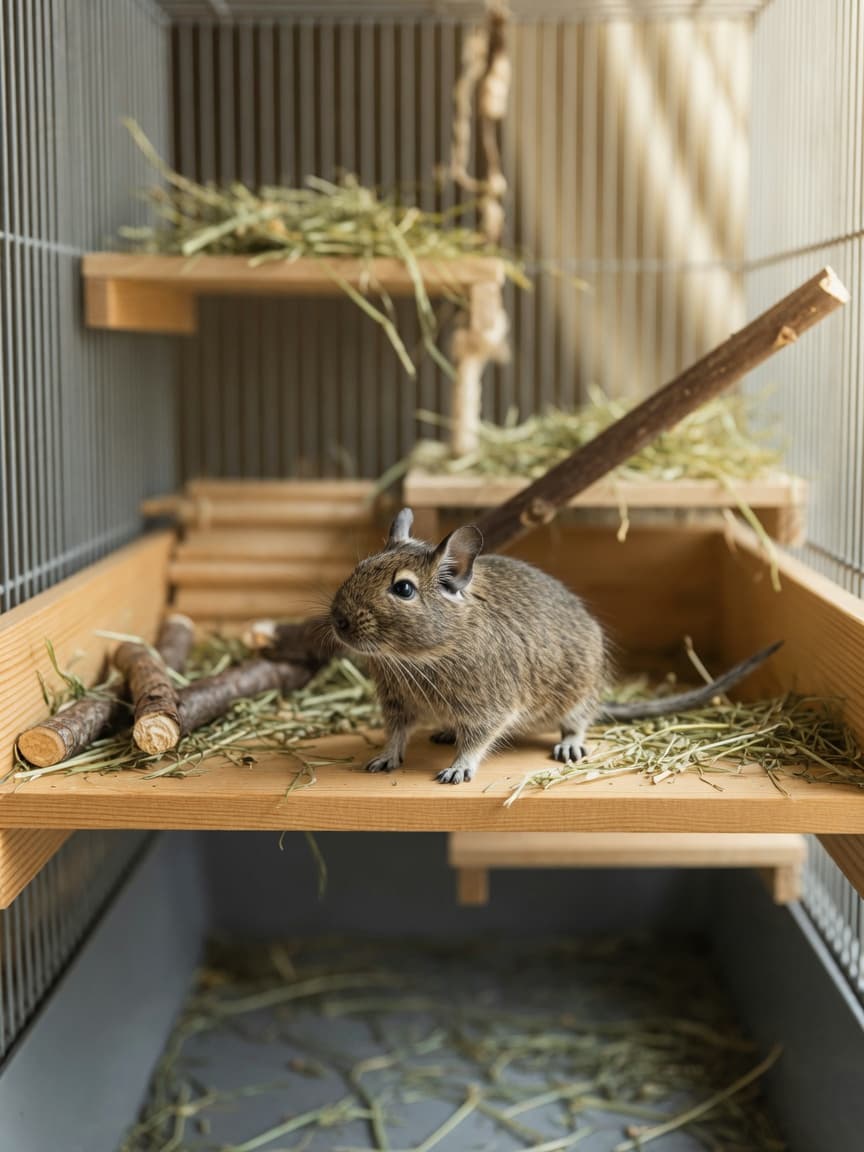
Introduction to Degus
The degu (Octodon degus) is a medium-sized rodent native to the scrublands and foothills of central Chile. Over the past two decades they have grown in popularity as pets across Europe, appreciated for their intelligence, sociability, and the fact that they are active during the day. Unlike many small rodents that are primarily nocturnal, degus can be observed playing, exploring, and interacting throughout daylight hours, which makes them particularly engaging companions for families.
Degus are not listed under CITES, but their legal status varies between EU member states and has been the subject of regulatory debate. They were previously banned in some regions due to concerns about ecological impact if released into the wild. Before acquiring degus, owners in all EU countries should verify the current regulations in their specific jurisdiction, as these can change and failure to comply may result in confiscation of the animals.
Degus have a lifespan of five to nine years when well cared for, which is considerably longer than most other pet rodents. This makes the commitment to their welfare a substantial one that should not be taken lightly.
The Social Needs of Degus
Degus are among the most social of all kept rodents. In the wild they live in complex family groups, share burrow systems, cooperate in raising young, and engage in social grooming throughout the day. Keeping a degu alone causes significant psychological harm and is considered a welfare violation under the standards applied by most European animal welfare organisations.
A minimum of two degus should always be kept together, but groups of four or more are strongly preferred. Larger groups allow for richer social interaction and reduce the impact if one animal dies, which can cause profound distress to a surviving single animal. Same-sex groups work well and are the most practical option for pet owners. Mixed-sex groups will breed prolifically, so separation or neutering is required if breeding is not intended.
Introducing new degus to an established group requires patience and a careful gradual introduction process over one to two weeks to avoid fighting. Established groups that have lived together for some time usually maintain stable social relationships.
Housing Requirements
Degus are active, acrobatic animals that require significantly more space than many owners initially anticipate. A multi-level cage is essential to allow climbing and exploration. The minimum recommended dimensions following German TVT welfare guidelines are 100 centimetres in length, 50 centimetres in depth, and 100 centimetres in height. This is for a small group, and larger groups require proportionally more space.
Bar spacing should be no more than 12mm to prevent escape. Degus are persistent and creative when it comes to finding weak points in enclosures. Wire mesh floors must be avoided as they cause foot injuries. Solid shelf levels and ramps are much safer. The enclosure should be placed away from direct sunlight and draughts, and should not be positioned in a humid environment.
Bedding should be paper-based hemp or similar material to a depth of at least 10 centimetres. Degus will dig and burrow, and providing sufficient depth to allow this behaviour is important for their wellbeing. Hay should be available throughout the enclosure, both as a food source and as nesting material.
Diet and the Critical Importance of Sugar Control
Diet is perhaps the single most important aspect of degu care, and also the area where many owners make the most serious mistakes. Degus have a unique metabolic profile that makes them exceptionally susceptible to diabetes mellitus. In their natural habitat their diet consists primarily of dry grasses, seeds, and plant matter with very low sugar content. Their insulin response is poorly equipped to handle the sugars found in most commercial pet food mixes designed for other rodents.
Timothy hay must form approximately 80 per cent of the degu diet. It should be available at all times and replenished daily. High-quality Timothy hay supports dental health by providing the abrasive chewing action needed to wear down continuously growing teeth, and it provides the fibre content essential for healthy gut motility.
The remaining 20 per cent of the diet should consist of a degu-specific pellet mix formulated without added sugars or fruit. Do not use hamster, gerbil, or rat mixes, as these typically contain ingredients that are harmful to degus. Fresh vegetables can be offered in small quantities, but only low-sugar varieties such as broccoli, leafy greens, cucumber, and courgette. Carrots and sweetcorn should be avoided due to their sugar content.
Fruit must never be given to degus. This point cannot be overstated. Even small amounts of fruit offered regularly can contribute to the development of diabetes. Similarly, avoid any treats marketed for other small animals, as these frequently contain honey, dried fruit, or other high-sugar ingredients.
Sand Baths
Degus maintain their coat condition through regular sand bathing, a behaviour they share with chinchillas. A sand bath using chinchilla sand (not dust) should be offered for 20 to 30 minutes each day. Chinchilla dust is too fine and can cause respiratory irritation in degus. The bath should be in a container large enough for the degu to roll around comfortably. After bathing, the container should be removed from the enclosure to prevent soiling. Sand should be replaced or refreshed regularly.
Enrichment and Dental Health
Degu teeth grow continuously throughout their lives and must be worn down through appropriate chewing. Wooden chews, dried herbs, and hay racks that encourage the animal to pull at material all help to maintain dental health. Apple wood, willow, and hazel are all safe and popular choices. Avoid treated or varnished wood.
Platforms at multiple heights, tunnels, ropes, and foraging opportunities all contribute to psychological wellbeing. A solid-surface running wheel of at least 25 centimetres in diameter is recommended for groups, as degus will often run together. As with all rodents, the wheel must have no gaps or rungs.
Common Health Conditions
Diabetes mellitus is the most common serious health condition in pet degus and is almost always related to an inappropriate diet high in sugar. Signs include excessive thirst and urination, weight loss, and lethargy. Cataracts are also closely linked to poor diet and blood sugar control, and can develop quite rapidly in degus on an incorrect diet.
Dental disease is the second most common health problem. Degus with malocclusion or overgrown teeth may stop eating, lose weight, and show drooling or pawing at the mouth. Regular veterinary dental checks are recommended.
Some degus are prone to seizures, which can be triggered by sudden loud sounds or excessive excitement. These are usually brief and the animal recovers quickly, but any seizure activity warrants veterinary assessment. Degus are also susceptible to respiratory infections similar to those seen in other rodents.
Finding Specialist Veterinary Care
Degus require a vet experienced in exotic mammal medicine. Many general practitioners have limited knowledge of degu-specific conditions, particularly diabetes and dental disease. The European College of Zoological Medicine (ECZM) maintains a directory of certified exotic mammal specialists across Europe. Establishing a relationship with a knowledgeable vet before any health emergency arises is strongly recommended.