
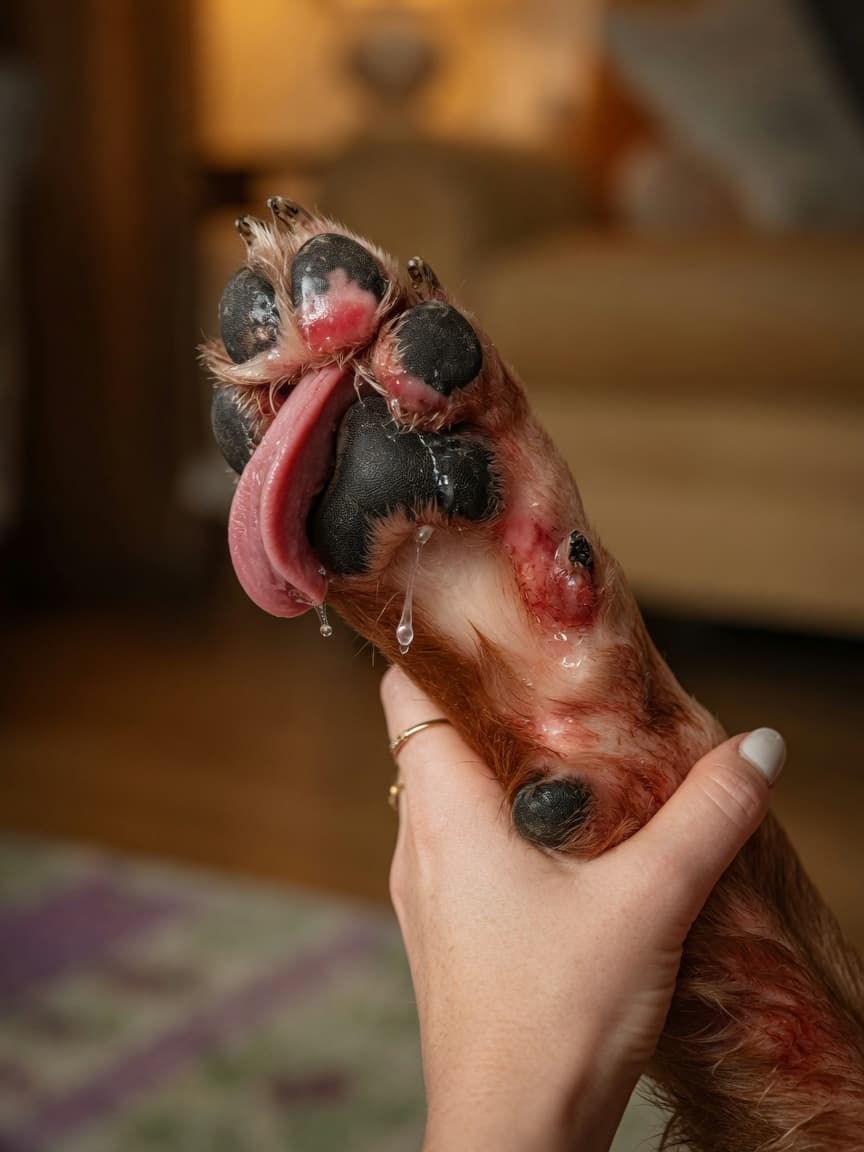
Normal Grooming Versus Excessive Licking
All dogs lick their paws. It is a normal part of canine self-maintenance — a brief lick after a walk to remove debris, or a quick clean of the paws before settling down to rest, is entirely unremarkable behaviour. The distinction that matters is between occasional, brief paw licking and persistent, repeated, or intense licking that the dog returns to throughout the day.
Excessive paw licking is one of the most common reasons dog owners visit their vet, and with good reason — it is almost always pointing at something that deserves attention, whether physical or behavioural. The encouraging news is that the majority of causes are identifiable and treatable once properly diagnosed.
Environmental Allergies
Environmental allergies — also called atopic dermatitis or atopy — are the single most common cause of chronic paw licking in dogs, and they are particularly prevalent in the UK and across Europe where dogs walk through grass, encounter pollen, and are regularly exposed to household cleaning products on flooring.
Unlike humans, who tend to respond to allergens with nasal symptoms and eye irritation, dogs respond primarily through the skin. The paws are one of the first areas to show signs because they are in direct contact with environmental allergens during every walk. Grass pollen, dust mites, mould spores, and chemical residues from floor cleaners are among the most frequent offenders.
Atopic dermatitis in dogs tends to be seasonal at first — worse in spring and summer when pollen counts are high — but can become year-round as the dog ages and its sensitivity increases. You may notice the licking correlates with time spent outdoors, or worsens in certain environments. The paws may appear red or irritated, and in fair-coated dogs a characteristic reddish-brown staining of the fur between the toes develops from the saliva deposited by repeated licking.
Food Intolerances
Food intolerances and allergies are a distinct cause of paw licking that is frequently underestimated. Unlike environmental allergies, food-driven symptoms tend to be present year-round with no seasonal variation. Common dietary triggers in dogs include beef, dairy, chicken, wheat, and soy, though any protein or ingredient can theoretically be involved.
Diagnosing a food intolerance requires a strict dietary elimination trial — typically eight to twelve weeks on a novel protein source or a hydrolysed protein diet that the dog has never encountered before. During this period, no other food, treats, or flavoured medications can be given. This process requires commitment but is the only reliable way to confirm or rule out food as a driver of the licking. Blood tests marketed as food allergy tests do not currently have reliable diagnostic accuracy for this purpose.
Yeast Infections Between the Toes
Malassezia pachydermatis is a yeast organism that normally lives on dog skin in small numbers. When the skin barrier is disrupted — by allergies, moisture, or immune dysregulation — this yeast can proliferate and cause a secondary infection. The warm, moist environment between the toes is an ideal location for yeast overgrowth.
Yeast infections between the toes produce a distinctive pattern of signs: intense licking and chewing of the paws, redness and swelling between the toe pads, a musty or corn-chip odour (a frequently cited descriptor), and the reddish-brown staining of the fur that results from chronic saliva contact. The brown discolouration between the toes of light-coated dogs is one of the most reliable visible indicators of a yeast component.
Yeast infections require antifungal treatment, which may be topical, oral, or both depending on severity. Critically, they often occur secondary to allergies — treating the yeast without addressing the underlying allergy typically results in recurrence.
Contact Dermatitis
Contact dermatitis occurs when the skin reacts to direct contact with an irritant. The paws are at particular risk because they are in contact with ground surfaces on every walk. Potential irritants include road salt and grit (especially prevalent in winter), pavement treated with pesticides or herbicides, garden chemicals, and household floor cleaning products.
Symptoms are usually limited to the areas of contact — the paw pads and the skin between the toes — and include redness, swelling, and licking or chewing that begins shortly after contact with the offending substance. Identifying and removing the irritant typically resolves the reaction. Rinsing the paws with clean water after every walk is both a useful preventative measure and a helpful diagnostic step.
Anxiety and Behavioural Causes
Not all paw licking has a physical origin. Dogs that experience chronic anxiety, stress, or boredom sometimes develop repetitive licking behaviours as a form of self-soothing. Licking releases endorphins, making it a behaviour that can be self-reinforcing over time — the dog licks to feel better, feels temporarily better, and so licks again.
Anxiety-driven paw licking tends to occur in specific contexts: when the dog is alone, during stressful events such as thunderstorms or fireworks, or during periods of low stimulation. Unlike allergy-driven licking, anxiety licking typically does not produce significant skin changes in its early stages, though prolonged licking of any cause can eventually result in secondary skin damage. Addressing the underlying anxiety through behaviour modification, environmental enrichment, and where appropriate veterinary support is the correct approach for this cause.
Examining Your Dog's Paws at Home
A regular home paw examination is useful both for catching problems early and for providing your vet with useful information. Look for redness or inflammation between the toes and around the paw pads, any swelling or unusual warmth in the foot, an unusual odour (musty smells suggest yeast, while a more pungent smell may indicate bacterial infection), brown staining of the fur indicating chronic saliva contact, any wounds, foreign bodies such as grass seeds or thorns embedded in the pads or between the toes, and hair loss or thickened skin from repeated trauma.
Examining the paws weekly and after walks in rough terrain gives you a useful baseline so you notice when something changes.
Home Management Strategies
Several practical steps can help manage paw licking at home, regardless of cause. Wiping the paws with a damp cloth or rinsing them with water after every walk removes environmental allergens and potential irritants before they have time to trigger a reaction. Ensuring your dog's flea and parasite prevention is consistently up to date removes one variable. If you suspect food intolerance, discussing a properly structured elimination diet trial with your vet is the appropriate next step.
Avoid applying human antiseptics, essential oils, or other topical products to your dog's paws without veterinary guidance — many products safe for humans are toxic or irritating to dogs, particularly given that dogs will lick whatever is applied to their paws.
When to See a Vet
Several signs indicate that home management is not sufficient and veterinary assessment is needed. Raw, broken, or ulcerated skin on the paws requires prompt attention to prevent secondary infection. Significant hair loss around the paws or between the toes should be assessed. Paw licking that persists despite removing obvious triggers, wiping paws after walks, and checking for visible irritants deserves professional investigation. And any licking that is causing visible distress to the dog — waking them from sleep, preventing normal activity, or seeming compulsive in character — warrants a veterinary appointment. With accurate diagnosis, the majority of cases of excessive paw licking can be managed effectively and the dog's comfort significantly improved.