
Is My Dog Overweight? Body Condition Score Guide
What Is the Body Condition Score (BCS)?
The Body Condition Score is a standardized 1–9 scale used by veterinarians and veterinary nutritionists to assess a dog's body fat percentage through visual inspection and palpation. Think of it as the canine equivalent of a body mass index — but far more accurate for individual animals of different breeds and builds.
The scale works like this:
- BCS 1–3 (Too thin): Ribs, spine, and pelvic bones are clearly visible from a distance. No palpable fat. Severe muscle loss in advanced cases.
- BCS 4–5 (Ideal): Ribs are easily felt but not seen. A visible waist when viewed from above. A slight abdominal tuck when viewed from the side.
- BCS 6–7 (Overweight): Ribs are difficult to feel under a noticeable fat layer. The waist is barely visible or absent. The abdomen may appear rounded.
- BCS 8–9 (Obese): Ribs cannot be felt at all. Heavy fat deposits over the spine, base of tail, and face. The abdomen is distended with no tuck whatsoever.
A BCS of 4 or 5 is considered ideal for most dogs. A score of 6 or 7 means your dog is carrying roughly 10–20% excess body weight. A BCS of 8 or 9 indicates obesity — typically 30% or more above ideal body weight.
How to Assess Your Dog at Home
You don't need a veterinary degree to perform a basic body condition assessment. Follow these three steps:
1. The Rib Feel Test
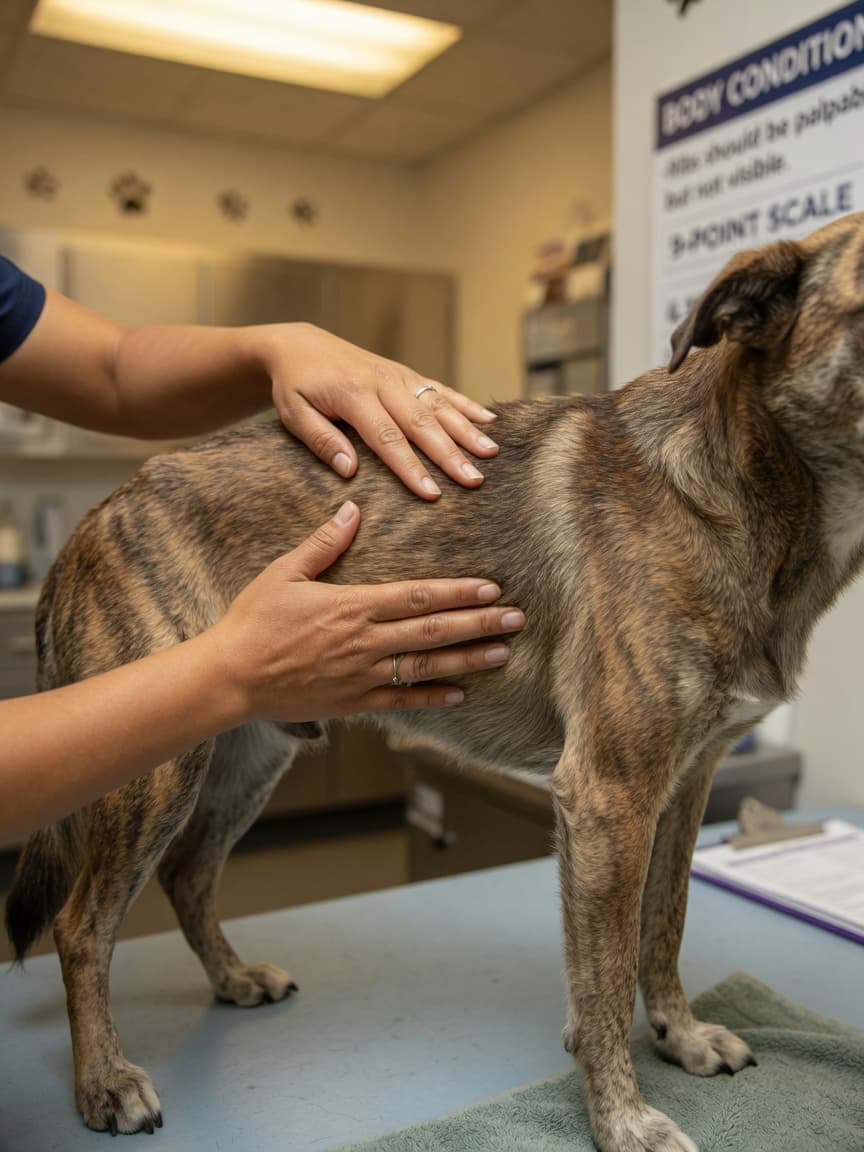
Place both thumbs on your dog's spine and spread your fingers across the rib cage. Apply gentle pressure — you should be able to feel each individual rib without pressing hard, similar to running your fingers over the back of your hand. If you have to press firmly to feel ribs, your dog is likely overweight. If ribs are immediately prominent with no pressure, your dog may be underweight.
2. The Overhead Waist Check
Stand above your dog and look straight down. You should see a clear narrowing — an hourglass shape — just behind the rib cage. This is the waist. If your dog's sides are perfectly straight from shoulder to hip, or if they bulge outward, this suggests excess weight.
3. The Side-Profile Tuck
View your dog from the side. The abdomen should rise upward from the bottom of the rib cage toward the hind legs — this is called the abdominal tuck. An ideal-weight dog looks like a gentle upward curve. An overweight dog's belly hangs level or droops downward.
How Common Is Dog Obesity?
The Association for Pet Obesity Prevention (APOP) conducts annual surveys across thousands of veterinary clinics. Their data consistently shows that more than half of all pet dogs in the US are carrying excess weight. Small breeds are disproportionately affected — Dachshunds, Beagles, Cocker Spaniels, Pugs, and Labrador Retrievers top the overweight lists year after year.
A troubling secondary finding is "fat blindness" — many owners of overweight dogs perceive their pet's weight as normal, especially when comparing to other pets in the neighborhood. Because heavy dogs have become common, the distorted weight can start to look typical. This is why learning the BCS system matters: it gives you an objective framework independent of what you see around you.
Health Risks of Excess Weight
Carrying extra body fat is not merely a cosmetic issue. Research links canine obesity to a cascade of serious health consequences:
- Osteoarthritis: Every extra kilogram adds roughly 4–5 kg of additional force on joints during movement. Overweight dogs develop arthritis earlier and experience more severe joint damage.
- Type 2 diabetes: Adipose tissue releases inflammatory cytokines that impair insulin sensitivity, particularly in predisposed breeds.
- Cardiorespiratory disease: Fat deposits around the chest wall and diaphragm restrict normal breathing. Heart function is compromised by increased systemic resistance.
- Reduced lifespan: A landmark 14-year study found that Labrador Retrievers maintained at an ideal body weight lived a median of 1.8 years longer than their slightly overweight littermates.
- Surgical and anesthetic risk: Obese dogs face significantly higher complications during any procedure requiring anesthesia.
- Heat intolerance: Subcutaneous fat acts as insulation, making thermoregulation difficult and increasing risk of heat stroke.
What Counts as Your Dog's Ideal Weight?
Breed standards give a general range, but individual variation matters. A large-framed female Labrador and a petite-framed male can both be healthy at very different weights. Your veterinarian can help establish a target weight based on BCS, breed, age, and frame size.
If your dog scores a 6 or above on the BCS scale, the goal is not just a number on the scale — it is returning to a BCS of 4–5. Safe weight loss in dogs is typically 1–2% of body weight per week. Faster loss risks muscle wasting rather than fat loss.
Browse Weight Management Dog Foods at Zooplus →
Key Takeaways
- Use the 1–9 BCS scale to assess your dog — a score of 4–5 is ideal; 6 or above means your dog is overweight.
- Check ribs, overhead waist shape, and side-profile abdominal tuck to score your dog at home.
- More than 56% of dogs in the US are overweight or obese — "fat blindness" makes this easy to miss.
- Obesity shortens lifespan, worsens joint disease, increases diabetes risk, and impairs heart and lung function.
- If your dog scores 6+, consult your vet to establish a safe target weight and calorie-controlled feeding plan.
References
Lund EM, et al. (2006). Prevalence and risk factors for obesity in adult dogs from private US veterinary practices. International Journal of Applied Research in Veterinary Medicine. PubMed
Kealy RD, et al. (2002). Effects of diet restriction on life span and age-related changes in dogs. Journal of the American Veterinary Medical Association. PubMed