
The Beauty and the Burden of the Persian Cat
No breed attracts more devoted admirers than the Persian — or carries a heavier inherited health burden. Their flat faces, dense coats, and rounded skulls are the product of decades of selective breeding that has, unfortunately, created a cluster of predictable medical challenges. Understanding these issues before you bring a Persian home — or as part of caring for one you already love — makes an enormous practical difference.
Brachycephalic Obstructive Airway Syndrome
Brachycephalic means, literally, short-headed. Persian cats share this anatomical feature with flat-faced dog breeds, and the consequences are similar: narrowed nostrils, an elongated soft palate, and sometimes a narrowed trachea all conspire to restrict airflow. The condition is collectively termed Brachycephalic Obstructive Airway Syndrome, or BOAS.
Recognising Breathing Difficulties
- Chronic snoring or stertor, even during light sleep
- Noisy, effortful breathing during normal activity
- Open-mouth breathing or extended recovery after mild exertion
- Recurrent episodes of gagging or regurgitation
- Cyanotic (bluish) gums during distress — this is an emergency
Many Persian owners normalise these sounds because they hear them constantly. It is worth remembering that a healthy cat should breathe silently and effortlessly. What sounds like personality is often discomfort.
Management and Surgical Options
Mild cases are managed conservatively: keeping the cat cool, avoiding physical stress, and maintaining a lean body weight, since even modest obesity significantly worsens airway obstruction. Severely affected cats may benefit from surgical correction of stenotic nares or an overlong soft palate. Your vet can assess whether surgical referral is appropriate.
Eye and Facial Fold Concerns
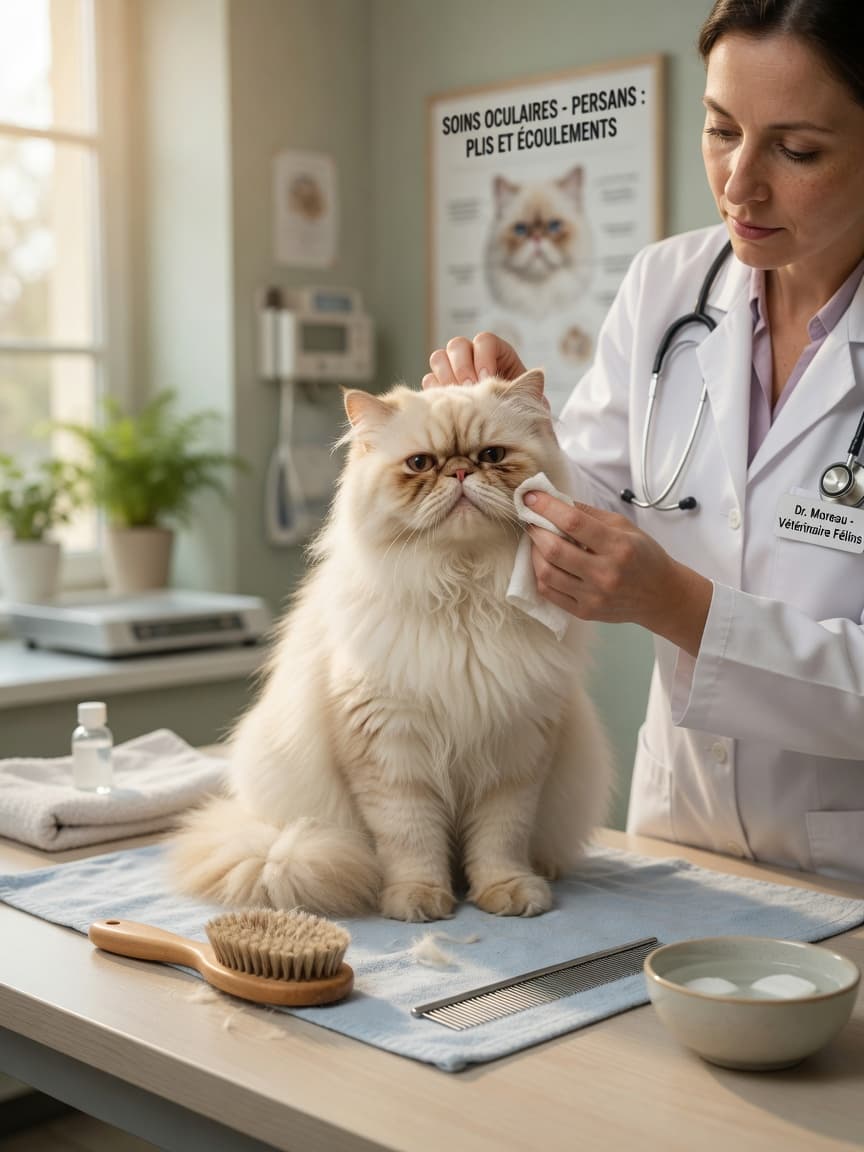
The same facial compression that causes breathing issues also affects the eyes. Persians are prone to epiphora — chronic tear overflow — because their tear ducts are distorted by skull anatomy. The fur around the eyes becomes perpetually stained and damp, creating an ideal environment for bacterial and yeast skin infections in the facial folds.
Daily cleaning of the facial area with a damp cloth or veterinary-recommended wipe is not optional for this breed; it is basic hygiene. Left unmanaged, fold dermatitis can become painful and require antibiotic treatment.
Polycystic Kidney Disease
Polycystic kidney disease, or PKD, is a hereditary condition in which fluid-filled cysts develop in the kidneys from birth and expand over time, eventually impairing kidney function. In Persians, it is caused by a mutation in the PKD1 gene and follows an autosomal dominant inheritance pattern — meaning only one copy of the mutation is needed to cause disease.
Historical estimates suggested that over 40 per cent of Persians globally carried the PKD1 mutation, though concerted breeding programmes have reduced this in lines from responsible breeders. Symptoms of progressive kidney disease — increased thirst, weight loss, vomiting, lethargy — typically emerge in middle age, often between seven and ten years.
Testing and Breeding Considerations
A DNA test for the PKD1 mutation is reliable and widely available. Any reputable Persian breeder should be testing their breeding cats and should be willing to share results. Affected cats can still live comfortable lives with appropriate management, but affected cats should not be bred, as this perpetuates the mutation in the population.
Coat Care: A Daily Commitment
The Persian's coat is genuinely magnificent and genuinely demanding. Without daily brushing, the fur mats rapidly — and severe matting is not merely cosmetic. Mats pull on skin, cause discomfort, trap moisture, and can conceal wounds or parasites beneath them. Persians who are not groomed consistently frequently require veterinary sedation for full-coat dematting.
- Brush daily with a wide-toothed metal comb, working from the skin outward
- Pay particular attention to the armpits, groin, and behind the ears — prime matting sites
- Bathe every four to six weeks using a cat-appropriate shampoo to prevent grease build-up
- Consider a professional groom or a practical short clip during warm months if daily brushing is not achievable
- Begin grooming routines in kittenhood so the cat accepts handling as normal
Summary: Caring for a Persian Well
Persian cats reward attentive owners richly — they are calm, affectionate, and remarkably content indoors. But their care requirements are non-trivial. A responsible Persian owner commits to daily grooming, regular facial cleaning, PKD genetic screening through their breeder, and close monitoring of breathing quality and kidney health as the cat ages. Consult your vet at least annually, and do not dismiss snoring, tear overflow, or increased thirst as simply breed characteristics — they are starting points for a clinical conversation.