
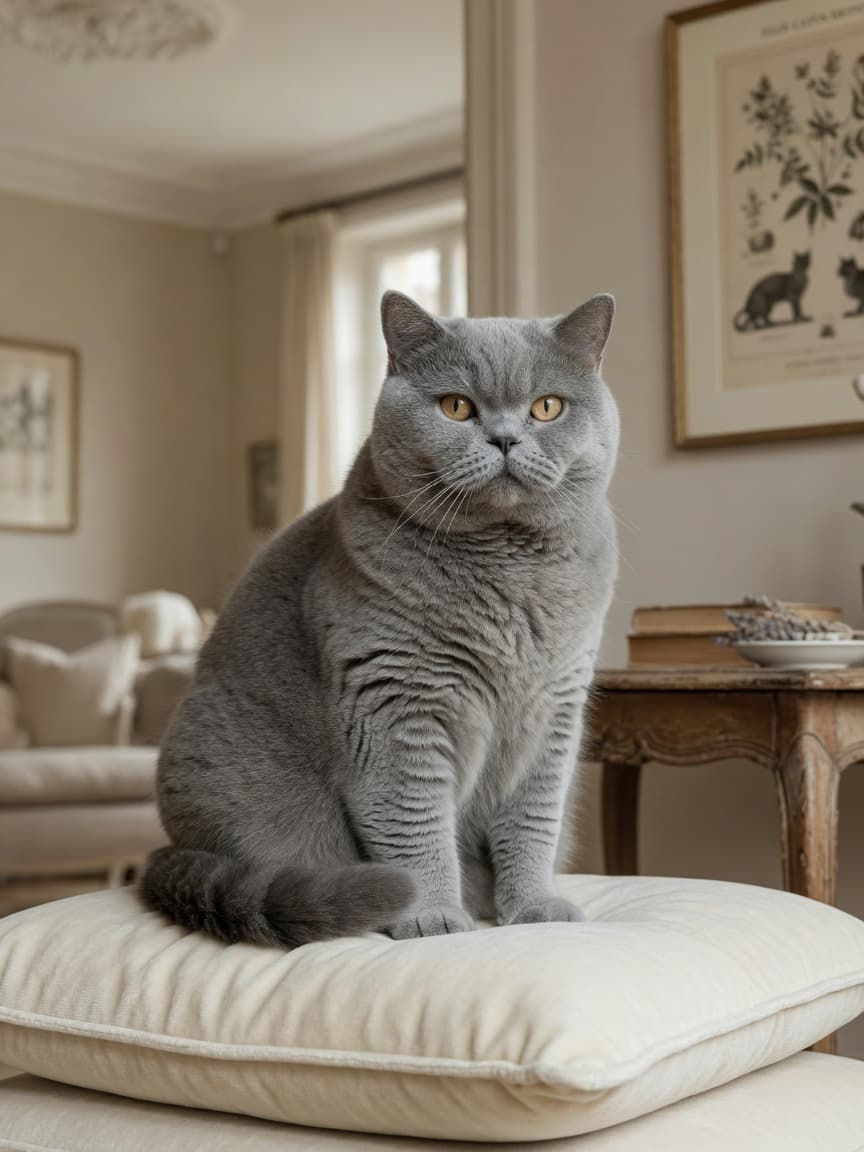
British Shorthair Cat Breed Guide: The Calm and Dignified Classic
The British Shorthair is arguably the most quintessentially British of all cat breeds — sturdy, self-possessed, and endlessly charming. With its plush teddy-bear coat, round face, and remarkably even temperament, the British Shorthair has earned a devoted following not only in the United Kingdom but throughout mainland Europe. It is one of the most registered breeds with the Governing Council of the Cat Fancy (GCCF), The International Cat Association (TICA), and the Fédération Internationale Féline (FIFe).
Origin and History
The British Shorthair descends directly from the domestic cats brought to Britain by Roman invaders nearly two thousand years ago. Over the centuries, these cats thrived in the British Isles, developing into a robust, stocky type well-adapted to the country's damp and variable climate. During the Victorian era, cat fancying became fashionable, and breeder Harrison Weir — who organised the world's first formal cat show at Crystal Palace in London in 1871 — played a pivotal role in standardising the breed.
After significant population losses during the two World Wars, breeders crossed British Shorthairs with Persian cats to rebuild numbers and improve the plush coat quality. Subsequent careful breeding gradually reduced the flat-faced Persian influence while retaining the characteristic dense coat and sturdy build. The breed was formally recognised by the GCCF, and later by TICA and FIFe, with strict breed standards governing type and colour.
Size and Appearance
The British Shorthair is a medium to large breed with a distinctly compact and powerful build. Adult males typically weigh between 5 and 8 kilograms, while females usually range from 4 to 6 kilograms. The breed is characterised by a broad, round head with full cheeks, a short nose, large round eyes (copper, gold, or blue depending on coat colour), and small rounded ears set well apart.
The coat is one of the breed's most distinctive features — it is exceptionally dense, plush, and crisp to the touch, standing away from the body rather than lying flat. The British Blue (a solid blue-grey colour) is the most iconic and widely recognised variety, but the breed also comes in an extensive range of colours and patterns including black, white, cream, tortoiseshell, tabby, colourpoint, and bicolour. All colours and patterns are eligible for championship status under GCCF and FIFe standards.
Temperament and Personality
The British Shorthair's temperament is calm, steady, and quietly affectionate — not a lap cat in the demanding sense, but deeply loyal to its family. These cats tend to be dignified and self-contained, preferring to sit beside their owners rather than on them, and they are rarely demanding or vocal. They adapt exceptionally well to indoor living and are not easily flustered by changes in routine or environment.
While British Shorthairs are gentle and patient with children and other pets, they are not typically enthusiastic about being picked up or carried. They are better suited to households that appreciate a companion who is present and affectionate without being clingy. They tend to get along well with other cats and with calm dogs, making them a versatile choice for multi-pet households.
Lifespan
British Shorthairs are a long-lived breed, with a typical lifespan of 14 to 20 years. Their robust constitution and moderate energy levels contribute to their longevity, provided they receive appropriate veterinary care and are kept at a healthy weight throughout their lives.
Common Health Problems
Despite their generally hearty constitution, British Shorthairs are prone to several conditions that owners and breeders should be aware of:
- Hypertrophic Cardiomyopathy (HCM): Like many breeds, British Shorthairs carry a risk of HCM. Although the specific genetic mutations involved are not yet as clearly defined as in Maine Coons or Ragdolls, cardiac screening via echocardiography is recommended for breeding cats. Buyers should ask breeders for evidence of cardiac health checks in the parent cats.
- Blood Type Incompatibility (Neonatal Isoerythrolysis): British Shorthairs have a higher-than-average prevalence of blood type B among pedigree cat breeds. When a type B queen mates with a type A tom and produces type A kittens, those kittens can suffer a serious and potentially fatal haemolytic reaction when they consume the queen's colostrum. Responsible breeders blood-type all breeding cats before pairing them. Owners considering breeding their British Shorthair must ensure this screening is carried out.
- Obesity: The British Shorthair's naturally sedentary temperament, combined with its compact, muscular build, makes it highly susceptible to weight gain. Obesity in cats contributes to diabetes, joint problems, and a shortened lifespan. Portion control, measured feeding, and avoiding ad libitum feeding are important management strategies. Zooplus stocks a range of weight-management dry and wet foods appropriate for less active cat breeds.
- Polycystic Kidney Disease (PKD): Inherited from Persian ancestry in some bloodlines, PKD causes cysts to develop in the kidneys over time. A DNA test is available, and ethical breeders screen all breeding cats. Always request PKD-negative certificates from your breeder.
Exercise Needs
British Shorthairs have low to moderate exercise requirements compared to more active breeds. They are not natural athletes and tend to prefer lounging over leaping. However, regular gentle play is important to prevent obesity and maintain muscle tone. Short interactive sessions using wand toys or feather teasers are ideal. Puzzle feeders can provide mental stimulation while slowing down eating — a useful tool for this food-motivated breed.
Because British Shorthairs are unlikely to self-exercise sufficiently, owners must take an active role in encouraging daily movement. As they age, joint health becomes increasingly important, and maintaining a healthy weight throughout life significantly reduces the risk of mobility issues in later years.
Grooming Requirements
Despite the density and plushness of the British Shorthair's coat, grooming needs are surprisingly manageable. The coat does not mat easily and can generally be maintained with one or two brushing sessions per week using a rubber grooming mitt or a soft slicker brush. During the spring and autumn moults, more frequent brushing — ideally daily — helps manage the significant amount of loose fur.
Bathing is rarely necessary unless the cat gets into something messy, as the coat is naturally clean and odour-resistant. Routine nail trimming, ear cleaning, and dental care should be part of the regular grooming schedule. Introducing these routines in kittenhood builds tolerance and makes veterinary examinations much easier throughout the cat's life.
Suitability for Families and Flats
The British Shorthair is one of the most suitable breeds for apartment or flat living anywhere in Europe. Its calm temperament, low activity level, and quiet nature make it an ideal companion in urban environments. It is not prone to destructive behaviour and does not require outdoor access to remain content, provided it has environmental enrichment such as window perches and scratching posts.
This breed suits a wide range of household types — from single professionals to families with children and from first-time cat owners to experienced fanciers. Its independent nature means it tolerates solitude better than many breeds, although it will always welcome company when offered. The British Shorthair is a dignified, devoted, and thoroughly dependable companion for life.