
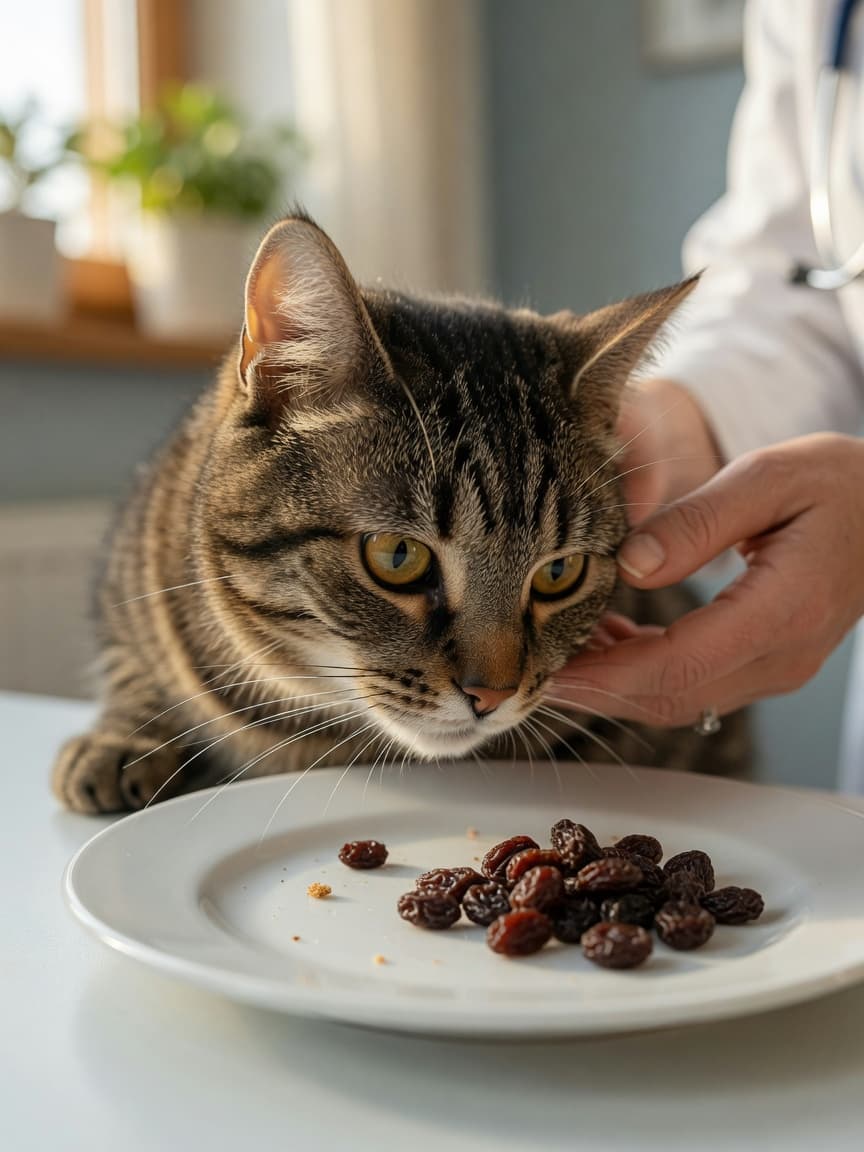
Can cats eat raisins?
No — raisins are toxic to cats and must never be fed to them. Raisins, along with grapes, are known to cause serious kidney damage in cats and can lead to acute kidney failure, which may be fatal. Even small amounts can be dangerous, so it is essential to keep all raisin-containing foods completely away from your cat.
Why are raisins toxic to cats?
The exact mechanism behind raisin toxicity in cats is not fully understood by veterinarians, but the toxins present in both grapes and raisins can cause severe damage to the kidneys. Raisins are simply dried grapes, which concentrates any harmful compounds, making them potentially even more dangerous than fresh grapes. The toxic substance appears to affect the kidneys' ability to filter waste and regulate electrolytes, leading to a dangerous accumulation of toxins in the bloodstream.
As obligate carnivores, cats have no biological need for fruits like raisins anyway. Their digestive systems are designed to process meat and animal proteins, not plant-based foods. This makes feeding raisins to cats not only toxic but also nutritionally unnecessary and inappropriate for their species.
What happens when a cat eats raisins?
When a cat ingests raisins, the toxic compounds begin to damage the kidneys. The kidneys may become inflamed and gradually lose their ability to function properly. In severe cases, acute kidney failure can develop, which is a life-threatening emergency. Some cats may develop kidney disease that becomes chronic, causing long-term health problems even if they initially survive the poisoning.
The concerning aspect of raisin toxicity is that the damage can occur even with small amounts, and individual cats may show different levels of sensitivity. There is no established safe dose — any amount should be considered potentially dangerous.
Symptoms of raisin poisoning in cats
If your cat has eaten raisins, watch carefully for the following signs, which may appear within hours or days:
Vomiting and diarrhoea (often the first signs), loss of appetite, lethargy or unusual tiredness, abdominal pain or discomfort, increased or decreased thirst, changes in urination patterns (increased, decreased, or absent), bad breath, weakness, and lack of interest in normal activities.
In advanced cases, your cat may become severely unwell with signs of kidney failure, including difficulty walking, seizures, or collapse. Some cats may show no symptoms initially, which is why immediate veterinary attention is crucial even if your cat seems well after consuming raisins.
What to do if your cat eats raisins
If you suspect or know that your cat has eaten raisins, do not wait for symptoms to develop. Contact your veterinary surgery immediately or call an emergency veterinary clinic if it is outside normal hours. Time is critical with raisin toxicity.
When you contact your vet, provide as much information as possible: how many raisins your cat ate (or the approximate amount), when they were eaten, and your cat's weight. This information will help your vet decide on the best course of action.
Your vet may recommend decontamination procedures such as induced vomiting (if caught early enough) or activated charcoal to help prevent absorption of the toxins. Blood tests will likely be performed to assess kidney function and check for any damage. Your cat may need intravenous fluids and supportive care to help their kidneys flush out toxins and maintain proper function.
Prevention is essential
The best approach is prevention. Store all raisin-containing foods, including breakfast cereals, baked goods, dried fruit mixes, and trail mix, in secure cupboards or high shelves where your cat cannot access them. Be aware that some foods containing hidden raisins — such as certain types of bran cereal, granola, and some baked goods — may not be obviously raisin-containing at first glance.
If other family members or visitors are in your home, ensure they understand that raisins must never be given to your cat, even as a treat or by accident.
If you have any concerns about what your cat has eaten, always contact your vet for advice. When it comes to raisins and cats, erring on the side of caution can quite literally save your cat's life.