
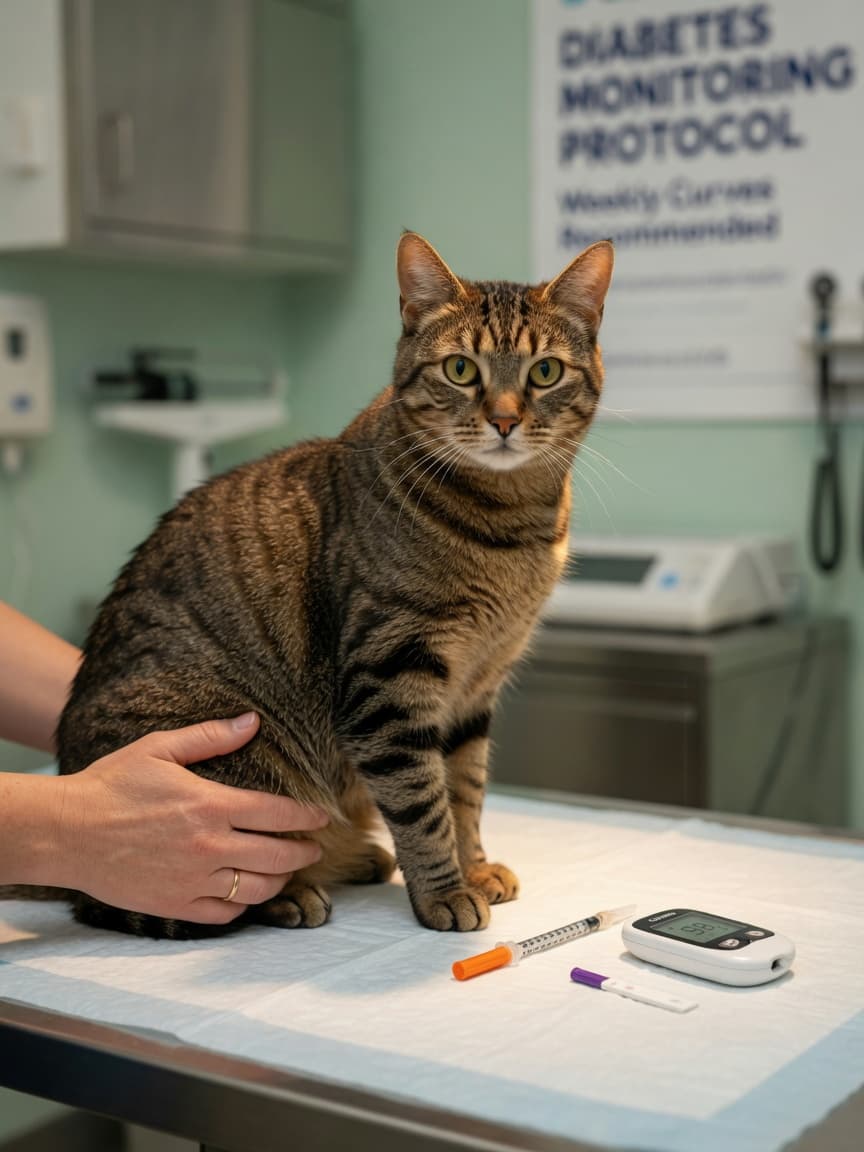
How Feline Diabetes Differs from Canine Diabetes
Diabetes mellitus in cats is predominantly a Type 2 condition, which sets it apart from the Type 1 insulin-dependent form most commonly seen in dogs. In Type 2 diabetes, the pancreatic beta cells are initially still functional and capable of producing insulin, but the body's cells have become resistant to its effects. Over time, sustained demand on the beta cells leads to their exhaustion and failure, making insulin therapy increasingly necessary.
This distinction is crucial because it opens a window of opportunity not available in most diabetic dogs: with early diagnosis, appropriate diet, and aggressive insulin management, many cats can achieve complete diabetic remission — a state where insulin is no longer required and blood glucose normalises without medication. The earlier intervention begins, the better the chance of achieving this outcome.
Which Cats Are Most at Risk?
Diabetes in cats is most commonly diagnosed in middle-aged to older animals, with the peak incidence occurring between eight and thirteen years of age. Male cats are affected at roughly twice the rate of females. Neutered cats carry a higher risk than intact animals, and obesity is one of the most significant modifiable risk factors.
Among breeds, the Burmese cat is dramatically overrepresented, particularly in the United Kingdom and Australia, where prevalence studies suggest Burmese cats are up to four times more likely to develop diabetes than the average domestic shorthair. The Burmese predisposition appears to have a genetic component, and owners of this breed should be particularly vigilant for early signs.
Other risk factors include chronic administration of corticosteroids or progestagens, concurrent diseases such as hyperthyroidism or acromegaly, and a sedentary indoor lifestyle.
Signs of Diabetes in Cats
The signs of feline diabetes closely mimic those of chronic kidney disease (CKD), which is another common condition in older cats. This overlap means that blood and urine testing are essential for differentiating the two, and it is not unusual for the two conditions to occur simultaneously.
Classic signs of diabetes in cats include:
- Weight loss, often despite an unchanged or even increased appetite
- Increased thirst (polydipsia)
- Increased urination (polyuria), including urinating outside the litter tray
- Unkempt coat and reduced grooming
- Weakness in the hind limbs, causing a characteristic flat-footed, plantigrade stance (diabetic neuropathy)
- Lethargy and reduced activity
The plantigrade posture — where the cat appears to walk on its hocks rather than its paws — is a distinctive sign of diabetic peripheral neuropathy and is more commonly seen in cats than in dogs. It can improve significantly with good glycaemic control.
The Role of Diet in Feline Diabetes
Diet is arguably the single most powerful non-insulin intervention available for diabetic cats. Unlike dogs, cats are obligate carnivores with a metabolism poorly adapted to processing carbohydrates. In diabetic cats, dietary carbohydrates directly drive post-meal blood glucose spikes, making carbohydrate restriction essential.
A high-protein, low-carbohydrate diet — typically containing less than 10% of metabolisable energy from carbohydrates — is now the recommended standard for diabetic cats. Wet food is preferred over dry kibble for both its lower carbohydrate content and its higher moisture content, which supports kidney health. Many owners are surprised to discover that a simple dietary switch alone can significantly reduce, or in early cases even eliminate, insulin requirements.
Studies suggest that with a combination of appropriate diet and insulin therapy, diabetic remission can be achieved in 50 to 90% of cats when treatment is started promptly after diagnosis. Remission rates are highest in cats where beta cell function has not been completely exhausted, reinforcing the importance of early intervention.
Insulin Options for Diabetic Cats
Several insulin preparations are suitable for use in cats. Two of the most commonly used in practice are:
- ProZinc (protamine zinc recombinant human insulin) — a long-acting insulin licensed specifically for use in cats, given once or twice daily
- Insulin glargine (Lantus) — a long-acting human insulin analogue that has become popular in cats due to its ability to maintain relatively stable blood glucose levels over 24 hours and its association with higher remission rates in clinical studies
Glargine in particular has been strongly associated with diabetic remission when combined with a low-carbohydrate diet and tight glucose regulation. It is not licensed for veterinary use but is widely used off-licence in feline diabetic management. Your vet will advise on which preparation is most appropriate for your cat's individual situation.
Home Glucose Monitoring
Home glucose monitoring is highly recommended for diabetic cats and is closely associated with improved remission rates. The stress of a veterinary visit can raise blood glucose dramatically in cats (a phenomenon known as stress hyperglycaemia), making in-clinic measurements unreliable for dose adjustments.
Blood samples in cats are most conveniently taken from the inner pinna of the ear or from the paw pad. The AlphaTrak glucometer, calibrated for use in cats and dogs, is the preferred device. Home glucose curves — a series of readings taken throughout the day — allow owners and vets to fine-tune insulin doses with precision and to detect the early signs of remission, when insulin requirements begin to fall.
Recognising Remission and Hypoglycaemia
Signs that a cat may be entering remission include consistently lower blood glucose readings, reduced water intake, and improved energy. If blood glucose drops into the normal range, insulin must be reduced or stopped promptly to avoid hypoglycaemia. Cats in remission should continue to be monitored at home, as diabetes can recur, particularly if diet slips or body weight increases.
Hypoglycaemia in cats causes weakness, wobbling, disorientation, and in severe cases, seizures or collapse. If suspected, rub a small amount of glucose solution or honey onto the gums and seek immediate veterinary advice.
Long-Term Outlook
Feline diabetes, when managed with dedication, carries an excellent prognosis. Many cats achieve remission and require no further treatment for months or even years. Those that do not achieve remission can still live comfortably with twice-daily insulin injections. Regular veterinary follow-up, consistent diet, and diligent home monitoring are the foundations of successful long-term management.