
Do Bed Bugs Bite Dogs? - Whole Dog Journal
If you've recently discovered bed bugs in your home, you're probably wondering whether your beloved canine companion is at risk. The short answer is yes — bed bugs will bite dogs, though they typically prefer human hosts. Understanding how bed bugs affect your pet and what you can do about them is essential for protecting your dog's health and comfort whilst dealing with an infestation.
Can Bed Bugs Actually Bite Dogs?
Bed bugs are opportunistic parasites that feed on the blood of mammals and birds. Whilst they have a strong preference for human blood, they will readily bite dogs, cats, and other pets when humans aren't readily available. The insect's mouthparts are designed to pierce skin and draw blood, regardless of whether that skin belongs to a person or a pet.
Research has shown that bed bugs can survive on pet blood alone, though they may not thrive as well as they do on human hosts. Your dog's fur provides some barrier, making it slightly less convenient for bed bugs to feed, but this doesn't stop them from trying, especially if your pet sleeps on or near infested bedding.
Recognising Bed Bug Bites on Your Dog
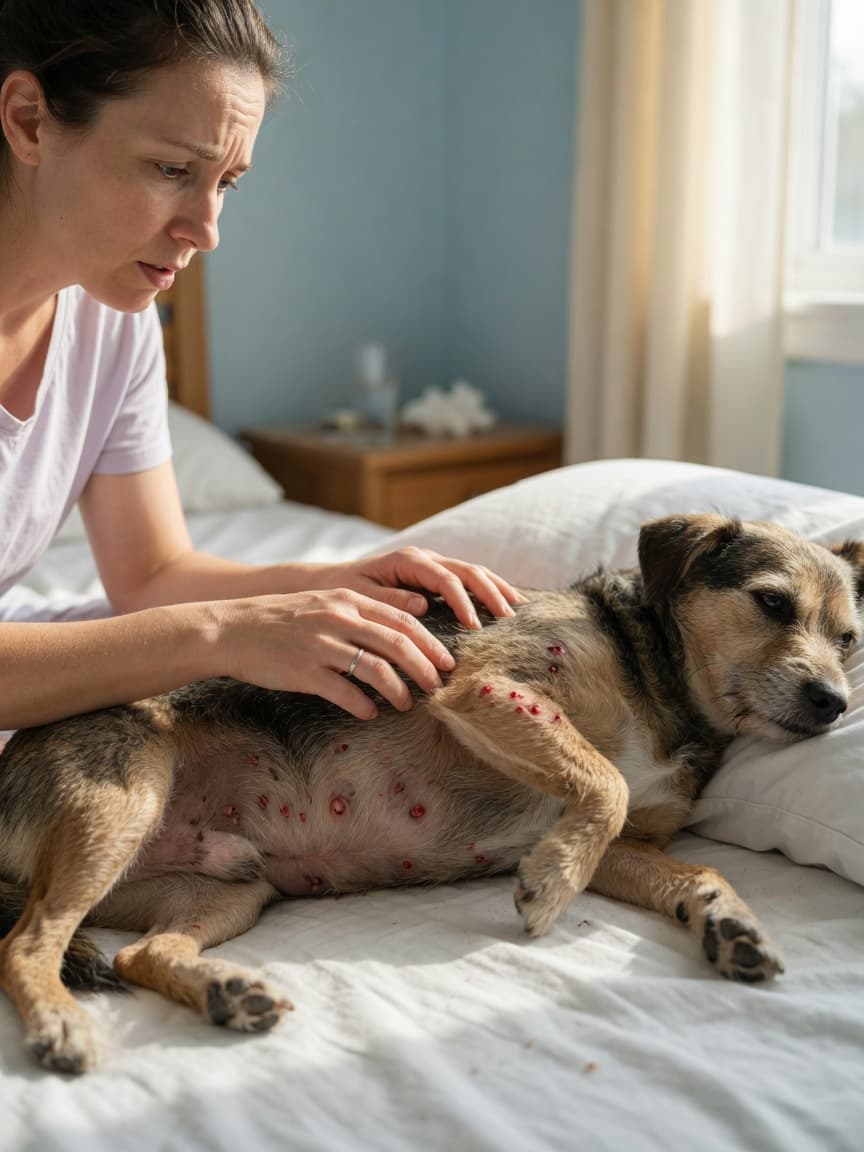
Identifying bed bug bites on your dog can be challenging due to their coat, but there are tell-tale signs to watch for:
- Small red bumps or welts, typically appearing in clusters or lines on areas with less hair (belly, inner thighs, paws, ears)
- Excessive scratching, itching, or licking at specific areas
- Signs of skin irritation or dermatitis
- Hair loss from repeated scratching
- Restlessness or sleep disturbances
If your dog has sensitive skin or a pre-existing skin condition, they may experience more severe reactions to the bites. Some dogs may develop secondary skin infections from scratching.
Health Risks for Dogs
Whilst bed bugs don't transmit diseases to dogs the way some parasites do, they can still cause discomfort and complications. The primary concerns include:
- Itching and discomfort: Multiple bites can cause significant irritation and affect your dog's sleep quality
- Allergic reactions: Some dogs may have heightened sensitivity to bed bug saliva, resulting in more severe itching and inflammation
- Secondary infections: Excessive scratching can break the skin, leading to bacterial infections
- Anaemia: In severe infestations, repeated blood loss could theoretically cause anaemia, though this is rare in dogs
Protecting Your Dog During a Bed Bug Infestation
If you're dealing with bed bugs, taking steps to protect your dog is crucial:
- Isolate the problem: Keep your dog away from infested areas whilst treatment is underway. Consider using a separate sleeping area that hasn't been affected
- Wash regularly: Bathe your dog in lukewarm water with a gentle, hypoallergenic shampoo to remove any parasites and soothe irritated skin
- Inspect thoroughly: Check your dog's entire body regularly for bites and signs of infestation
- Vacuum and clean: Remove your dog's bedding and wash it in hot water. Vacuum your home thoroughly, including under furniture
- Consult your vet: If your dog shows signs of infection or severe allergic reaction, seek professional advice
- Consider professional pest control: Contact a licensed pest control company to treat your home properly
Can Your Dog Bring Bed Bugs Into Your Home?
Contrary to popular belief, your dog is unlikely to introduce bed bugs into your home from outdoors. Bed bugs are primarily indoor parasites that hitchhike in luggage, clothing, and furniture. They don't live outdoors or on wildlife like fleas do.
Key Takeaways
Bed bugs can and will bite your dog, though they prefer human hosts. Whilst bed bug bites won't cause serious disease, they can create discomfort and skin complications. If you suspect a bed bug infestation, act promptly to protect both yourself and your pet. Keep your dog away from affected areas, maintain good hygiene practices, and contact a professional pest control service. Monitor your dog closely for signs of secondary skin infections and consult your veterinarian if you're concerned about their health or comfort.
```