
How to Transition Dog Food - Whole Dog Journal
Changing your dog's food might seem straightforward, but rushing the process can lead to digestive upset, vomiting, and diarrhoea. Whether you're switching to a higher-quality diet, addressing health concerns, or simply trying a new formula, a gradual transition is essential for your dog's wellbeing. This comprehensive guide will walk you through the science-backed process of transitioning dog food safely and effectively.
Why Gradual Transitions Matter
Your dog's digestive system contains beneficial bacteria that have adapted to their current diet. These microbes help break down food and absorb nutrients efficiently. When you introduce a completely new food overnight, you're essentially shocking this delicate ecosystem. A sudden change can disrupt the balance of gut flora, leading to gastrointestinal distress.
Additionally, different foods have varying protein, fat, and fibre contents. A gradual transition allows your dog's digestive enzymes to adjust to the new nutritional profile, reducing the likelihood of digestive upset.
The 7-10 Day Transition Schedule
The ideal transition period typically spans 7-10 days, though some dogs—particularly those with sensitive stomachs—may need 10-14 days. Here's the recommended schedule:
- Days 1-2: Mix 25% new food with 75% old food
- Days 3-4: Mix 50% new food with 50% old food
- Days 5-6: Mix 75% new food with 25% old food
- Days 7-10: Serve 100% new food
If your dog shows signs of digestive upset at any stage, extend that phase by a few days before progressing further. Every dog is unique, and some may require a slower transition pace.
Monitoring Your Dog During Transition
Watch your dog closely for any signs of digestive discomfort:
- Loose stools or diarrhoea
- Vomiting or retching
- Excessive gas or bloating
- Loss of appetite
- Constipation
Minor changes in stool consistency are normal during transition, but persistent diarrhoea warrants a slower pace. If symptoms persist beyond the transition period, consult your veterinary surgeon to rule out food allergies or intolerances.
Special Considerations for Sensitive Dogs
Dogs with sensitive stomachs, older dogs, or those with pre-existing digestive conditions benefit from extended transition periods. Consider these adjustments:
- Extend the transition to 14 days or longer
- Use smaller percentage increments (10-15% instead of 25%)
- Ensure both foods have similar protein levels to minimise digestive shock
- Keep feeding schedules consistent
- Avoid introducing other dietary changes simultaneously
Practical Tips for Success
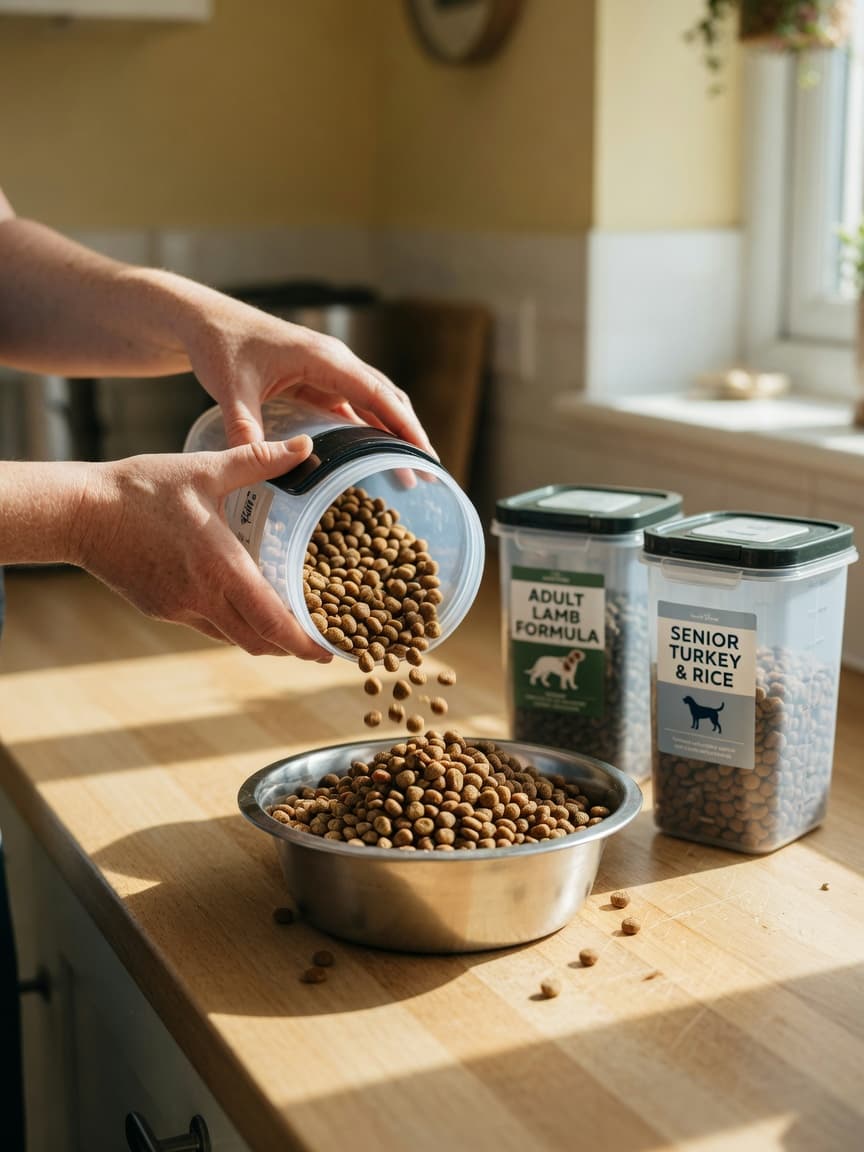
Store both foods in airtight containers to maintain freshness and prevent contamination. Keep your dog's meal times consistent—irregular feeding can compound digestive upset during transitions. If feeding multiple dogs, separate them during mealtimes to prevent confusion about which dog is eating what food.
Maintain detailed notes about your dog's stools and appetite throughout the transition. This information proves invaluable if issues arise and you need to consult your veterinary surgeon.
Key Takeaways
A successful food transition requires patience and observation. By following a gradual 7-10 day schedule, monitoring your dog's digestive response, and adjusting the pace as needed, you'll ensure a smooth shift to new nutrition. Remember, every dog is individual—what works perfectly for one may need adjustment for another. When in doubt, consult your veterinary surgeon for personalised guidance, particularly if your dog has existing health concerns or digestive sensitivities. Your thoughtfulness during this process sets the foundation for long-term digestive health and nutritional wellbeing.