
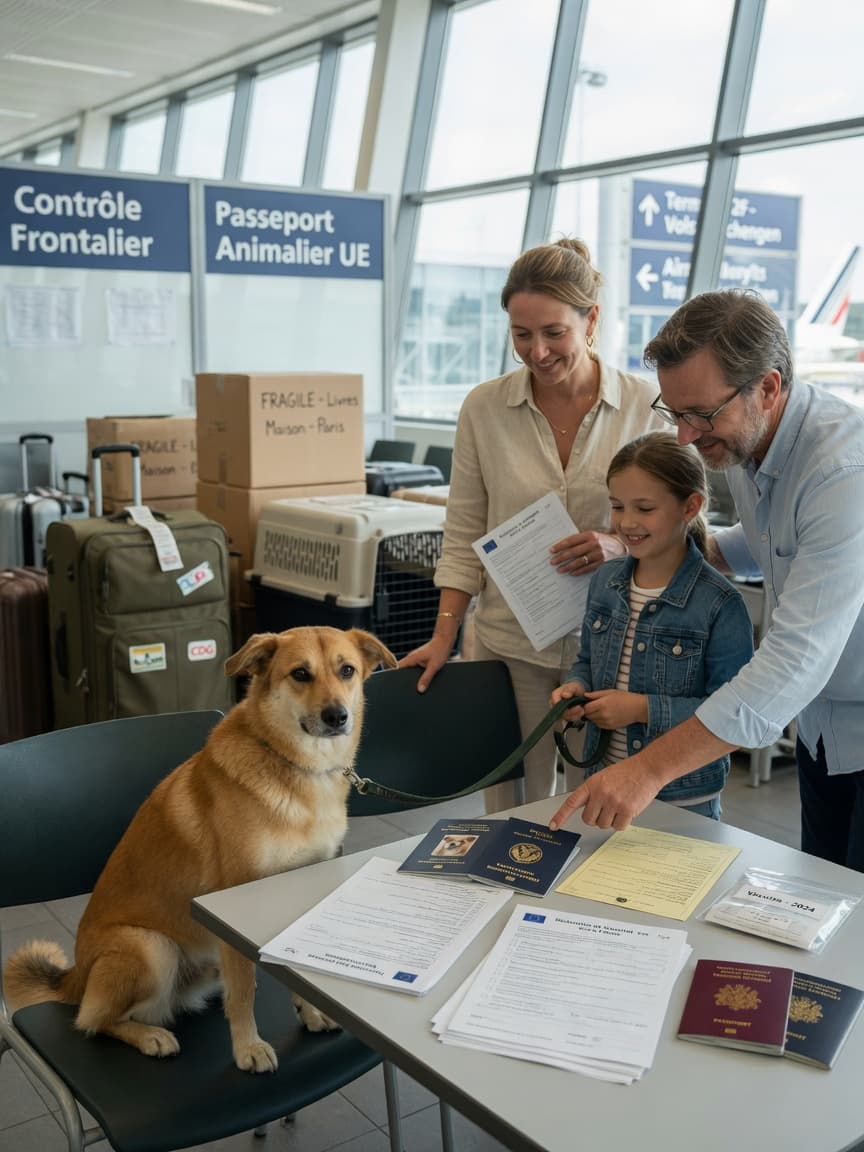
Moving to France with a Pet: What Expats Need to Know
France has long been a top destination for European expats — and their pets. Whether you're relocating from Germany, the UK, Spain, Belgium, or the Netherlands, France's combination of natural beauty, excellent healthcare (for humans and animals alike), and genuinely welcoming attitude towards pets makes it an appealing permanent home. Understanding the requirements before you arrive will make the transition smooth for every member of your family.
This guide covers both the import requirements for bringing a pet to France and the steps you'll need to take once you're settled in — including the French national identification system, annual vaccination requirements, and regional breed restrictions.
Bringing Your Pet to France: Import Requirements
From EU Member States
Moving from another EU country to France is administratively straightforward. Your pet needs:
- An ISO-compatible microchip (11784/11785 standard) or an official tattoo applied before 3 July 2011
- A valid EU Pet Passport issued by an authorised vet
- A current rabies vaccination recorded in the passport
- A 21-day wait after a first vaccination before entry (not applicable to valid boosters)
France does not require additional treatments (e.g., tapeworm) for pets entering from EU member states. Border checks are generally routine for EU pet travel, but having your documentation readily accessible at any crossing is always wise.
From the United Kingdom (Post-Brexit)
UK residents moving to France now require an Animal Health Certificate (AHC) instead of an EU Pet Passport. The AHC must be issued by an Official Veterinarian (OV) in the UK and is valid for 10 days from the issue date. For a permanent move, this means timing your travel carefully and arranging the OV appointment within the 10-day window before your departure date.
Once in France, you will not need another AHC unless you travel back to the UK and return. Your pet can be re-documented with a French EU Pet Passport through a French vet, which will then serve as their ongoing travel document for intra-EU movement. The Guardian has published detailed expat guides covering the practical experience of British families relocating to France with pets post-Brexit.
The French Identification System: ICAD
France operates a mandatory national pet identification system called ICAD (Identification des Carnivores Domestiques). All dogs and cats in France must be registered in the ICAD database. For dogs, registration is mandatory; for cats, it has been mandatory since 2024 under updated French animal welfare legislation.
When you relocate to France with a pet, you (or your vet) must update the ICAD database with your French address and contact details. The process is typically handled by your French vet at your first consultation. ICAD registration is separate from your EU Pet Passport — it's a domestic database used by French authorities, shelters, and vets to reunite lost pets with owners.
If your pet is already microchipped from another EU country, the chip number is the link — the ICAD entry is simply updated with your French details. If for any reason your pet carries only a tattoo (permitted for animals tattooed before July 2011), your French vet can advise on whether a chip is now required.
Finding a French Veterinarian
France has an excellent and widely accessible veterinary network. Finding a local vet (vétérinaire) should be one of your first tasks on arrival. In rural France, vet practices may be less dense than in cities — research availability in your specific area before finalising your move.
Your French vet will:
- Register your pet in ICAD with your French details
- Issue a French-format EU Pet Passport (particularly useful for UK expats)
- Advise on region-specific parasite prevention (tick and heartworm risk varies significantly across France)
- Set up annual vaccination schedules aligned with French veterinary standards
ESCCAP's France-specific parasite maps show significant regional variation in tick risk, Leishmania risk (present in southern France), and heartworm risk (Dirofilaria) in the south and along river valleys. If you're moving to Provence, Languedoc, or Occitanie, discuss antiparasitic protocols appropriate to southern France with your vet — they may differ from what was recommended in your home country.
French Breed Restrictions
France divides dogs into two categories under its breed-specific legislation:
- Category 1 (attack dogs): Includes dogs resembling Pit Bull Terriers, Tosa Inus, and similar types without a pedigree. These dogs are illegal to import, sell, give away, or breed in France. Category 1 dogs cannot be taken into public spaces and face eventual phase-out through no-breeding orders.
- Category 2 (defence dogs): Includes pedigree American Staffordshire Terriers, Rottweilers, and Tosa Inus. Category 2 dogs can be kept but must be muzzled and on a leash in all public spaces. The owner must obtain a permis de détention (ownership permit) from the local prefecture.
If you own a breed that may fall into either category, consult a French vet or the local prefecture before your move. BBC News' France coverage has reported on ongoing debates in France about breed-specific legislation and potential reforms.
Annual Obligations in France
Once settled in France, ongoing requirements include:
- Rabies vaccination: Mandatory for dogs in France and essential for any cross-border travel. Boosters every 1–3 years depending on the vaccine used.
- Leptospirosis vaccination: Strongly recommended by French vets and often required by kennels; annual booster.
- Distemper, hepatitis, and parvovirus: Core vaccines, typically given every 3 years after initial puppy course.
- Antiparasitic treatment: Frequency and products vary by region; discuss with your French vet.
- Dog licence (taxe sur les chiens): No longer applied nationally, but some municipalities retain a local levy — check with your mairie (local council).
Practical Life with Pets in France
One of the genuine pleasures of living in France with a dog is how naturally animals are integrated into daily life. Dogs are routinely welcomed in cafes, many restaurants, and most market environments. Trains (SNCF) accept dogs with a ticket, and rural France offers exceptional walking terrain. French parks in cities are generally leash-required, but designated off-leash areas (espaces canins) are increasingly common in larger communes.
Key Takeaways
- EU residents need an EU Pet Passport with current rabies vaccination to move to France with a pet.
- UK nationals need an AHC (Animal Health Certificate) from an OV, issued within 10 days of travel.
- All pets must be registered in the French ICAD database — handled by your local vet after arrival.
- Category 1 breeds are effectively illegal in France; Category 2 breeds require a permis de détention.
- Parasite risk varies significantly across France — discuss regional prevention protocols with your French vet.
- France is genuinely welcoming to pets in daily public life — dogs in cafes and restaurants is the cultural norm.
Set Up Your Pet for French Life
From quality French-approved pet food to stylish travel accessories, Zooplus delivers across France with an excellent selection suited to every breed and size.
Shop on Zooplus → for premium pet food, antiparasitic treatments, and travel gear delivered to your new French home.