
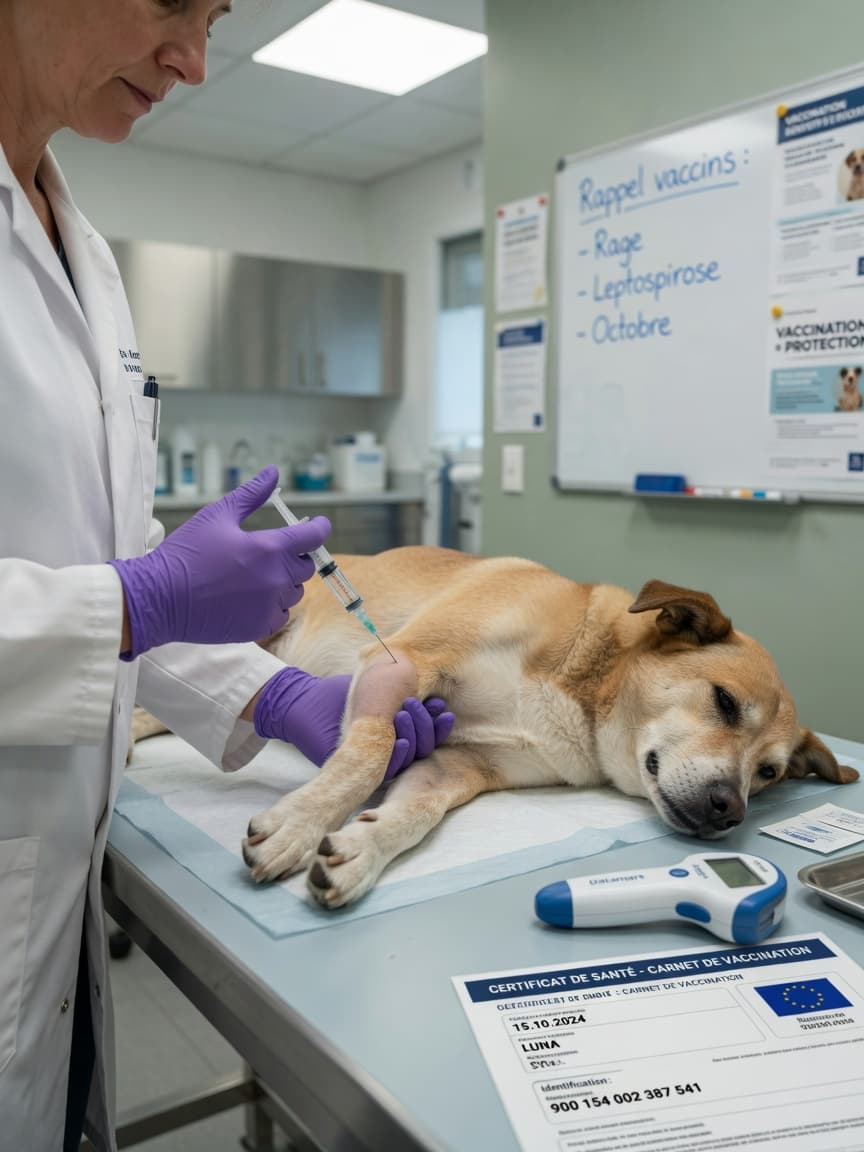
Getting the Rules Wrong Can Mean Months of Quarantine
Pet travel regulations are unforgiving. A missed date on a rabies vaccination, a titre test done before the required waiting period, or a microchip implanted after vaccination rather than before — any one of these errors can result in your animal being refused entry or placed in quarantine at your expense. Understanding the rules before you book travel is not optional; it is the difference between a successful trip and a very expensive mistake.
The Foundation: Microchip First, Then Vaccination
This is the most commonly missed rule. Before any rabies vaccination can be recorded as valid for travel purposes, your pet must be microchipped. The microchip provides the unique identifier that links the animal to its health documentation. If a rabies vaccine is administered before the microchip is implanted — or if the microchip cannot be read at the point of travel — the vaccination is considered invalid for travel purposes and the process must restart.
The microchip must comply with ISO standard 11784/11785, which is the international standard used across the EU, UK and most third countries. Have the chip implanted and its number recorded by your vet before any travel-related vaccinations are given.
The GB Pet Health Certificate and What Replaced the EU Pet Passport
Since January 2021, UK-issued EU pet passports are no longer valid for travel from Great Britain to the EU or Northern Ireland. They were replaced by the Animal Health Certificate (AHC), issued by an Official Veterinarian (OV) within ten days of travel. The AHC is a single-use document — it covers one journey only, unlike the old passport which was reusable.
Northern Ireland follows different rules under the Windsor Framework and continues to use EU pet passports. Dogs travelling from NI to Ireland or the EU mainland fall under this system. Dogs travelling from Great Britain require an AHC from a registered OV, and you must check the specific entry requirements of your destination country, as some EU member states have additional requirements beyond the AHC.
Rabies Vaccination Requirements for EU Travel
For travel from GB to most EU countries, a valid rabies vaccination is required. The vaccine must have been administered after microchipping and recorded in the official documentation. Booster rules vary: if the booster is given within the valid period of the previous vaccine (as specified by the manufacturer), protection is considered continuous. If the booster is given late — after the previous vaccine has expired — it is treated as a primary vaccination, and a 21-day waiting period applies before the animal can travel.
The 21-day wait applies after the primary vaccination course is completed. Animals vaccinated for the first time must wait 21 days from the date of vaccination before entering the EU. Travelling within this window will result in refusal at the border.
Titre Testing: What It Is and When You Need It
A rabies antibody titre test measures whether an animal has sufficient antibody levels in its blood to demonstrate adequate immune response to vaccination. The internationally accepted threshold is 0.5 IU/ml or above, measured at an EU-approved laboratory. This test is not required for routine travel between GB and the EU, but it is mandatory for travel to certain third countries — and for re-entry to the UK from those countries.
When a Titre Test Is Required
If you are travelling from the UK to a country outside the EU and EEA — or returning from one — titre testing requirements depend on that country's disease-free status. Countries classified as unlisted (not on the UK's approved list for simplified entry rules) require titre testing before an animal can return to the UK. The test must be carried out by an approved laboratory, at least 30 days after the rabies vaccination was administered, and at least three months before the animal enters the UK.
This three-month waiting period after a successful titre test is critical and non-negotiable. Planning travel to unlisted countries without factoring in this timeline is the most common error that leads to animals being quarantined on return.
Countries That Commonly Require Titre Testing
Rules change and should always be verified with the relevant authorities immediately before travel, but countries that have historically required titre testing for entry or return include Japan, Australia, New Zealand, Malaysia and several Middle Eastern and South American nations. The APHA (Animal and Plant Health Agency) and DEFRA maintain updated guidance for GB-based owners.
Tapeworm Treatment: The Rule That Catches Dog Owners Off Guard
Dogs — not cats — entering GB from most EU countries and listed third countries must be treated for tapeworm (Echinococcus multilocularis) by a vet between one and five days before arrival. This treatment must be recorded in the AHC or pet passport. Without it, entry can be refused. This requirement does not apply to dogs travelling from Finland, Ireland, Malta, Norway or Northern Ireland.
Planning a Realistic Timeline
Getting travel documentation right requires working backwards from your departure date. A realistic minimum timeline for a dog travelling from GB to an EU country for the first time might look like this: microchip implanted, then rabies vaccination at least 21 days before travel, then AHC issued within ten days of departure. If you are returning from an unlisted country, add titre testing at least 30 days after vaccination and three months before UK re-entry into your planning horizon.
Contact your vet as soon as international travel is on the horizon, not two weeks before you leave. Official Veterinarians have limited availability and AHCs require an appointment that cannot always be booked at short notice.
Checklist for Pet Travel
- Microchip implanted and readable before any travel vaccinations are given
- Rabies vaccination given after microchipping, with at least 21 days before first EU entry
- Animal Health Certificate obtained from an Official Veterinarian within ten days of departure
- Booster vaccinations kept within manufacturer-specified intervals to avoid restarting the 21-day clock
- Titre test arranged if travelling to or returning from an unlisted third country — allow at least three months plus 30 days post-vaccination
- Tapeworm treatment for dogs within one to five days of returning to GB from most countries
- Destination country requirements verified directly with their official authorities before travel
Consult your vet well in advance of any international travel and ask to speak with a registered Official Veterinarian who can issue the required health certificate. Rules are updated periodically; always verify current requirements through DEFRA or APHA rather than relying on information that may be outdated.