
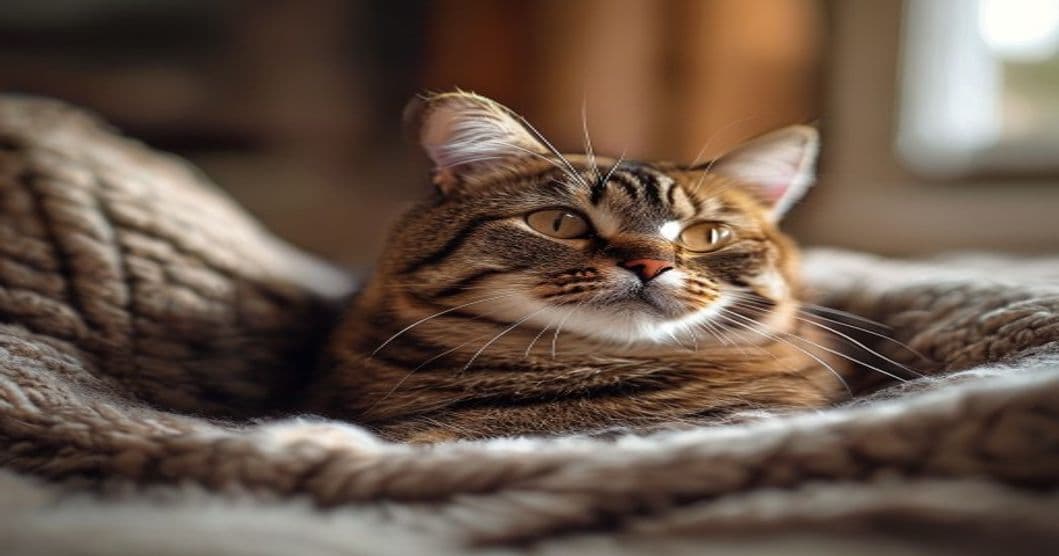
Why Do Cats Headbutt You? Bunting Explained
Your cat walks up with a purposeful stride, plants their forehead squarely against your shin, and pushes. Or maybe they climb onto your chest, look you in the eyes with maximum intensity, and then — boop — press their tiny skull against your nose. If you've experienced this, congratulations: you've been bunted, and your cat is deeply, sincerely fond of you.
But why do cats do this? What's happening chemically, socially, and evolutionarily when a cat headbutts a human? The answer involves scent glands, social bonding, trust, and a communication system that goes far deeper than most people realize.
What Is Bunting, Exactly?
Bunting is the term ethologists use to describe when a cat presses their head — typically the forehead, cheeks, or chin — against another animal or object. It's distinct from rubbing (where the cat slides their cheek along a surface) though both behaviors are related. Both involve the transfer of scent from glands concentrated in the face.
Cats have scent glands located at specific points around their head: the temporal glands near the corners of the eyes, the perioral glands around the mouth, and the submandibular glands under the chin. When a cat bunts you, they are depositing their personal chemical signature on you. You are being marked as a member of their social group — their colony, their family, their safe zone.
The Science of Scent Communication
Scent is the primary language of the feline world. While humans communicate mostly through speech and facial expression, cats have evolved an extraordinarily sophisticated chemical communication system using pheromones — chemical signals detected through the vomeronasal organ (also called Jacobson's organ), located in the roof of the mouth.
When cats bunt each other or objects in their environment, they create what behaviorists call a "group scent" — a shared chemical profile that binds members of a social group together. In multi-cat households, you'll often see cats bunt each other to reinforce social bonds, especially after returning home from a vet visit that has temporarily altered their scent.
The ASPCA notes that facial pheromone deposition through bunting is a positive affiliative behavior — meaning it signals friendly, bonded relationships rather than dominance or aggression.
Bunting Versus Rubbing: What's the Difference?
While bunting involves direct head-pressing contact, allorubbing — where cats rub their entire body, especially cheeks and flanks, along a person or object — is related but slightly different in function. Bunting tends to be more intentional and directed at specific individuals (particularly trusted ones), while rubbing is often more about scent-marking territory and familiar objects.
When your cat specifically seeks you out to press their forehead against yours, that's personal. That's social bonding, not just environmental marking. It means you, specifically, are important to them.
Cats Don't Bunt Strangers
Here's the part that should make you feel genuinely special: cats are selective about who they bunt. Unlike some dogs who will greet virtually every human with enthusiasm, cats reserve bunting for individuals they genuinely trust and feel safe around. Research from Cornell's Feline Health Center supports that cats form differentiated attachment bonds with humans — and bunting is one of the clearest behavioral indicators of a secure attachment.
If your cat bunts a new visitor, that's a very good sign. If they never bunt anyone in the household but suddenly start bunting you after a period of distance, they're communicating a shift in their social relationship with you.
Is It Always Affectionate?
Mostly, yes — but context matters. Bunting is almost always a positive behavior, but there are a few nuances:
- Social bunting: The most common form. Your cat is bonding with you and confirming your place in their social group.
- Attention-seeking bunting: Cats quickly learn that headbutting a human usually results in petting, attention, or food. If your cat bunts you right before their usual meal time, they've figured out that it's effective.
- Stress-related marking: In high-stress situations, cats may increase facial marking behaviors as a way to create familiarity in their environment. This is essentially a self-soothing behavior — surrounding themselves with their own scent makes a stressful space feel safer.
Should You Bunt Back?
This is a fun one. The short answer is: kind of, yes. You can reciprocate by gently touching your forehead to your cat's head or offering your forehead for them to press against. Many cats respond very positively to this — it's communicating back in their language.
You can also offer your knuckle or the back of your hand near their head and let them choose to bunt it. This is a low-pressure, cat-directed version of the greeting and works well with cats who are a little shy or selective about contact.
Bunting Between Cats
In multi-cat households, bunting between cats is a positive sign of social harmony. When you see your cats bunt each other, it means they've accepted each other into their social group — a process that can take weeks or months after an introduction. If you're introducing a new cat to a resident cat, successful inter-cat bunting is one of the milestones you're hoping to see.
According to AVMA cat behavior guidance, affiliative behaviors between cats — including mutual grooming (allogrooming) and bunting — are reliable indicators of a stable, low-stress social relationship.
What If Your Cat Has Never Bunted You?
Not every cat is a bunter. Personality, early socialization, and individual temperament all play roles. Some cats express affection in completely different ways — through slow blinking, following you from room to room, sitting near (but not on) you, or presenting their belly. Don't take it personally if your cat isn't a big bunter. They may simply have a different communication style.
If your cat used to bunt you and has stopped, it might be worth paying attention to whether anything has changed in the environment — new people, new pets, changes in routine, or health issues that make physical contact uncomfortable (such as a head or neck pain issue).
Key Takeaways
- Bunting is the act of pressing the head or cheeks against a person or object, driven by scent glands in the cat's face.
- When a cat bunts you, they're depositing their scent on you — marking you as a trusted member of their social group.
- Cats are selective bunters; if your cat headbutts you, it's a genuine sign of trust and affection.
- You can reciprocate by gently offering your forehead or knuckle for the cat to press against.
- Bunting between cats in a multi-cat household is a positive sign of social harmony.
- If a cat that previously bunted stops doing so, changes in environment or health may be worth investigating.
References
- Bradshaw JWS, Casey RA, Brown SL. "The Behaviour of the Domestic Cat." CAB International. 2012. PMID: 22345178
- Vitale KR, Behnke AC, Udell MAR. "Attachment bonds between domestic cats and humans." Current Biology. 2019;29(18):R864-R865. PMID: 31553906