
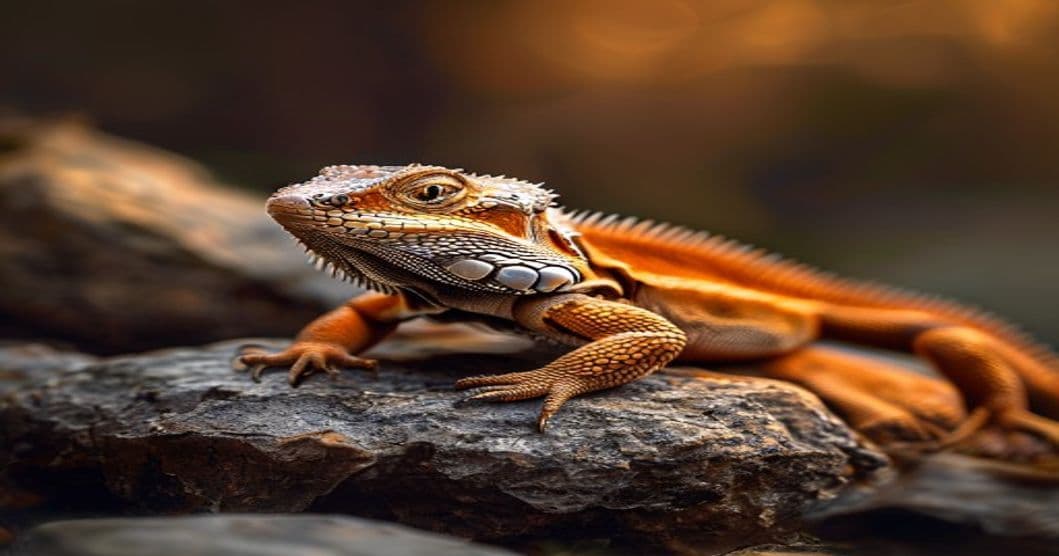
Why Lighting Is the Foundation of Bearded Dragon Health
Bearded dragons originate from the arid interior of Australia — a landscape of intense sunshine, bone-dry heat, and dramatic daily temperature cycles. Every system in their body has evolved to function within those specific environmental conditions. When we bring bearded dragons into our homes, we take on the responsibility of recreating that environment with as much accuracy as possible. Nothing matters more to a bearded dragon's long-term health than getting the lighting right, and unfortunately nothing is more frequently done inadequately by first-time owners.
There are three distinct lighting requirements that must be addressed for a bearded dragon to thrive: ultraviolet B radiation for metabolic health, a basking zone for thermoregulation, and an appropriate light-dark cycle for circadian rhythm and seasonal health cues. Each serves a different biological function and requires a different approach.
UVB Lighting: The Non-Negotiable
Bearded dragons are diurnal — active during the day — and in their natural habitat they bask in sunlight for many hours. Sunlight contains ultraviolet B radiation, which penetrates the skin and triggers the synthesis of vitamin D3. Without adequate D3, bearded dragons cannot absorb calcium from their food, regardless of how calcium-rich that food is. The result is metabolic bone disease (MBD), a devastating and sadly very common condition in captive bearded dragons characterised by soft, deformed bones, tremors, difficulty walking, and in severe cases, pathological fractures.
No dietary supplement fully replaces UVB light. Oral D3 supplementation can help bridge gaps, but the body regulates D3 production from UVB naturally, preventing toxicity — whereas excessive oral D3 supplementation can cause hypercalcaemia. The gold standard is always a high-quality UVB light source combined with appropriate supplementation, not one or the other alone.
Choosing the Right UVB Bulb
Not all UVB bulbs are equal. For bearded dragons, a T5 HO (High Output) tube light producing a UVI (UV Index) of 3 to 5 in the basking zone is widely recommended by reptile veterinarians and herpetologists. This corresponds to a bulb rated at 10 to 12 percent UVB output. Compact coil UVB bulbs are significantly less effective and have been associated with eye damage in some reptiles — they should be avoided.
The positioning of the UVB light matters as much as the bulb specification. The basking spot should fall within the photozone where the UVI reaches the recommended level, which depends on the specific bulb, the distance from the bulb to the basking surface, and whether the bulb is mounted inside or outside the enclosure (glass and most plastic filter out UVB). Manufacturers provide photozone data for different mounting heights; use this information rather than guessing.
UVB bulbs degrade over time. Even when still producing visible light, the UVB output of most bulbs falls to insufficient levels after 6 to 12 months of use, depending on the brand and hours of operation. A UV meter (solarmeter) allows owners to track actual output levels. Without one, replace the bulb every 6 months as a precautionary minimum.
Basking Lighting: Temperature and Gradient
Bearded dragons are ectotherms — they regulate their body temperature through behaviour, moving between warmer and cooler areas of their environment. A correct thermal gradient is essential for digestion, immune function, and activity. A basking zone that is too cool means a dragon cannot properly digest food; one that is too hot risks hyperthermia and burns.
The target basking surface temperature for an adult bearded dragon is between 40 and 43 degrees Celsius, measured at the basking surface itself using an infrared temperature gun — not the ambient air temperature. The cool end of the enclosure should sit between 24 and 28 degrees Celsius, with an ambient mid-range around 30 to 32 degrees.
Basking spots are typically created with incandescent halogen flood bulbs or purpose-designed reptile basking bulbs. The wattage required depends on the distance from the bulb to the basking surface and the ambient room temperature. A 50 to 100 watt bulb suspended at the correct height usually achieves the target temperature, but always verify with a temperature gun before relying on an assumption. Mercury vapour bulbs combine basking heat and UVB in a single unit and are a viable option for larger enclosures, though they produce very high heat output and require careful distance management.
Positioning the Basking Spot
The basking area should be positioned at one end of the enclosure, allowing the opposite end to remain at the cooler ambient temperature. A natural basking perch — a flat rock or thick branch — positioned at an appropriate height beneath the basking bulb gives the dragon a solid surface to absorb radiant heat from above while also absorbing heat stored in the basking surface from below. This replicates how dragons behave on sun-warmed rocks in the wild and maximises the efficiency of thermoregulation.
Night Cycles: Darkness Matters More Than You Think
Bearded dragons need a clear light-dark cycle that reflects natural photoperiods. During the day (12 to 14 hours of light in summer, 10 to 12 in winter), all lights should be on. At night, all visible-spectrum lights should be switched off completely.
A common misconception is that red or blue "night" bulbs are acceptable for providing supplemental warmth after dark without disrupting sleep. Current evidence strongly suggests that bearded dragons can perceive these wavelengths and that they do disrupt sleep patterns, stress responses, and hormonal cycles over time. If night-time temperatures in the enclosure fall below approximately 18 degrees Celsius, a ceramic heat emitter (which produces heat but no light) is the appropriate solution.
Seasonal light cycle variation also matters for long-term health. Bearded dragons naturally experience a period of reduced activity or brumation (a reptile equivalent of hibernation) during winter months, triggered in part by shorter day length. Maintaining an artificially constant 14-hour photoperiod year-round can disrupt reproductive health and hormonal cycles. Gradually adjusting light hours across the year — simulating natural seasonal change — supports better overall physiological health in captive bearded dragons.
A Practical Daily Lighting Routine
A timer-controlled lighting system removes the guesswork and ensures consistency. Set the UVB and basking lights to come on simultaneously at a fixed morning time and switch off in the evening. The ceramic heat emitter, if required, can remain on a separate thermostat-controlled circuit to maintain safe night temperatures without overheating. Check UVI readings monthly, replace UVB bulbs on schedule, and verify basking temperatures whenever a bulb is changed or repositioned.
Correct lighting is not an optional upgrade for bearded dragon care — it is the difference between an animal that thrives and one that slowly deteriorates from preventable disease. The investment in quality equipment and ongoing monitoring pays dividends in the form of a healthy, active, long-lived dragon.