
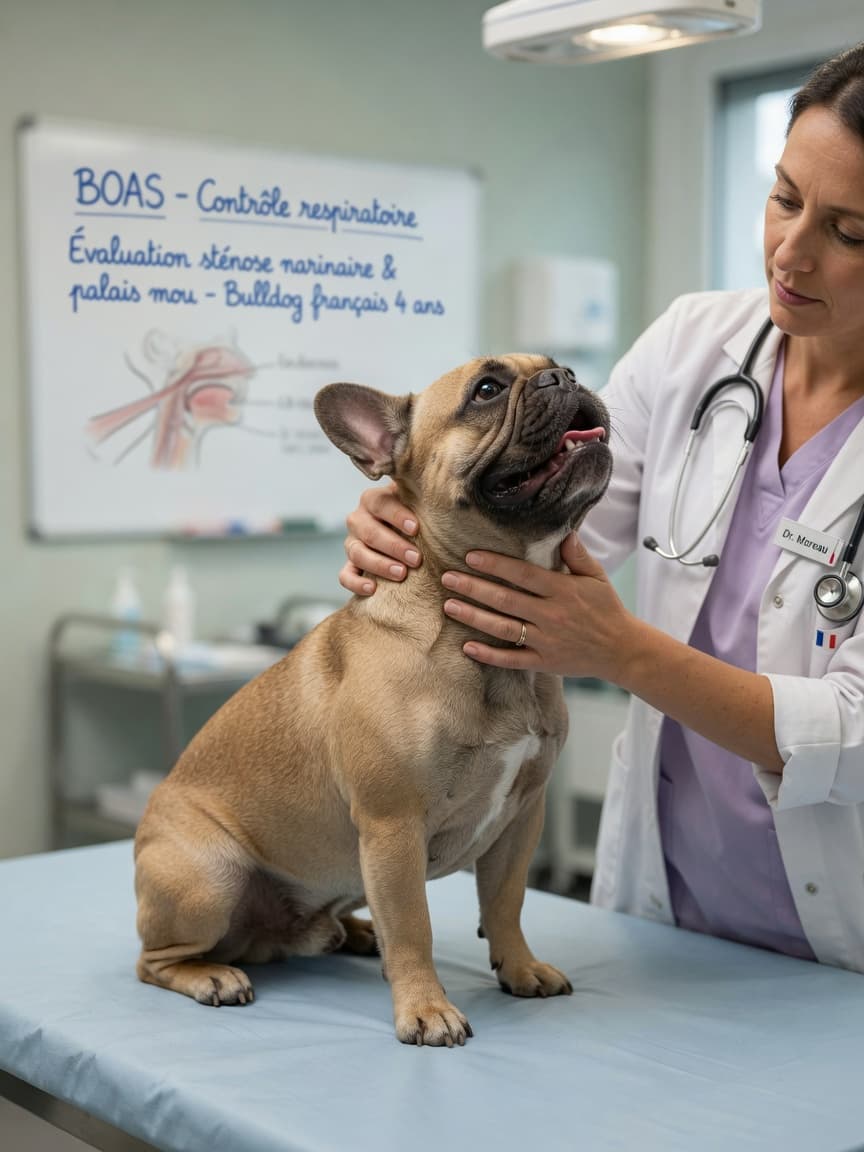
When Snoring Is More Than Cute
Around one in two flat-faced dogs show clinically significant breathing difficulty, yet many owners assume the snorting and wheezing are simply part of the breed's character. Brachycephalic Obstructive Airway Syndrome (BOAS) is a collection of anatomical abnormalities that restrict airflow, and in severe cases it can become life-threatening. If your French Bulldog strains to catch a breath after a short walk, or your Pug turns blue around the gums in warm weather, this is not normal — it is a medical condition that warrants attention.
What Exactly Is BOAS?
Brachycephalic breeds are those selectively bred for shortened skulls and flattened faces. The bone structure is compressed, but the soft tissue — nostrils, soft palate, throat — does not reduce proportionally. The result is a set of anatomical mismatches that obstruct the upper airway.
The Four Main Abnormalities
- Stenotic nares: Nostrils so narrow that the dog must work hard to draw air through them.
- Elongated soft palate: Excess tissue at the back of the throat partially blocks the windpipe during inhalation.
- Hypoplastic trachea: A windpipe that is narrower than it should be for the dog's size, reducing total airflow capacity.
- Everted laryngeal saccules: Small pouches inside the larynx that turn outward under the constant negative pressure of laboured breathing, further obstructing the airway.
Most affected dogs have more than one of these abnormalities simultaneously, which is why the condition is described as a syndrome rather than a single defect.
Breeds Most Commonly Affected
French Bulldogs, English Bulldogs, Pugs, Boston Terriers, Shih Tzus, Boxers, and Cavalier King Charles Spaniels top the list. However, BOAS is not exclusive to dogs: Persian and Himalayan cats share analogous anatomy and can experience similar respiratory compromise. Among dogs, French Bulldogs and Pugs are statistically the most severely affected, with studies suggesting a majority require some form of veterinary intervention during their lifetime.
Recognising the Signs
Because many owners have grown up seeing these breeds breathe noisily, the warning signs are frequently normalised. Knowing what to look for can make an enormous difference to a dog's quality of life.
Everyday Symptoms
- Loud snoring, snorting, or gurgling at rest as well as during exercise.
- Rapid tiring on walks that would be routine for other breeds.
- Open-mouth breathing or extended neck posture to maximise airflow.
- Difficulty eating or swallowing, sometimes accompanied by regurgitation.
- Sleep disruption, including waking suddenly to reposition the head.
Emergency Warning Signs
- Blue or pale gums (cyanosis), indicating dangerously low oxygen levels.
- Collapse or extreme distress following mild exertion.
- Breathing that appears to involve the entire body, with visible effort from the flanks and neck.
These emergency signs require immediate veterinary attention. Dogs with severe BOAS can deteriorate very rapidly in hot or humid conditions.
Diagnosis and Treatment Options
A veterinarian will typically assess the nostrils visually and may use endoscopy to examine the pharynx and larynx directly. Grading systems exist — the most widely used classifies BOAS from Grade 0 (no signs) to Grade 3 (severely compromised) — and a functional exercise test may be used to reveal symptoms that are not obvious at rest.
Surgical Correction
Surgery is the most effective long-term intervention for moderate to severe BOAS. Procedures include widening the nostrils (rhinoplasty), shortening the soft palate, and removing everted laryngeal saccules. Outcomes are significantly better when surgery is performed early, ideally before two years of age and before secondary changes worsen the obstruction. Many dogs show dramatic improvement in breathing capacity, exercise tolerance, and sleep quality post-operatively.
Conservative Management
For mild cases or dogs awaiting surgery, management focuses on reducing triggers: keeping the dog cool and well away from heat and humidity, avoiding strenuous exercise, maintaining a healthy body weight (obesity compounds airway narrowing substantially), and using a harness rather than a collar to minimise throat compression.
The Weight Factor
Excess body weight is one of the most modifiable risk factors in BOAS. Fat deposits around the throat and chest directly reduce airway diameter and increase the work of breathing. Even modest weight loss — five to ten percent of body weight — can produce measurable improvements in respiratory function. A veterinarian or veterinary nurse can calculate your dog's ideal weight and advise on caloric targets.
Practical Steps for Brachycephalic Dog Owners
- Schedule a BOAS assessment with your vet if you have not already done so, particularly before the dog reaches two years of age.
- Never leave a flat-faced dog in a car or conservatory, even briefly; heat stress can be fatal within minutes.
- Walk in the coolest part of the day and keep sessions short, watching closely for signs of distress.
- Switch to a well-fitted harness to keep pressure off the trachea.
- Keep your dog at a lean, healthy body weight — discuss a target with your vet.
- If you are considering a brachycephalic puppy, choose a breeder who health-screens breeding animals and prioritises wider nostrils and longer muzzle length.
- Consult a vet promptly if breathing seems to worsen, particularly during warmer months.
BOAS is not an inevitable life sentence, but it does require proactive management. Early intervention, whether surgical or conservative, can give a flat-faced dog a substantially more comfortable and active life.