
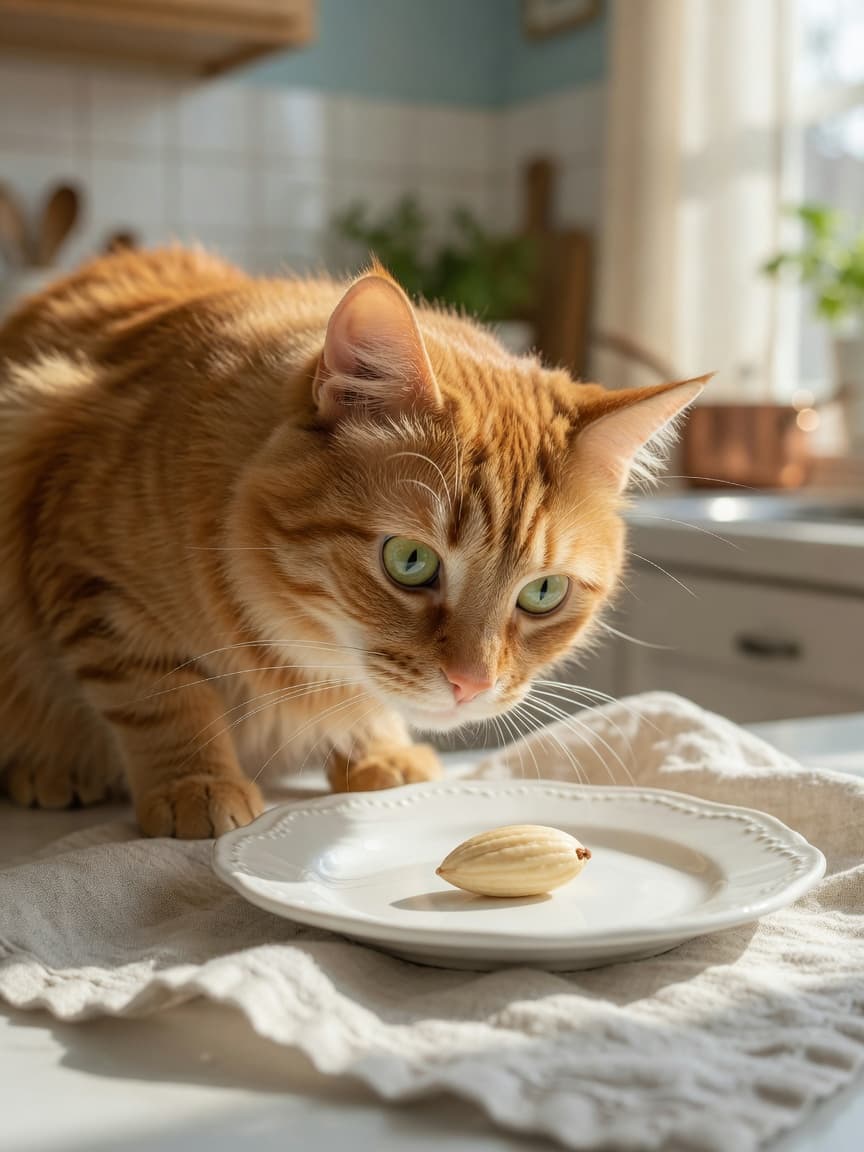
Can Cats Eat Almonds? A Cautious Yes, With Important Limits
The short answer is: almonds are not toxic to cats, but they require caution. Whilst a single almond won't poison your cat, they're not a suitable regular treat and come with genuine risks that every cat owner should understand. As a responsible pet parent, it's worth knowing exactly why almonds sit in a grey area rather than being a straightforward "yes" or "no."
Why Almonds Are Problematic for Cats
Cats are obligate carnivores, meaning their bodies are designed to digest meat, not plant matter. Their digestive systems are relatively simple and not equipped to process nuts efficiently. Almonds present several specific concerns:
Choking and Obstruction Risk: Almonds are hard and can pose a serious choking hazard, particularly for cats who don't chew food thoroughly. A whole almond could potentially cause a blockage in the digestive tract, which would require emergency veterinary surgery.
Digestive Upset: Because nuts are high in fat and fibre, cats often struggle to digest them. This can lead to vomiting, diarrhoea, and stomach discomfort. Even small amounts may trigger these symptoms in sensitive cats.
Nutritional Imbalance: Almonds contain phosphorus and other minerals that, whilst safe in moderation for humans, offer no nutritional benefit to cats and can interfere with their carefully balanced diet.
Fat Content: Almonds are quite fatty. Excessive fat consumption can contribute to pancreatitis in cats—a painful and potentially serious inflammation of the pancreas.
Safe Preparation and Portion Sizes
If you've already given your cat an almond or two and they seem fine, don't panic. The occasional tiny piece, properly prepared, is unlikely to cause immediate harm. However, "safe" almonds means:
Blanched and skinned almonds (with the outer layer removed) are marginally easier to digest than raw or roasted versions. Raw almonds carry more potential for digestive upset, whilst salted or roasted varieties introduce excess sodium and oils that cats don't need.
If you choose to offer an almond at all, it should be crushed into a very small piece—think pea-sized—mixed into their regular food. Never offer whole almonds. A single tiny piece once in a great while is the absolute maximum; this should not become a regular treat.
Better yet, avoid almonds entirely and stick to cat-appropriate treats instead.
Which Cats Should Absolutely Avoid Almonds
Some cats are at higher risk and should never consume almonds:
Kittens and elderly cats have more delicate digestive systems. Cats with a history of digestive problems, pancreatitis, or food sensitivities must avoid nuts completely. Any cat on a restricted diet prescribed by your vet should not eat almonds without explicit permission. Obese cats or those prone to weight gain shouldn't receive fatty treats.
Warning Signs to Watch For
After your cat eats an almond, monitor them for the following symptoms over the next 24–48 hours:
Vomiting or retching, diarrhoea or constipation, loss of appetite, lethargy or unusual quietness, abdominal pain (shown by hunching, reluctance to move, or crying), difficulty swallowing or drooling excessively.
If your cat shows any of these signs, contact your veterinarian promptly. If you suspect a blockage—particularly if your cat is in visible pain, hasn't defecated, or is repeatedly vomiting—seek emergency veterinary care immediately.
The Bottom Line
Almonds are not a safe, regular treat for cats. Whilst they're not acutely toxic in tiny amounts, the risks genuinely outweigh any potential benefit. Your cat receives no nutritional advantage from almonds, and the choking, digestive, and pancreatitis risks are real concerns.
Instead, offer feline-appropriate treats—small pieces of cooked chicken, turkey, or fish. These align with your cat's natural diet and pose far fewer risks. If you're looking to vary your cat's routine or reward them, your vet can recommend safe alternatives tailored to your individual pet.
When in doubt, ask your veterinarian before introducing any new food, especially nuts. Your cat's health is always worth the quick conversation.