
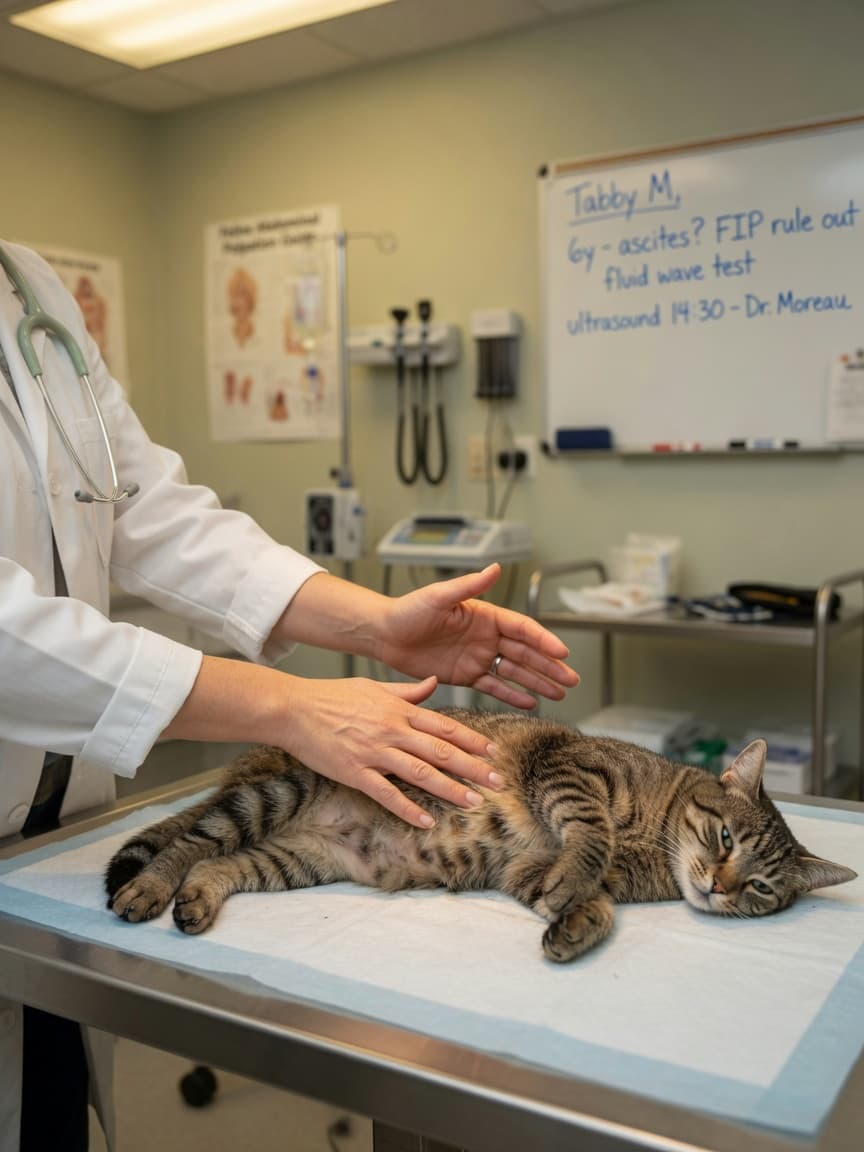
A Diagnosis That Once Felt Like a Death Sentence
For decades, a diagnosis of Feline Infectious Peritonitis meant one thing: a cat owner facing the hardest decision imaginable, usually within weeks. FIP killed reliably and quickly. Then, around 2019, antiviral drugs changed everything — and the veterinary world has not been the same since. Understanding what FIP actually is, how it develops, and what treatment now looks like is essential knowledge for any cat owner, particularly those with young or multi-cat households.
What Is FIP and Where Does It Come From
FIP is caused by a mutated form of Feline Coronavirus (FCoV). Feline Coronavirus itself is extremely common — estimates suggest that between 25% and 40% of household cats carry it, and in multi-cat environments that figure can rise above 80%. In the vast majority of cases, FCoV causes mild or no symptoms: perhaps a brief bout of soft stools, nothing more.
The problem begins when the virus mutates within an individual cat's body. This mutation is not transmitted between cats — the mutated, disease-causing form arises spontaneously in the infected cat. Once the virus shifts its behaviour and begins replicating inside white blood cells (macrophages), the immune system's response drives the destruction of tissues throughout the body. Why some cats undergo this mutation and others do not remains an active area of research, though genetics, immune status, stress, and viral load at initial exposure all appear to play roles.
Recognising the Two Forms of FIP
Wet (Effusive) FIP
The wet form progresses rapidly and is characterised by the accumulation of fluid in the abdomen, chest, or around the heart. A cat may develop a visibly distended belly, laboured breathing, or muffled heart sounds. The fluid itself — a distinctive straw-coloured, protein-rich liquid — is one of the key diagnostic clues a vet will look for during examination.
Dry (Non-Effusive) FIP
The dry form is slower and more insidious. It tends to affect specific organs: the eyes, brain, kidneys, or liver. Neurological signs such as seizures, wobbly gait, or behavioural changes may be the first thing owners notice. Uveitis (inflammation inside the eye) is another hallmark presentation. Because symptoms can mimic many other conditions, dry FIP is notoriously difficult to diagnose without specialist testing.
How FIP Is Diagnosed Today
There is no single definitive test for FIP in a living cat. Diagnosis is built from a combination of evidence: clinical signs, laboratory findings (raised protein levels, low albumin-to-globulin ratio, elevated white cell counts in fluid), imaging, and increasingly, PCR testing of fluid or tissue samples to detect the mutated virus. A test called the Rivalta test can be performed on abdominal fluid and is a low-cost but useful screening tool. Some university and specialist laboratories now offer immunohistochemistry or coronavirus spike protein mutation assays that provide greater certainty. Your vet may refer to an internal medicine specialist for complex cases.
The Antiviral Revolution
The landscape changed dramatically with the development of nucleoside analogue antivirals — most notably GS-441524 and its prodrug form molnupiravir-adjacent compounds — originally developed for human viral diseases. Clinical trials and compassionate-use studies demonstrated remission rates above 80% in cats treated with appropriate protocols. This was previously unthinkable.
Treatment typically involves daily injections or oral tablets over a minimum of 12 weeks, though many specialists now recommend longer courses depending on the form of FIP and the cat's response. Neurological and ocular FIP generally requires higher doses and longer duration. Cats are monitored throughout with repeat blood tests to track protein levels, white cell counts, and organ function.
The challenges are real: the drugs are expensive, the treatment period is demanding, and access has historically been patchy — with many owners obtaining medications through grey-market channels while regulatory approvals were pending. Availability is improving in a number of countries, and licensed veterinary formulations are beginning to reach the market. Speak with your vet about what is currently accessible and legal in your region.
What Remission Means and the Road Ahead
Remission is not a cure in the conventional sense. Cats that complete treatment and remain symptom-free for 12 months post-treatment are generally considered to have achieved sustained remission, and the prognosis for those cats is excellent. Relapse does occur, particularly if treatment was stopped too early or the dose was insufficient — which is why veterinary oversight throughout the entire course is non-negotiable. Do not attempt to self-manage FIP treatment without a vet's involvement.
Ongoing research is examining optimal dosing regimens, the role of immune modulators alongside antivirals, and whether any cats carry residual viral load post-remission. The science is moving quickly.
Reducing Risk in Multi-Cat Households
Because FCoV spreads via faecal-oral routes, practical hygiene measures reduce the burden of initial infection. Keep litter trays scrupulously clean, position them away from food and water, and provide one tray per cat plus one extra. Avoid overcrowding, which raises stress and viral load simultaneously. Kittens are at highest risk of developing FIP following FCoV exposure, so sourcing kittens from breeders who actively manage coronavirus status in their breeding colonies is worthwhile. A vaccine against FCoV exists in some markets, though its use and efficacy in preventing FIP specifically remains a topic of veterinary debate — discuss it with your vet.
Key Takeaways for Cat Owners
- FIP arises from a mutation of common Feline Coronavirus — the mutated form is not contagious between cats.
- Wet FIP progresses rapidly with fluid accumulation; dry FIP affects organs and progresses more slowly.
- Diagnosis requires multiple tests and often specialist input — no single test is definitive.
- Antiviral treatments now offer remission rates above 80% when administered correctly and for a sufficient duration.
- Treatment must be supervised by a veterinarian — never attempt unsupervised antiviral protocols.
- Good hygiene and reduced crowding lower coronavirus exposure in multi-cat settings.