
Why Adopt a Rescue Dog?
Every year, thousands of dogs pass through rescue organisations across the UK. Some are surrendered due to changes in their owner's circumstances; others are stray, abandoned, or removed from neglectful situations. Each one of these animals deserves a second chance, and for the right owner, a rescue dog can be an extraordinarily rewarding companion. That said, adoption is not the same as buying a puppy from a breeder. The process requires a different mindset — one grounded in patience, empathy, and realistic expectations. The information in this guide will help you give your rescue dog the best possible start.
The 3-3-3 Rule Explained
The 3-3-3 rule is a widely used framework in rescue and rehoming circles that describes the typical adjustment timeline for a dog entering a new home. It is a guideline, not a guarantee — some dogs move through the phases more quickly, others more slowly — but it provides a useful structure for understanding what your dog is experiencing and what to expect at each stage.
The First 3 Days: Decompression
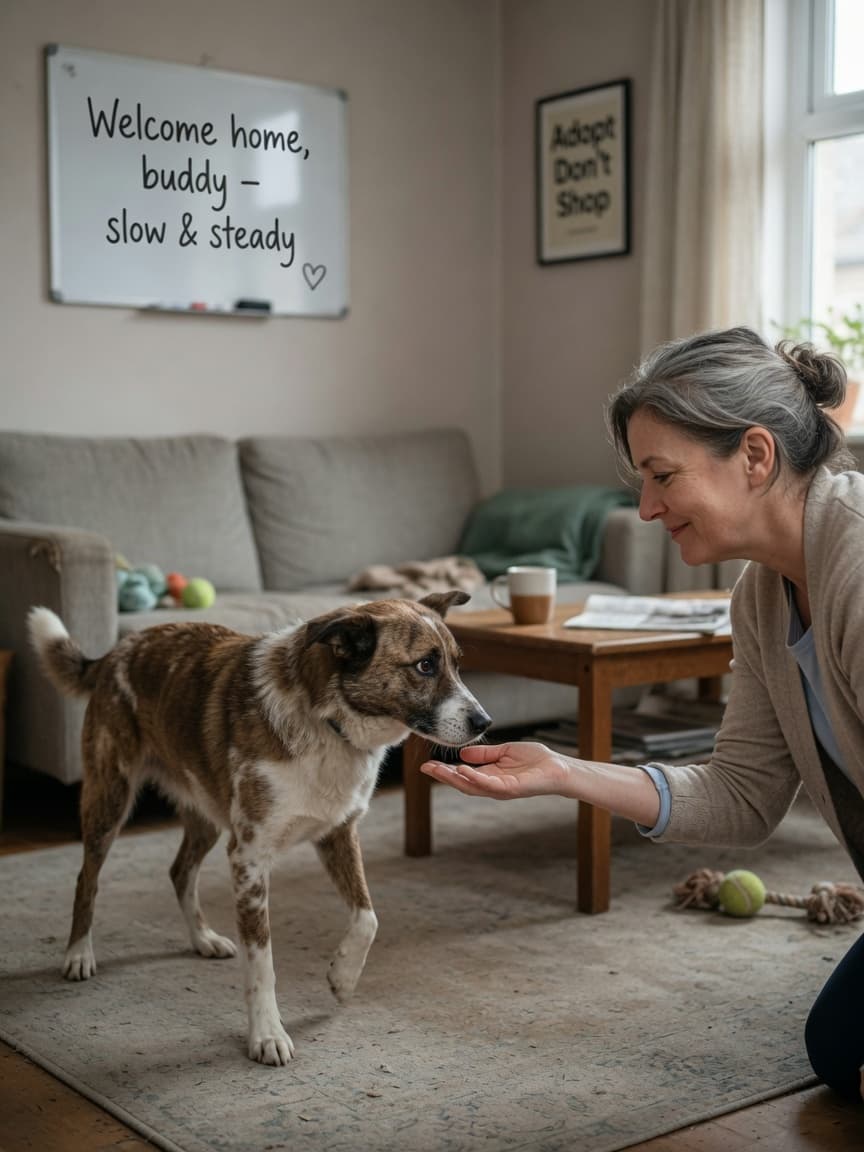
During the first three days, most rescue dogs are overwhelmed. The combination of a new environment, new smells, new sounds, and new people creates a significant sensory and emotional load. A dog in this phase may shut down — eating little, sleeping a great deal, showing no interest in play or exploration. Others may exhibit the opposite response: restlessness, destructive behaviour, pacing, or vocalising. Both are normal expressions of stress. Your job during these three days is simply to provide a calm, safe, and predictable environment. Avoid inviting friends and family to meet the dog, keep outings short, and resist the urge to accelerate bonding through excessive attention. Let the dog set the pace.
The First 3 Weeks: Learning the Routine
After roughly three weeks, most dogs begin to relax into the new household routine. They start to understand when walks happen, when mealtimes are, and what the daily rhythm looks like. This is also when personality begins to emerge — both positive traits and any challenges that were masked during the initial shutdown phase. You may notice the dog beginning to test boundaries, particularly around resource guarding, reactivity on lead, or separation anxiety when you leave the house. This is not regression — it is the dog feeling secure enough to communicate its needs and uncertainties. This is the period to begin basic reward-based training and to introduce a consistent routine.
The First 3 Months: Feeling at Home
By three months, most rescue dogs have genuinely settled. They understand the household rules, trust their owners, and have begun to form a meaningful bond. This is when the full personality of the dog typically becomes clear — the playfulness, the affection, the quirks, the things they love, and the things that unsettle them. Many adopters describe this period as transformative, as they witness the dog come to life in ways they could not have imagined during the early weeks. Continue to build on positive training, socialisation, and routine throughout this period.
Kennel Cough Risk at Adoption
Kennel cough — correctly termed infectious tracheobronchitis — is a highly contagious respiratory infection caused by a combination of viral and bacterial pathogens, most notably Bordetella bronchiseptica and canine parainfluenza virus. It spreads readily in rescue kennels, where dogs are housed in close proximity and share air space. Many rescue organisations vaccinate against kennel cough, but vaccination is not one hundred per cent protective, and the incubation period means a dog can appear healthy at adoption and develop symptoms within the first week or two at home. Symptoms include a harsh, honking cough — sometimes described as a goose honk — retching, and occasionally nasal discharge. Most cases resolve without treatment in two to three weeks, but puppies, elderly dogs, and immunocompromised animals may need veterinary support. Book a post-adoption health check with your vet within the first few days, and inform them if you notice any coughing.
Managing Unknown History
One of the most significant differences between adopting a rescue dog and acquiring a puppy is the absence of a complete history. You may not know what the dog experienced in its early life, whether it was socialised with children or other animals, how it was trained, or whether it has experienced trauma. This uncertainty requires a particular kind of patience. Avoid assumptions based on breed stereotypes. Take time to observe your individual dog's reactions to new stimuli — other dogs, strangers, vehicles, uniforms, children — and give space and support where you notice anxiety or uncertainty. Work with a qualified force-free behaviourist if you encounter significant challenges. Many rescue organisations offer post-adoption support and behavioural advice, so make use of these resources.
UK Rescue Organisations
Dogs Trust
Dogs Trust is the UK's largest dog welfare charity, with rehoming centres across England, Scotland, Wales, and Northern Ireland. They operate a thorough matching process designed to pair adopters with dogs whose needs suit their lifestyle and experience level. Dogs Trust offers lifetime support after adoption and runs educational programmes on responsible dog ownership.
RSPCA
The RSPCA operates animal centres throughout England and Wales and rehomes dogs of all breeds and backgrounds. As the UK's primary animal welfare enforcement body, the RSPCA also takes in dogs removed from neglect and cruelty situations. Their adoption process includes a home check and detailed lifestyle assessment to ensure appropriate matching.
Blue Cross
Blue Cross runs rehoming centres in several locations across the UK and provides veterinary care for animals in their charge. They also offer a pre- and post-adoption advice service and can connect adopters with behavioural support.
Breed-Specific Rescues
For owners set on a particular breed, dedicated breed rescues can be an excellent route. Organisations exist for almost every breed, from Greyhound Rescue West of England to the Labrador Rescue Trust and the German Shepherd Dog Rescue. These rescues tend to have deep breed knowledge and can offer advice on breed-specific health considerations, training approaches, and lifestyle suitability. Finding them is straightforward through the breed club listings maintained by the Kennel Club.
Setting Realistic Expectations
Adopting a rescue dog is not always a linear journey. There will be setbacks. A dog that seemed perfectly house-trained in week two may have accidents in week five. A dog that appeared confident on early walks may begin to show reactivity as it grows more comfortable. These are normal parts of the adjustment process and do not mean the adoption has failed. The adopters who report the greatest satisfaction are consistently those who approached the process with patience, sought help early when challenges arose, and allowed the relationship to develop at the dog's pace rather than their own. Give your rescue dog time, and what you receive in return will far exceed what you put in.