
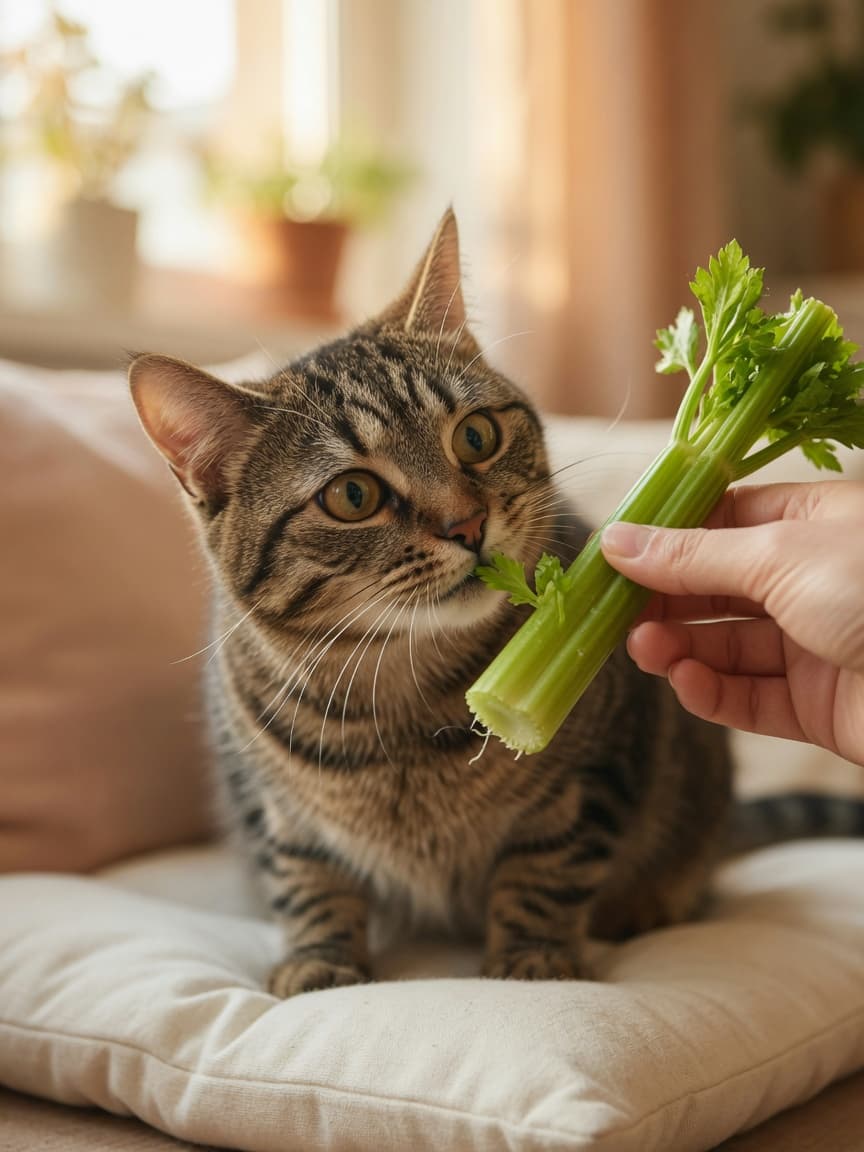
Can Cats Eat Celery?
Yes, cats can eat celery in moderation. Celery is generally safe for cats as an occasional treat, though it offers limited nutritional benefit to your feline friend. If your cat shows interest in a small piece of celery, there's no need to panic—it won't harm them. However, celery should never replace a proper cat diet and should only be offered occasionally.
Understanding Your Cat's Dietary Needs
Cats are obligate carnivores, which means their bodies are designed to thrive on meat-based diets. Unlike humans or dogs, cats require specific nutrients found primarily in animal proteins, including taurine, arachidonic acid, and vitamin A in their pre-formed state. These are essential for heart health, vision, and overall wellbeing. While the occasional vegetable won't hurt, cats lack the digestive enzymes and nutritional requirements that make plant-based foods necessary or particularly beneficial to them.
Why Celery Is Safe for Cats
Celery contains no toxic compounds for cats. It's low in calories, contains some vitamins (including vitamin K and folate), and includes dietary fibre. The vegetable itself poses no poisoning risk, making it safe to offer in small quantities. Some cats may even enjoy the texture or crunch, particularly if they have a playful or curious nature about different foods.
Potential Benefits of Celery
While celery isn't essential for cats, it does offer some minor advantages. The high water content can contribute to hydration, which is particularly useful for cats that don't drink enough water throughout the day. The fibrous nature of celery may also provide minimal digestive support, though this benefit is marginal in obligate carnivores. Some cat owners offer small pieces of celery as an enrichment activity or a low-calorie way to satisfy a cat's curiosity about human food.
How to Serve Celery Safely
If you decide to give your cat celery, follow these simple guidelines:
Cut it into small pieces: Remove any leaves and chop the celery into tiny, manageable pieces to reduce choking risk. Cats have different swallowing mechanisms than humans, and smaller portions are safer.
Remove strings: Celery contains fibrous strings that can be difficult for cats to digest. Peel away these strings as much as possible before offering the vegetable.
Offer only occasionally: Treat celery as you would any non-essential treat. Once every week or two is more than sufficient. This prevents digestive upset and ensures celery doesn't interfere with your cat's nutritionally balanced diet.
Serve plain: Never offer celery that's been salted, seasoned, or cooked with oils, garlic, or onions. These additions can be harmful to cats. Stick to plain, raw celery only.
Monitor your cat's reaction: After offering celery for the first time, watch for any signs of digestive upset, such as vomiting or diarrhoea. If your cat experiences any adverse effects, discontinue celery immediately.
Important Caveats
Celery should never make up a significant portion of your cat's diet or replace meals. Some cats may show no interest in celery whatsoever, which is entirely normal and healthy. If your cat has pre-existing digestive issues, kidney disease, or other health conditions, consult your veterinary surgeon before introducing any new foods, including celery.
Additionally, if your cat has difficulty chewing or swallowing, or if they have a history of choking, it's best to avoid celery altogether. Always prioritise your individual cat's health and temperament when considering new foods.
The Bottom Line
Celery is safe for cats as an occasional treat served in small, plain pieces. However, given that cats are obligate carnivores with specific dietary requirements, celery offers minimal nutritional value and should never be considered essential to your cat's health. If your cat is curious about celery, there's no harm in offering a tiny piece now and then. For questions about your cat's individual dietary needs, always consult with your veterinary surgeon.