
Cat Hair Loss: Causes, Diagnosis & Treatment Guide
Normal Shedding vs. True Alopecia
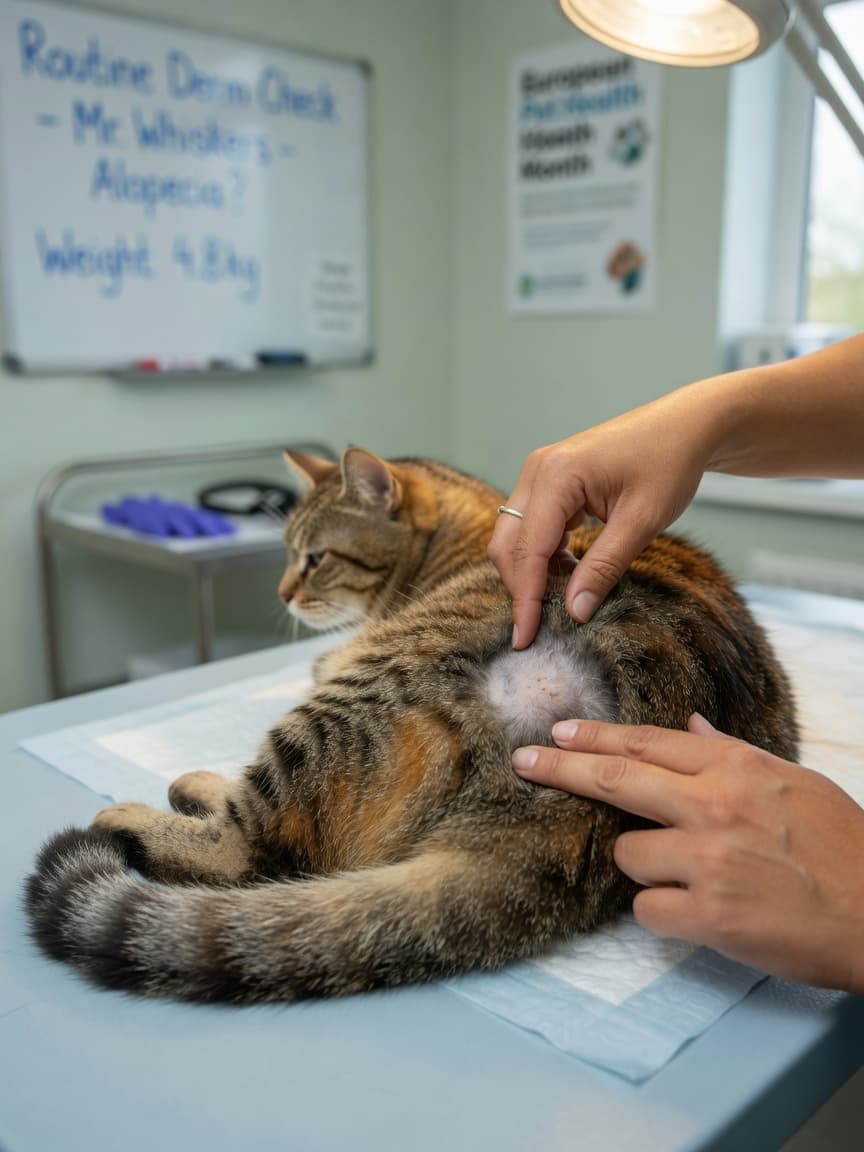
Cats are naturally prolific shedders, especially during seasonal transitions in spring and autumn. A cat losing loose undercoat across furniture, clothing, and floors is not cause for alarm. True alopecia, by contrast, refers to abnormal hair loss that results in thinning, bald spots, or complete absence of fur in defined areas. The difference matters because alopecia is almost always a symptom of an underlying condition rather than a standalone problem.
Normal shedding produces full, healthy hairs that release easily. Alopecia-related hair loss often involves broken hair shafts, hair that pulls out in clumps with minimal resistance, skin redness or scaling underneath, or the cat visibly pulling hair out through overgrooming. Keeping this distinction in mind helps you communicate clearly with your vet and speeds up diagnosis.
Common Causes of Cat Hair Loss
Parasites
Fleas are among the most frequent culprits. Even a single flea bite can trigger Flea Allergy Dermatitis (FAD) in sensitive cats, causing intense itching and subsequent hair loss—most often at the base of the tail and along the lower back. Mites (including Demodex and Cheyletiella) cause mange, which produces scaly, itchy patches with significant hair loss. Ear mites can also drive secondary scratching around the head and neck. A thorough coat examination and skin scraping under a microscope can identify these culprits.
Ringworm (Dermatophytosis)
Despite the name, ringworm is a fungal infection, not a worm. It produces classic circular patches of hair loss with broken, stubby hairs and a slightly scaly or crusty border. It is highly contagious—to other pets and to humans. Young cats, elderly cats, and immunocompromised animals are especially vulnerable. Diagnosis is confirmed via Wood's lamp examination, fungal culture, or PCR testing.
Allergies
Cats can develop allergies to food ingredients (commonly chicken, beef, or fish proteins), environmental allergens (pollen, dust mites, mould), or contact allergens (certain cleaning products, fabrics). Allergic reactions often cause diffuse hair thinning, military dermatitis (tiny scabs scattered across the back), and facial or belly hair loss from constant scratching or licking. Food allergy diagnosis typically requires an 8–12 week strict elimination diet trial.
Hormonal Imbalances
Hormonal conditions such as hyperthyroidism, hypothyroidism (rare in cats), and hyperadrenocorticism (Cushing's disease, also rare) can cause symmetrical, non-itchy hair loss. Cats with hormonal alopecia often have a dull, dry coat that thins progressively over weeks to months. Intact female cats may experience hair loss related to hormonal fluctuations. Blood panels measuring thyroid hormone levels and cortisol are key diagnostic tools here.
Stress and Psychogenic Alopecia
Cats are creatures of habit, and significant environmental changes—a new pet, a move, a change in household routine, or prolonged boredom—can trigger compulsive overgrooming. This is called psychogenic alopecia. The hair loss is typically symmetrical, affecting the belly, inner thighs, and flanks. The skin beneath is usually normal. Diagnosis involves ruling out all physical causes first, since cats rarely groom compulsively in front of their owners, making this condition easy to misidentify.
Overgrooming and Compulsive Behaviours
Beyond stress, some cats overgroom due to chronic pain (e.g., lower back arthritis), neuropathy, or underlying itch from subclinical allergies. Distinguishing between pain-driven and anxiety-driven overgrooming matters because treatment differs significantly. Video recording the cat at home can be invaluable for the vet, as it captures behaviours that wouldn't be seen during a clinic visit.
How Vets Diagnose Hair Loss in Cats
A thorough diagnostic workup typically begins with a detailed history: when did the hair loss start, is it itchy, has anything changed at home, what is the diet? Physical examination includes evaluating the distribution of hair loss (symmetrical suggests hormonal or psychogenic; asymmetrical suggests parasites or infection), skin condition, and lymph node size.
Common diagnostic tests include skin scrapings for mites, fungal culture or PCR for ringworm, cytology to detect bacterial or yeast infections, flea combing, intradermal allergy testing, and blood work. In complex cases, a skin biopsy may be required to rule out immune-mediated conditions or neoplasia (tumours affecting the skin).
Treatment by Cause
Parasites: Monthly broad-spectrum parasite prevention (products containing selamectin, imidacloprid, or fluralaner) eliminates fleas and many mite species. Household decontamination is essential for fleas, as up to 95% of the flea population lives off the pet in carpets and bedding.
Ringworm: Treatment involves antifungal medications (oral itraconazole or terbinafine, plus topical miconazole or lime sulphur dips), strict hygiene protocols, and environmental decontamination. Treatment often lasts 6–12 weeks.
Allergies: Food allergies are managed with a hydrolysed protein or novel protein diet. Environmental allergies may be managed with antihistamines, corticosteroids, or immunotherapy. Apoquel (oclacitinib) and biologics such as Cytopoint are increasingly used in cats with chronic allergic itch.
Hormonal conditions: Hyperthyroidism is managed with methimazole, radioactive iodine therapy, or surgical thyroidectomy. Cushing's disease requires specialist management. Spaying or neutering can resolve reproductive hormone-related hair loss.
Psychogenic alopecia: Environmental enrichment (puzzle feeders, climbing structures, scheduled play), pheromone diffusers (Feliway), and in refractory cases, anti-anxiety medications such as fluoxetine or clomipramine are effective strategies.
Key Takeaways
- Patchy, symmetrical, or rapidly progressing hair loss is not normal and warrants a vet visit.
- Fleas, ringworm, and allergies are the most common causes—but hormonal and behavioural causes must also be ruled out.
- Diagnosis almost always requires more than a visual exam: skin scrapings, fungal culture, and blood work are standard.
- Treatment depends entirely on cause; never use over-the-counter antifungals or steroids without veterinary guidance.
- Stress-induced overgrooming is a genuine medical condition, not a behavioural quirk—it responds well to combined environmental and pharmacological treatment.
- Early diagnosis and targeted treatment give the best chance of full hair regrowth.
References
Moriello KA, et al. (2017). Diagnosis and treatment of dermatophytosis in dogs and cats. Veterinary Dermatology. PubMed
Waisglass SE, et al. (2006). Underlying medical conditions in cats with presumptive psychogenic alopecia. Journal of the American Veterinary Medical Association. PubMed