
Why Mental Enrichment Matters for Dog Welfare
A dog's brain needs regular exercise just as much as its body does. Mental enrichment refers to any activity that encourages a dog to think, problem-solve, investigate, or use its natural instincts in a constructive way. Without adequate cognitive stimulation, dogs become frustrated, develop problem behaviours, and can suffer from chronic stress. With the right enrichment programme in place, dogs are calmer, more confident, easier to live with, and genuinely happier.
The benefits of mental enrichment extend beyond simple entertainment. Studies in animal cognition have shown that dogs engaged in regular cognitive activity display lower levels of stress hormones, recover more quickly from anxiety-provoking situations, and are less likely to develop compulsive or repetitive behaviours. Enrichment also supports the bond between dog and owner by creating shared, positive experiences.
The following fifteen activities are suitable for dogs of all ages and most breeds, though the level of intensity and type of activity should always be adapted to the individual dog's capabilities, health, and temperament. Always use positive reinforcement — reward-based approaches — rather than correction or pressure.
Scent Work and Nose Games
A dog's sense of smell is estimated to be between ten thousand and one hundred thousand times more sensitive than a human's. Scent work activities harness this extraordinary capability and are among the most mentally tiring enrichment options available. Begin by hiding a smelly treat under one of three cups and encouraging the dog to find it. Progress to hiding scent articles around the home or garden. Formal nose work classes are available across the UK and EU and provide an excellent structured introduction.
Lick Mats
Lick mats are textured rubber or silicone mats onto which soft food such as natural yoghurt, peanut butter without xylitol, or wet food can be spread. The repetitive licking action required to retrieve the food has a documented calming effect, making lick mats particularly useful for dogs that are anxious or need to settle before a stressful event such as a veterinary visit. They are inexpensive, easy to clean, and suitable for dogs of all ages.
Frozen Kongs and Stuffed Toys
Stuffing a Kong or similar rubber toy with food and freezing it provides extended mental engagement as the dog works to extract the contents. The frozen texture increases the challenge and the duration of the activity. Suitable fillings include mashed banana, cooked chicken, cottage cheese, or commercially prepared Kong stuffing pastes. This is an ideal activity for dogs that need to be occupied during periods when the owner is busy or unavailable.
Scatter Feeding
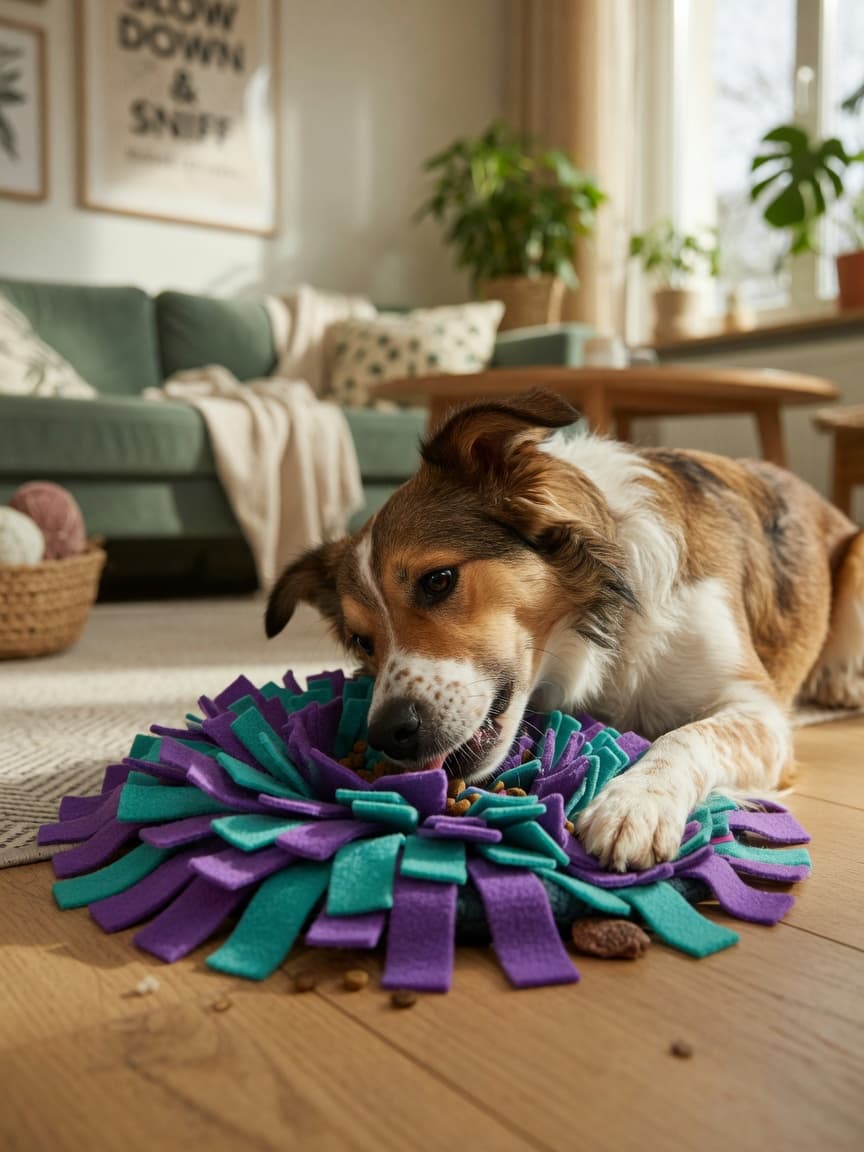
Rather than presenting a dog's daily ration in a bowl, scatter the kibble across a patch of grass, a snuffle mat, or across the carpet. The dog must then use its nose to locate each piece of food individually. This mimics natural foraging behaviour and provides significant mental stimulation. Even a few minutes of scatter feeding can be more tiring than a short walk for many dogs.
Hide and Seek
Hide and seek is a game that engages a dog's search drive and reinforces recall. Ask the dog to wait or have a second person hold them, then hide somewhere in the home or garden and call the dog. When the dog finds you, reward with enthusiastic praise and a treat or play. This game also builds confidence in dogs that are nervous or under-stimulated.
Trick Training
Learning new tricks is a genuinely cognitively demanding activity for dogs. Short training sessions of five to ten minutes are ideal — beyond this, many dogs begin to lose focus. Focus on positive reinforcement using high-value treats and a calm, patient approach. Teaching behaviours such as spin, bow, roll over, tidy toys, or fetch a named object provides challenge, structure, and an excellent opportunity to strengthen the owner-dog bond.
Snuffle Mats
A snuffle mat is a rubber mat with numerous fabric strips attached, into which food can be hidden. The dog must snuffle through the strips to find the pieces of kibble or treats. Snuffle mats are widely available from pet retailers across Europe and can also be made at home. They are particularly well suited to dogs that eat too quickly, as they slow the dog down and encourage natural foraging behaviour.
Foraging Boxes
Fill a cardboard box with scrunched newspaper, leaves, or strips of fabric and hide treats throughout. Allow the dog to rummage through the box to find the food. This activity encourages investigative behaviour, nose work, and tactile exploration. The box can be replenished and reused, or recycled and replaced, making it an extremely low-cost enrichment option.
Novel Objects and Exploration
Introducing novel objects into the dog's environment — a new cardboard tube, an upturned basket, a bundle of safe twigs, or a new toy — encourages investigation and curiosity. Dogs that regularly encounter new objects in a safe and positive context develop greater confidence and resilience. Ensure all objects are safe and non-toxic before allowing the dog to interact with them.
Agility
Agility involves navigating a timed obstacle course including tunnels, weave poles, A-frames, and jumps. It is an excellent combination of physical and mental exercise, requiring the dog to listen to the handler, process information quickly, and respond accurately. Agility classes are available throughout the UK and EU and are suitable for most healthy, active dogs. Beginner classes do not require any prior experience.
Water Play
For water-loving breeds such as Labrador Retrievers, Golden Retrievers, Portuguese Water Dogs, and Spaniels, supervised water play provides genuine enrichment. A paddling pool in the garden with floating toys, a paddling session at a dog-friendly river or beach, or water-retrieve games can all provide significant mental and physical stimulation. Always supervise water activities and ensure the dog can exit the water safely.
Food Puzzles and Interactive Feeders
Interactive feeders come in a range of complexity levels, from simple rolling balls that dispense kibble to multi-step puzzle boards requiring the dog to slide, lift, and spin components to reveal food. Matching the difficulty level to the dog is important — a puzzle that is too easy provides little challenge, while one that is too difficult may cause frustration. Begin with easier puzzles and increase complexity as the dog gains confidence and skill.
Dog Sports
Beyond agility, a wide range of dog sports are available across the UK and EU, each catering to different temperaments and breeds. Canicross, flyball, heelwork to music, scentwork trials, and gundog working tests all provide structured mental and physical challenge. Participating in a sport with your dog builds a strong working relationship and provides a community of like-minded owners.
Socialisation and New Environments
Visiting new locations, meeting unfamiliar people in a positive context, and experiencing different environments are all forms of cognitive enrichment. A walk in a new park, a trip to a dog-friendly cafe, or a visit to a friend's home all provide a wealth of novel sensory information that engages the dog's brain. Ensure that socialisation experiences are positive and that the dog is never pushed beyond their comfort level.
Training Classes
Group training classes provide structured cognitive challenge, socialisation with other dogs and people, and the opportunity to learn new skills under professional guidance. Look for classes that use reward-based methods exclusively and are run by instructors with recognised qualifications. Regular attendance at a positive training class is one of the most comprehensive enrichment activities available to dog owners.
Adapting Enrichment to Your Individual Dog
Not every activity will suit every dog, and individual preferences vary considerably. Some dogs are highly motivated by food while others prefer play or social interaction. Breed heritage influences which activities a dog is likely to find most rewarding. The key is to observe the dog's responses, focus on activities that generate genuine engagement and enthusiasm, and build enrichment into the daily routine rather than treating it as an occasional luxury.