
Ferret Diet Guide for European Keepers: Feeding Your Ferret Correctly
Ferrets are obligate carnivores — and they take this designation even more seriously than cats. Every aspect of their physiology is adapted for a diet of whole animal prey: their digestive tract is short, their gut transit time is rapid (typically three to four hours), and they have no metabolic mechanism for processing significant amounts of carbohydrate. Feeding a ferret incorrectly is one of the leading causes of serious, life-shortening disease in domestic ferrets across Europe. This guide explains what ferrets need, what to avoid, and how to navigate the options available to EU keepers.
Legal Status of Ferrets in the EU
The domestic ferret (Mustela putorius furo) is not listed under CITES and is legal to keep throughout the European Union without special permits. Ferrets are popular pets across France, the Netherlands, Germany, Spain, and Scandinavia. EU keepers wishing to travel across member state borders with ferrets should be aware of pet passport requirements and country-specific rabies vaccination rules — in some EU countries, rabies vaccination is mandatory for ferrets. Distemper vaccination is universally recommended throughout Europe, as distemper is fatal in ferrets and exposure risk from wildlife and unvaccinated dogs exists across the continent. ESCCAP Europe publishes parasite control guidance relevant to ferrets, particularly for those with outdoor access.
Nutritional Requirements: What Ferrets Need
The core nutritional requirements for ferrets are straightforward but non-negotiable:
- Protein: 30–35% of diet, from animal sources only
- Fat: 15–20% of diet, from animal sources
- Carbohydrate: as low as possible — ideally below 3%
- Fibre: minimal — ferrets cannot digest plant fibre
- Taurine: essential amino acid found in muscle meat, insufficient in plant protein
The key distinction from other carnivores is that ferrets cannot use plant protein effectively. A food with 35% protein listed as its first ingredient is not adequate if that protein comes from peas, soy, or cereals. The protein source matters as much as the protein percentage.
Dietary Options for European Ferret Keepers
Prey Model Raw (PMR) and Whole Prey
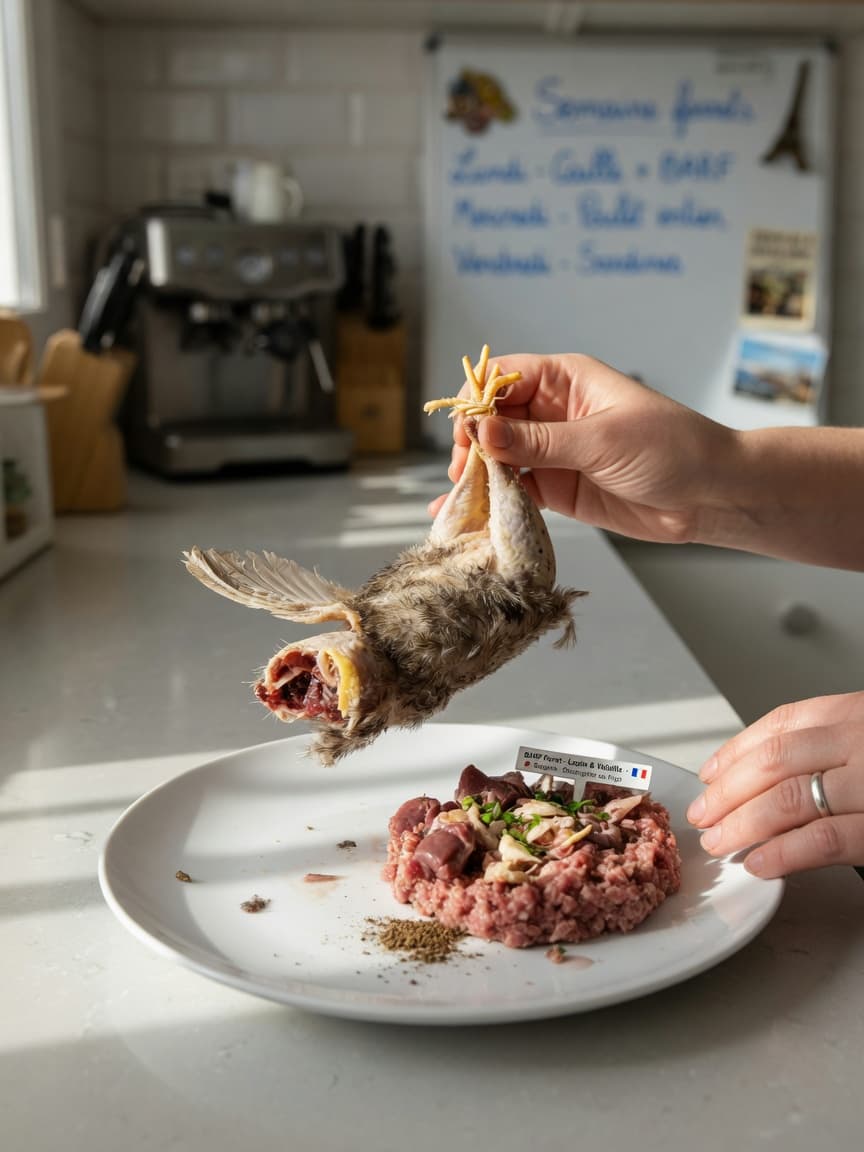
Many experienced ferret keepers consider whole prey or prey model raw the gold standard diet. This involves feeding whole or partial carcasses — day-old chicks, mice, quail, rabbit, and similar — which provide the natural balance of meat, bone, and organ that a ferret's digestive system evolved to process. Whole prey provides dental benefits through the mechanical action of eating bone and fur, and avoids any additives or preservatives.
In practice, sourcing whole prey in sufficient variety can be challenging for urban keepers in Europe, and raw feeding requires careful hygiene management to prevent bacterial contamination — both for the ferret and for human household members. Pregnant women, immunocompromised individuals, and young children should be particularly careful around raw meat.
Commercial Raw Diets
A convenient middle ground is commercially prepared raw ferret food, available frozen in portions across many European countries. These products offer the nutritional benefits of raw feeding with more consistent formulation and easier handling. Check ingredient lists carefully — good commercial raw food should list named meats as the primary ingredients with organ content included.
High-Quality Dry Kibble
High-quality dry ferret kibble is a practical option for many keepers, particularly given that ferrets benefit from having food available almost continuously due to their fast metabolism. When selecting kibble, the first ingredient must be a named animal protein — chicken, turkey, or salmon, for example. Avoid any kibble where cereals, corn, rice, or plant proteins appear in the first three ingredients. Due to their short gut transit time, ferrets essentially graze throughout the day, and free-feeding dry kibble is a widely used and acceptable approach.
Zooplus stocks a range of ferret-specific dry foods from European brands, including options with high meat content that are appropriate for ferrets — particularly useful for keepers who want reliable delivery of heavy or bulky supplies.
Foods to Avoid
The following should never be fed to ferrets:
- Fruit and vegetables — ferrets cannot digest plant matter and high sugar content contributes to insulinoma risk
- Grains and cereals — corn, wheat, rice, and oats are nutritionally inappropriate
- Dairy products — ferrets are lactose intolerant
- Sugary treats — commercial ferret treats containing sugar are actively harmful
- Onion and garlic — toxic to mustelids
- Xylitol — found in some human foods and extremely toxic
- Cooked bones — these splinter and can cause internal injury
Diet-Related Diseases: Why Getting This Right Matters
Insulinoma
Insulinoma — cancer of the insulin-producing cells of the pancreas — is one of the most common diseases in older ferrets kept on high-carbohydrate diets. The chronic stimulus of elevated blood glucose from carbohydrate-rich food is strongly associated with insulinoma development. Symptoms include weakness, drooling, pawing at the mouth, and episodes of apparent collapse or glazed staring. Any ferret showing these signs needs urgent veterinary assessment. Transitioning ferrets to a low-carbohydrate diet is considered both preventative and, under veterinary guidance, part of managing diagnosed insulinoma.
Adrenal Disease
Adrenal gland disease is extremely common in European ferrets and while its causes are multifactorial, diet and early neutering practices are both considered contributing factors. Symptoms include symmetrical hair loss, muscle wasting, and swollen vulva in females. Management options include surgical removal of the affected gland or, increasingly in Europe, hormonal implants.
Lymphoma
Lymphoma is another common ferret cancer with suspected links to diet, genetics, and possibly viral exposure. A nutritionally appropriate diet from a young age is considered an important preventative factor.
Feeding Schedules and Practical Tips
Ferrets have a very short digestive transit time and a high metabolic rate, meaning they need access to food far more frequently than dogs or cats. Free-feeding dry kibble is standard practice for most European keepers — the bowl should never be empty. If feeding raw or commercial raw, offer small portions six to eight times daily, or use timed feeders.
Fresh water must always be available. Many ferrets prefer drinking from bowls rather than bottles — offer both and see which your ferret uses more readily.
Exotic Vet Care for Ferrets
Ferrets require a vet with genuine mustelid or exotic mammal expertise. The European College of Zoological Medicine (ECZM) accredits vets in small mammal medicine, and seeking an ECZM-accredited exotic vet — or one with a demonstrable ferret caseload — is strongly recommended. Annual health checks, including blood glucose screening in ferrets over three years of age, are an important part of preventative care.