
Why Cats Are So Good at Hiding Pain
Cats are masters of concealment, and this trait has deep evolutionary roots. In the wild, showing weakness invites predation. Even in the safety of a domestic home, that instinct remains intact. The result is that many cats live with significant pain for weeks or months before their owners notice anything is wrong.
This is not a failure of observation on your part — it is a reflection of how effectively cats suppress outward signs of discomfort. Understanding what to look for, particularly in senior cats where chronic conditions are common, is one of the most valuable skills a cat owner can develop.
Changes in Movement and Posture
One of the earliest indicators of pain in cats is a change in how they move. This can be subtle. You might notice your cat is less willing to jump onto surfaces they previously used with ease, or that they approach jumps with hesitation before attempting them. A cat who used to leap confidently onto the kitchen counter and now circles it several times before deciding not to bother is likely experiencing joint discomfort.
Stiffness after rest is another telling sign. A cat who moves slowly and awkwardly for the first few minutes after waking, then loosens up as they get moving, may be dealing with arthritis. This pattern mirrors what humans with joint problems experience and is often dismissed as "just getting old" when it actually warrants investigation and management.
Posture changes are also significant. A cat in pain may adopt a hunched position, tucking their limbs in and rounding their back. This is a protective posture designed to guard tender areas. A cat with abdominal pain may press their belly to the floor and resist being picked up.
Grooming Changes: Too Much or Too Little
Healthy cats spend a significant portion of their day grooming. Any notable change in this behaviour can indicate pain. Over-grooming a specific area — licking one spot obsessively until the fur thins or disappears — often points to localised pain or discomfort beneath the skin, including joint pain, nerve irritation, or internal organ issues.
Under-grooming is equally important. A cat who is experiencing widespread pain, fatigue, or reduced mobility may simply stop grooming as thoroughly as they once did. The coat becomes dull, matted, or unkempt. Older cats with arthritis often struggle to reach their hindquarters and tail base, so these areas deteriorate first. If your cat's coat has changed noticeably and they appear less fastidious than usual, pain is a very plausible explanation.
Facial Expressions and Eye Changes
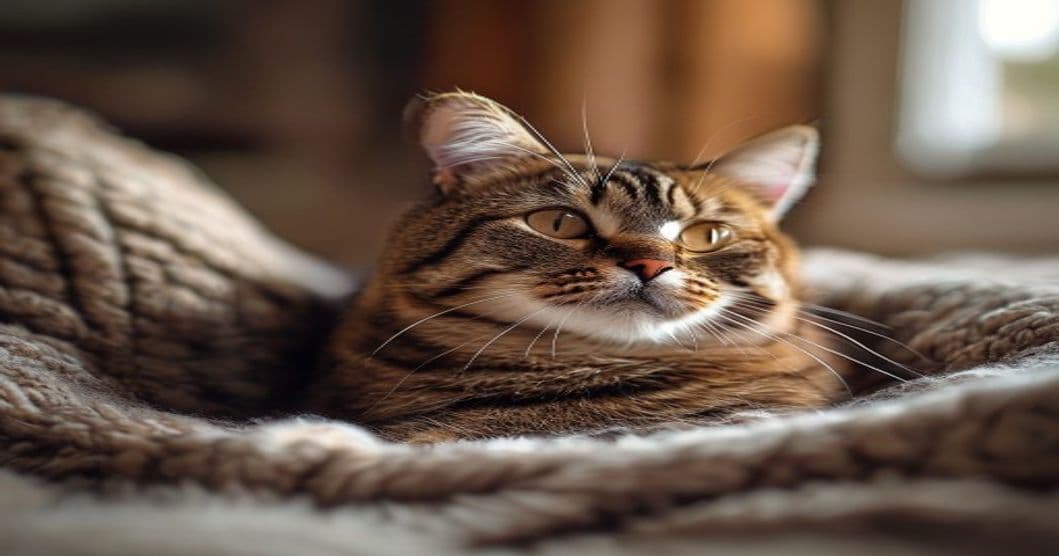
Research published in scientific journals has confirmed that cats do display distinct facial expressions when in pain, and that trained observers — and even attentive owners — can detect them. The Feline Grimace Scale, developed by researchers at the University of Montreal, identifies key markers including orbital tightening (a slight squinting of the eyes), flattened or rotated ears, a tense muzzle, and whisker changes.
A cat in pain may keep their eyes partially closed even when awake, giving a glazed or unfocused appearance. Pupils may be dilated even in normal lighting. If your cat's eyes look different from their usual bright, alert expression, it is worth taking note.
Behavioural and Personality Shifts
Pain frequently alters personality. A previously sociable cat may become withdrawn, hiding more than usual and avoiding interaction. Conversely, some cats become clingy and anxious when unwell. Neither change should be assumed to be purely temperamental without first ruling out a physical cause.
Aggression when touched in a particular area is a strong signal. If your cat hisses, bites, or swipes when you handle their belly, back, legs, or head — especially if this is new behaviour — they are likely telling you that contact hurts. A cat who objects to being stroked along the spine may have spinal arthritis or nerve pain.
Toileting changes also matter. A cat with joint pain may find it difficult to climb in and out of a litter tray, particularly a high-sided one. If they begin eliminating outside the tray without an obvious behavioural explanation, pain-related mobility issues should be considered. Lowering the tray sides or providing a flat tray can help in the short term while you seek veterinary advice.
Vocalisation and Breathing
While not all cats vocalise pain, some do — particularly at night. Increased yowling, crying, or vocalising in a cat who was previously quiet may reflect pain, cognitive decline, or both. Older cats with hyperthyroidism or high blood pressure may also vocalise more, and these conditions are themselves associated with pain and discomfort.
Breathing changes are a more urgent sign. A cat breathing rapidly at rest, showing laboured chest movement, or breathing through their mouth requires immediate veterinary attention. Respiratory distress can indicate pleural effusion, heart disease, or severe pain responses.
Appetite and Thirst as Indicators
Reduced appetite is a non-specific but important signal. Cats in pain often eat less, both because pain suppresses appetite directly and because conditions causing pain — dental disease, gastrointestinal inflammation, kidney disease — frequently reduce interest in food. Dental pain in particular is chronically underdiagnosed. A cat who drops food, chews only on one side, or reacts to crunchy biscuits may have significant oral pain.
Increased thirst, on the other hand, can indicate conditions such as kidney disease or diabetes, both of which cause discomfort as they progress. Tracking your cat's water consumption is a worthwhile habit, particularly from middle age onwards.
When to Seek Veterinary Help
Any single sign on this list warrants observation. Multiple signs, or a sudden change in your cat's behaviour or physical presentation, warrant prompt veterinary assessment. Senior cats benefit from twice-yearly health checks rather than annual ones, as conditions develop more quickly in older animals and early detection makes management significantly more effective.
Trust your instincts. You know your cat's baseline better than anyone. If something feels different — if they seem quieter, slower, less themselves — that observation has real clinical value. Mention it. Vets rely on owner insight to piece together a picture that an examination alone cannot always provide.