
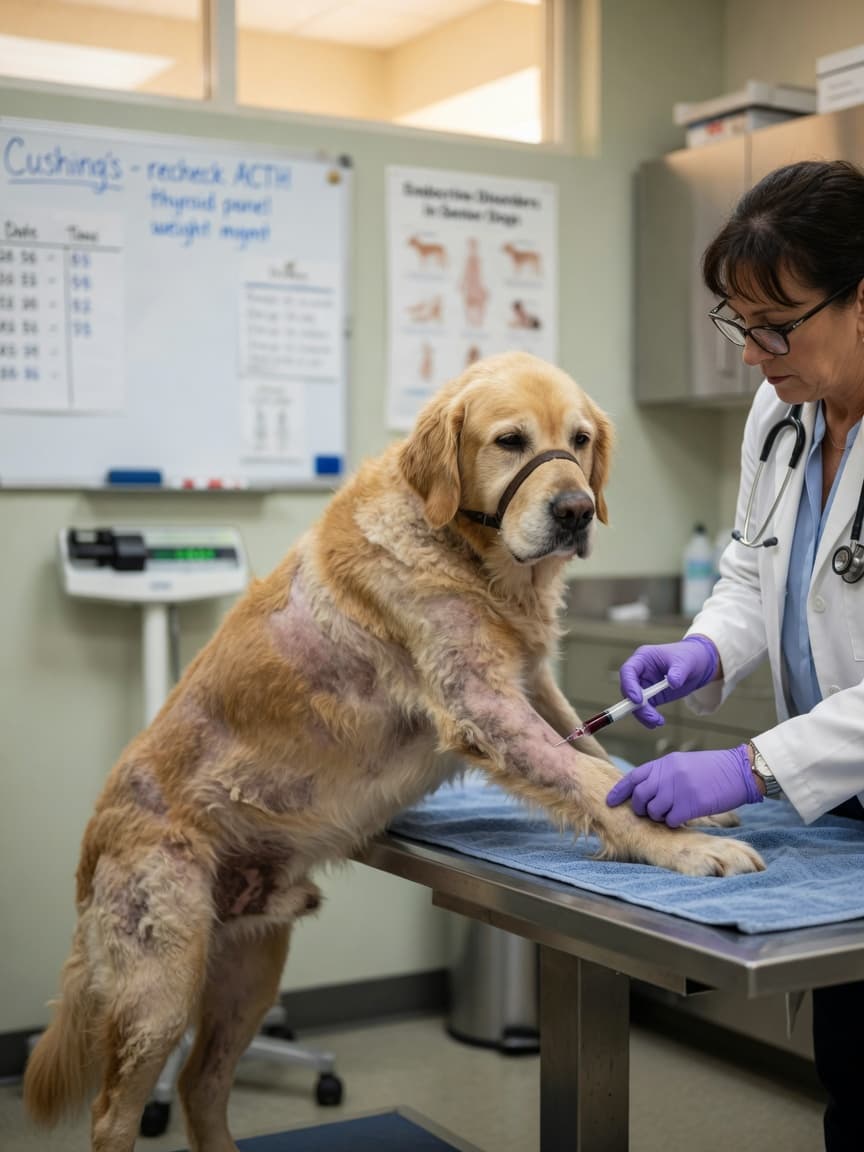
The Most Common Hormonal Disorder in Dogs
Hypothyroidism holds the distinction of being the single most frequently diagnosed endocrine disease in dogs. Yet despite how often it occurs, it remains one of the most commonly missed or delayed diagnoses in veterinary practice — largely because its symptoms are vague, develop gradually, and can easily be attributed to ageing, obesity, or stress. Understanding what to look for, and pushing for appropriate testing when something feels off, can save your dog years of unnecessary discomfort.
What Is Hypothyroidism?
The thyroid gland, which sits in your dog's neck, produces hormones — primarily thyroxine (T4) and triiodothyronine (T3) — that control the body's metabolic rate. In a dog with hypothyroidism, the thyroid gland is underactive and produces insufficient amounts of these hormones. The result is a metabolism that runs too slowly, affecting energy levels, body weight, skin health, heart function, and much more.
In the vast majority of cases, hypothyroidism in dogs results from one of two processes: lymphocytic thyroiditis, an immune-mediated condition in which the dog's own immune system gradually destroys the thyroid gland, or idiopathic thyroid atrophy, in which the gland simply shrinks and loses function over time without a clear immune component. Between the two, these account for the great majority of cases. Rarely, a tumour or other structural lesion of the thyroid can be responsible.
Which Dogs Are Most Commonly Affected?
Hypothyroidism is most commonly seen in middle-aged dogs, typically between four and ten years of age, with the average age of diagnosis around seven years. Medium to large breeds are disproportionately affected compared to small breeds and cats (who very rarely develop hypothyroidism). Breeds with a notably higher incidence include Golden Retrievers, Dobermanns, Irish Setters, Boxers, Cocker Spaniels, Miniature Schnauzers, and Airedale Terriers, among others. There is no clear sex predisposition, though neutered dogs of both sexes may be at slightly higher risk.
Classic Symptoms: What Owners Notice First
The symptom that often first prompts concern is unexplained weight gain. The key distinction that separates hypothyroidism from simple dietary overindulgence is that the dog gains weight without any increase in food intake. In fact, many hypothyroid dogs have a normal or even reduced appetite, yet the weight creeps up persistently. This occurs because a slowed metabolism means the body burns fewer calories at rest.
Lethargy is the other early and pervasive sign. The dog that used to bound eagerly to the door at the prospect of a walk now seems reluctant to move, tires quickly, and seeks warm spots to rest. Owners sometimes describe their dog as having "lost their spark." Cold intolerance — actively seeking heat and being reluctant to go outside in cool weather — reflects the same sluggish metabolic state.
Skin and coat changes are among the most visible and diagnostically useful signs. The coat may become dry, dull, and brittle. Symmetrical hair loss (alopecia) often develops, particularly over the trunk and flanks — classically described as "rat tail" when affecting the tail — without the associated itching that would suggest a skin allergy. The skin itself may thicken, develop a dusky discolouration called hyperpigmentation, and in some cases take on a puffy or thickened texture, particularly on the face (giving rise to what clinicians sometimes call a "tragic expression"). Secondary skin infections are common because thyroid hormones normally help maintain healthy immune defences in the skin.
Less commonly, hypothyroidism can cause neurological signs such as weakness, incoordination, or even a condition called vestibular disease, as well as reproductive abnormalities and in severe cases changes in heart rate and function.
Diagnosis: Blood Tests Are Key
Because the symptoms of hypothyroidism are so non-specific, diagnosis requires blood testing. The most commonly used screening test is measurement of total thyroxine (total T4). A low total T4 in a dog with compatible clinical signs strongly supports the diagnosis. However, total T4 can be lowered by many other illnesses (a phenomenon called sick euthyroid syndrome) and by certain medications, meaning a low result does not automatically confirm hypothyroidism.
For this reason, vets often measure additional markers to increase confidence in the diagnosis. Free T4 (fT4), measured by a specific method called equilibrium dialysis, is less affected by concurrent illness and gives a more accurate picture of true thyroid output. Canine thyroid-stimulating hormone (cTSH) is produced by the pituitary gland when it detects low thyroid hormone levels; a high cTSH alongside a low T4 is a very persuasive combination pointing to primary hypothyroidism. Some dogs also have measurable antibodies against their thyroid tissue, which can be informative in cases of lymphocytic thyroiditis.
Treatment: Levothyroxine — Simple, Effective and Lifelong
The treatment for canine hypothyroidism is levothyroxine sodium — a synthetic version of the thyroid hormone T4 that replaces what the dog's gland can no longer produce adequately. In the UK, licensed veterinary preparations include Forthyroid and Soloxine, and there are also human-licensed formulations that vets can prescribe. Levothyroxine is given orally, usually once or twice daily depending on the individual dog's response.
Treatment is lifelong. There is no cure for hypothyroidism — the thyroid gland will not recover — but the medication is safe, well tolerated, and typically very effective. Most owners notice a remarkable improvement within four to eight weeks of starting treatment: the dog's energy returns, weight stabilises and gradually reduces, and skin and coat begin to recover. The improvement is often dramatic enough to feel transformative.
Monitoring and Dose Adjustment
After starting levothyroxine, your vet will schedule a follow-up blood test, typically four to eight weeks later, to check that T4 levels have returned to the normal range at the appropriate time after dosing. The dose may need adjusting upwards or downwards based on these results and on clinical response. Once stable, monitoring every six to twelve months is usually sufficient.
Signs that the dose may be too high include restlessness, excessive panting, increased thirst, or weight loss — essentially the opposite of the original hypothyroid signs. These should prompt a blood test and dose review rather than abrupt discontinuation of treatment.
Outlook: Excellent With Correct Treatment
The prognosis for dogs with hypothyroidism that is correctly diagnosed and treated is genuinely excellent. This is a condition where the treatment reliably works, the medication is affordable and straightforward to administer, and the quality of life improvement for the dog — and the relief for the owner — can be profound. If you suspect your dog may be showing signs of an underactive thyroid, it is well worth discussing testing with your vet sooner rather than later.