
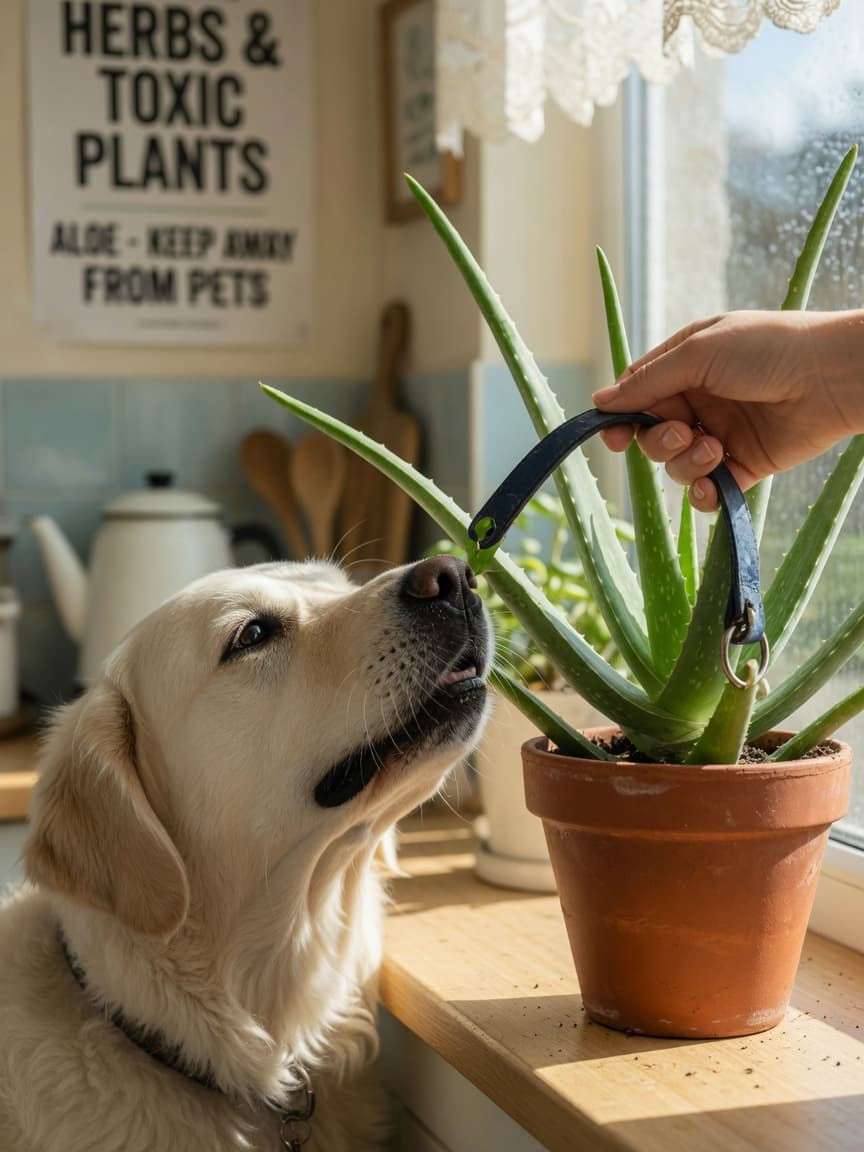
Is Aloe Vera Safe for Dogs? Gel vs Plant: Important Difference
VERDICT: DEPENDS — the distinction matters enormously. Purified inner leaf aloe gel is generally considered low-risk for topical use on dogs. However, the whole aloe plant — including the latex layer (the yellow sap beneath the skin), leaves, and some commercial products — contains anthraquinone glycosides (particularly aloin) that are toxic to dogs if ingested. Never let your dog eat aloe vera in any form. If you use aloe topically, ensure your dog cannot lick it off.
Aloe Vera: Two Very Different Substances in One Plant
Aloe vera (Aloe barbadensis miller) is not a single substance — it is a plant containing at least two biologically distinct materials that have dramatically different safety profiles for dogs. Understanding this difference is the most important thing a dog owner can take away from this article.
The inner leaf gel — the clear, viscous mucilage found at the centre of the leaf — is composed primarily of water, polysaccharides (acemannan), glycoproteins, and amino acids. This is the substance used in most skin-care products and is the part that gives aloe its soothing topical properties. Purified inner leaf gel, when properly processed to remove the latex layer, contains very low levels of anthraquinones and is generally considered safe for external use on dogs.
The latex layer — a thin yellow layer of cells (the pericycle) that sits just beneath the outer green skin — is rich in anthraquinone glycosides, primarily aloin (barbaloin). Aloin is a potent laxative and GI irritant. It is the same compound used in over-the-counter laxative products for humans. In dogs, ingestion of aloin causes vomiting, diarrhoea, abdominal pain, lethargy, and with large quantities, electrolyte imbalances and more serious systemic effects.
What the ASPCA Says
The ASPCA lists aloe vera as toxic to dogs, citing saponins, anthraquinones, and glycosides as the toxic components. Their listing is based on ingestion risk — not topical use of purified gel. This is an important nuance that is often lost when the ASPCA toxicity classification is cited without context: "toxic" here means "toxic if eaten," which is true of many plants that can be safely used topically.
However, the ASPCA classification should be taken seriously as a reminder that any aloe vera product applied to your dog's skin is at risk of being ingested when your dog grooms itself. Dogs lick wounds and skin irritations obsessively, meaning a topical application can quickly become an oral one.
Topical Aloe Use on Dogs: Practical Guidance
Purified aloe gel is used in many commercial pet products — wound sprays, hot spot treatments, paw balms, and shampoos — at concentrations that are generally well tolerated topically. If you are using a pet-formulated product that lists aloe as an ingredient, the manufacturer should have ensured that aloin content is within safe limits.
If you are using raw aloe gel from a home plant, the risk increases significantly because home processing rarely removes the latex layer completely. Squeezing gel directly from a leaf almost certainly includes some aloin from the pericycle. For this reason, using raw plant gel on dogs is not recommended even for topical application.
If you do use a commercial purified aloe product topically:
- Apply it to areas your dog cannot easily reach with their tongue.
- Use an Elizabethan collar (cone) if the treated area is anywhere the dog can lick.
- Choose products specifically labelled as pet-safe and formulated for dogs.
- Do not apply to open wounds without veterinary advice.
Ingestion: When to Be Concerned
If your dog has chewed on an aloe plant — leaf, skin, and all — or consumed a significant quantity of aloe gel, watch for signs of GI toxicity: vomiting, diarrhoea, abdominal discomfort, and lethargy. These typically appear within 6–12 hours of ingestion. In most cases, the toxicity is self-limiting and manageable, but puppies, small breeds, and dogs with pre-existing GI conditions are at higher risk of dehydration and electrolyte imbalance from persistent vomiting and diarrhoea.
Contact your vet if your dog has ingested a significant quantity of aloe or if signs are severe or prolonged. Treatment is generally supportive — fluids, antiemetics, and monitoring.
A 2012 study in the Journal of Veterinary Emergency and Critical Care reviewed cases of plant-based GI toxicity in dogs, noting that aloe vera was among the most common household plant sources of self-limiting but clinically significant GI signs. PMID 22882229.
Aloe in Dog Food and Supplements
Some dog supplements and functional treats contain aloe vera. These products should use decolourised (purified) aloe gel with verified low aloin content — aloin levels above 10 ppm are considered unacceptable in products intended for regular consumption according to guidelines from the British Small Animal Veterinary Association (BSAVA). If a supplement contains aloe and does not specify "decolourised" or "aloin-free," contact the manufacturer for clarification before feeding it to your dog.
ScienceDaily reported on research into acemannan — the key bioactive polysaccharide in aloe inner gel — showing potential immunomodulatory benefits in animals, but researchers cautioned that these findings relate to purified fractions, not raw aloe products.
The Garden Aloe Hazard
Aloe vera is a popular houseplant and garden plant in warmer climates. If you have an aloe plant at home, treat it as you would any mildly toxic plant — keep it out of reach of dogs who have a tendency to chew on plants. The decorative fencing of garden beds or relocating pot plants to high shelves is a simple precaution.
For safe, pet-formulated topical treatments for your dog's skin, hot spots, and paws, explore HolistaPet — their dog wellness range uses carefully selected, pet-safe ingredients. Browse HolistaPet dog wellness products →
Key Takeaways
- Aloe vera is not one substance — the purified inner gel and the latex layer (containing aloin) have very different safety profiles.
- The ASPCA lists aloe as toxic to dogs because of ingestion risk from aloin — this does not mean purified topical gel is unsafe.
- Raw aloe gel squeezed from a home plant likely contains aloin from the latex layer and should not be applied to dogs.
- Topical application of any aloe product to a dog carries ingestion risk since dogs lick themselves — use a cone if necessary.
- If a dog ingests aloe leaf or whole-plant material, watch for vomiting, diarrhoea, and lethargy — call your vet if signs are severe or persistent.
- Commercial products with aloe should specify "decolourised" or "aloin-free" for oral/internal use.
References
- Genovese AG, McLean MK, Khan SA. "Adverse reactions from essential oil-containing natural flea products and insecticides in dogs and cats." J Vet Emerg Crit Care. 2012;22(4):470-475. PMID 22882229
- Hamman JH. "Composition and applications of Aloe vera leaf gel." Molecules. 2008;13(8):1599-1616. PMID 18794775