
Shih Tzu Grooming Guide: Coat Care, Health Checks, and EU Tips
The Shih Tzu is classified under FCI Group 9 (Companion and Toy Dogs), Section 5, Standard No. 208. Originally bred as a companion dog for Chinese imperial households, the Shih Tzu is celebrated for its flowing double coat, flat face, and affectionate personality. With a typical lifespan of 10 to 16 years, the Shih Tzu is a long-lived breed — but that beautiful coat and brachycephalic structure demand consistent grooming and health monitoring to keep this dog comfortable and healthy throughout its life.
Understanding the Shih Tzu Coat
The Shih Tzu has a dense double coat: a soft, woolly undercoat and a long, flowing outer coat that grows continuously and does not shed significantly. This coat type is prone to tangling and matting, particularly behind the ears, under the armpits, around the collar area, and at the base of the tail. Unlike single-coated breeds, a neglected Shih Tzu coat does not simply look untidy — mats pull on the skin, cause pain, trap moisture, and create ideal conditions for bacterial and fungal skin infections.
Daily Brushing Routine
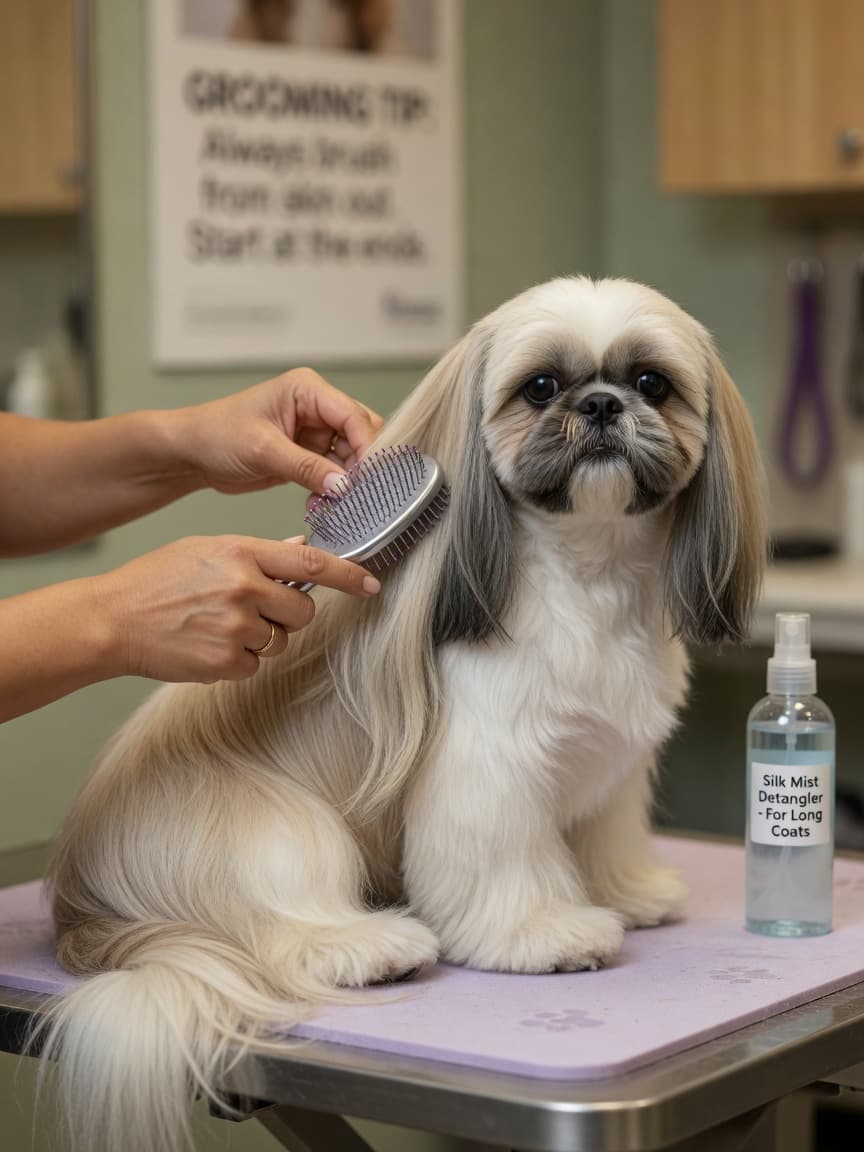
Daily brushing is essential for Shih Tzus kept in full coat. Use a pin brush to work through the outer coat in sections, followed by a wide-toothed comb to check that the comb moves freely from skin to tip without catching. Never brush a dry coat — use a detangling spray or a light misting of water to reduce breakage and static. Work methodically from the paws upward, parting the coat to ensure you are reaching the undercoat.
For owners who prefer a shorter, more manageable look, the puppy cut (a trim that leaves the coat approximately 2.5 to 5 cm all over) reduces brushing time considerably. A professional groomer should trim the coat every six to eight weeks regardless of style.
Eye Cleaning and Tear Staining
Shih Tzus are prone to tear staining — the reddish-brown discolouration that appears on the facial fur beneath the eyes. This is caused by porphyrins, pigments found in tears, which oxidise on contact with air and fur. The Shih Tzu's prominent eyes and facial skin folds create conditions where tears pool and accumulate rather than draining normally.
Clean the area beneath the eyes daily with a dampened cotton pad or specialist eye wipe, wiping gently outward from the inner corner. Do not use human wet wipes, which may contain preservatives irritating to canine skin. Check regularly for signs of discharge, redness, cloudiness, or squinting, which could indicate conjunctivitis, corneal ulceration, or entropion (inward rolling of the eyelid).
Ear Care
The Shih Tzu's heavy, pendulous ears reduce airflow into the ear canal, creating a warm, moist environment that encourages yeast and bacterial growth. Additionally, Shih Tzus often grow hair inside the ear canal, which can further impede ventilation and trap wax and debris.
Inspect ears weekly for redness, odour, excess wax, or head shaking. Clean with a vet-approved ear cleaning solution — apply the solution, gently massage the base of the ear, and allow the dog to shake before wiping the outer canal with a cotton ball. Never insert anything into the ear canal. If hair inside the canal is excessive, ask your groomer or vet whether plucking is appropriate for your dog.
Dental Care
Dental disease is extremely common in Shih Tzus due to their small jaw and crowded teeth. Plaque accumulates rapidly, leading to gingivitis, periodontitis, and tooth loss. Brush your Shih Tzu's teeth at least three times per week using a toothbrush and dog-safe toothpaste. Dental chews, water additives, and raw meaty bones (appropriate size only) can supplement but do not replace brushing.
Nail Trimming
Nails should be trimmed every three to four weeks. Overgrown nails alter the dog's gait and can cause pain and joint problems over time. Use a purpose-made dog nail clipper or grinder, and take care to avoid cutting the quick — the blood vessel visible as a pink line in light-coloured nails. If your Shih Tzu has dark nails, trim small amounts at a time and look for a grey or white chalky circle in the nail cross-section that indicates you are approaching the quick.
Health Conditions Relevant to Grooming
Brachycephalic Obstructive Airway Syndrome (BOAS)
As a brachycephalic breed, the Shih Tzu has a shortened skull and flattened face that can cause narrowed nostrils, an elongated soft palate, and a narrowed trachea. During grooming sessions, monitor your dog for laboured breathing, noisy respiration, or exercise intolerance, particularly in warm weather. BOAS surgery is available and can significantly improve quality of life for severely affected dogs.
Progressive Retinal Atrophy (PRA)
PRA is a group of inherited retinal diseases that progressively destroy the photoreceptor cells of the eye, leading to blindness. EU breeders should DNA test for PRA-PRCD (progressive rod-cone degeneration) using an accredited laboratory. Laboklin in Germany offers this test and provides postal testing kits suitable for European breeders. Look for test certificates confirming both parents are clear or carrier-by-parentage before purchasing a puppy.
Intervertebral Disc Disease (IVDD)
The Shih Tzu's relatively long back and chondrodystrophic characteristics make this breed susceptible to IVDD. During grooming, handle the dog gently and avoid bending the spine unnaturally when positioning on a grooming table. Lifting with support under both the chest and hindquarters reduces spinal strain.
Renal Dysplasia
Renal dysplasia is an inherited malformation of the kidneys that can lead to early kidney failure. Symptoms include increased thirst, frequent urination, poor growth, and weight loss. There is no DNA test currently available for this condition, making a thorough health history of the breeding line essential.
BVA and KC Health Schemes for Shih Tzus
- BVA/KC/ISDS Eye Scheme — annual eye testing for inherited conditions including PRA
- BVA/KC Hip Dysplasia Scheme — hip scoring recommended for breeding dogs
ESCCAP Parasite Prevention
ESCCAP guidelines recommend year-round parasite prevention for companion dogs across Europe. For Shih Tzus, particular attention should be given to flea prevention (fleas can be harder to detect in dense coats) and tick removal after outdoor exercise. Routine worming schedules should follow your vet's recommendation based on local risk factors for roundworm, tapeworm, and lungworm.
EU Grooming Products
Zooplus offers an excellent range of Shih Tzu grooming products including detangling sprays, pin brushes, slicker brushes, and ear cleaning solutions. Shopping through Zooplus allows EU owners to access a broad selection of professional-grade products without the need for specialist pet shops. Look for products specifically formulated for long-coated or double-coated breeds to get the best results.
A well-groomed Shih Tzu is a healthy, comfortable, and happy companion. Establishing a consistent grooming routine from puppyhood not only maintains coat and skin health but also creates a bonding opportunity and makes routine health checks — eyes, ears, skin, teeth, and nails — a natural part of daily life.