
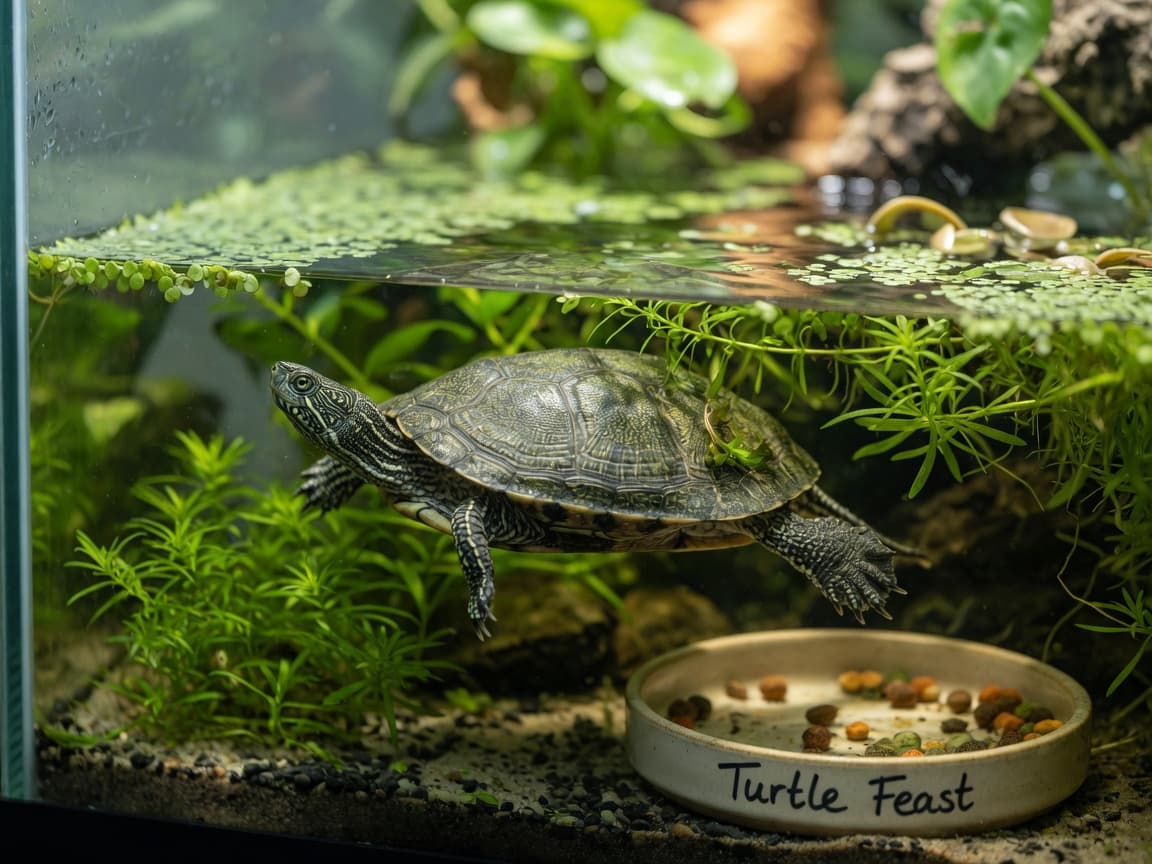
Pet Turtle Diet Guide for Europe: Feeding and Legal Considerations
Keeping a turtle or tortoise in the EU is a rewarding experience, but it comes with responsibilities that go beyond simply filling a bowl with food. European owners must navigate both the nutritional needs of their animals and a set of important legal regulations that affect which species they can keep in the first place. This guide covers both sides of the picture so you can give your chelonian the best possible care.
Critical EU Regulations: What Every Turtle Owner Must Know
Before discussing diet, it is essential to address the legal landscape in Europe — because the species you own, or are thinking of acquiring, matters enormously under EU law.
The Ban on Red-Eared Sliders
If you grew up in the 1990s, you may remember the small green turtles sold in pet shops across Europe. The vast majority of those were Trachemys scripta — the red-eared slider and its subspecies, including Trachemys scripta elegans. Since 2017, the commercial sale of this species has been banned throughout the European Union under EU Regulation 1143/2014 on invasive alien species, with the Union List adopted via Regulation 2016/1141.
The reason for this ban is ecological. Released and escaped red-eared sliders have devastated native European turtle populations. They are highly competitive and outcompete native species for basking spots, food, and nesting sites. If you already own a red-eared slider, you may continue to keep it, but you cannot sell, breed, or release it under any circumstances. Releasing a red-eared slider into the wild is not only harmful to the environment — it is illegal.
Which Species Can You Keep?
Most EU pet turtles sold today belong to other species. Popular aquatic options include Mauremys reevesii (Reeves' turtle) and Mauremys sinensis (Chinese stripe-necked turtle), both of which are available from licensed breeders. It is worth noting that the European pond turtle (Emys orbicularis) is strictly protected under the EU Habitats Directive (Annex II and IV) and cannot legally be kept as a pet.
Always purchase your turtle or tortoise from a reputable, licensed EU breeder. For species that require CITES documentation, ensure all paperwork is in order before completing any purchase. This protects both you and the animals involved.
Feeding Aquatic Turtles
Aquatic turtles are omnivores and thrive on a varied diet that mirrors what they would encounter in the wild. A single food source, no matter how nutritious it sounds, is never sufficient on its own.
The Foundation: Quality Pellets
A good commercial turtle pellet should form the base of your aquatic turtle's diet. Brands such as ReptoMin and Tetra Reptomin are widely trusted and provide a balanced nutritional profile. Pellets are convenient and nutritionally consistent, but they should complement rather than replace fresh foods.
Aquatic Plants
Aquatic plants serve double duty — they provide nutrition and enrichment. Duckweed, water hyacinth, and elodea are all excellent choices. Many turtles will graze on these plants throughout the day, which encourages natural foraging behaviour and keeps them mentally stimulated.
Protein Sources
Protein is particularly important for juvenile and smaller turtles, whose growing bodies demand more of it than adults. Suitable protein sources include earthworms, crickets, mealworms, small feeder fish, and bloodworms. As turtles mature, the proportion of protein in their diet should decrease slightly in favour of plant matter.
Leafy Greens
Dandelion leaves, romaine lettuce, and endive are all well-received by most aquatic turtles. Avoid iceberg lettuce — it is almost entirely water and offers very little nutritional value. The darker and leafier the green, the better.
Foods to Avoid
- Processed human food of any kind
- Dairy products — turtles cannot digest lactose
- Bread and other starchy foods
- Citrus fruits — too acidic for their digestive systems
Feeding Tortoises: Mediterranean Species
Tortoises are a different matter entirely. The most commonly kept tortoise in southern Europe is Hermann's tortoise (Testudo hermanni), a Mediterranean species that thrives on a diet quite distinct from that of aquatic turtles.
What Hermann's Tortoises Eat
Hermann's tortoises are strict herbivores and should eat predominantly leafy greens and edible weeds. Dandelion leaves and flowers, plantain, clover, and chicory are all excellent choices that closely resemble the vegetation they would find in the wild. Occasional small amounts of fruit can be offered as a treat, but fruit is high in sugar and should never become a staple.
Commercial tortoise pellets can be used to supplement the diet, particularly during winter months when fresh weeds may be scarce. However, fresh plant matter should always make up the bulk of their meals.
Feeding Frequency
Juvenile tortoises should be fed daily, as they need consistent nutrition to support healthy growth. Adult tortoises can be fed every two to three days, though many owners prefer to offer smaller amounts daily. Always remove uneaten food promptly to prevent bacterial growth.
UVB Lighting: Non-Negotiable for All Reptiles
Perhaps the single most important aspect of turtle and tortoise husbandry that is frequently underestimated is UVB lighting. Without adequate UVB exposure, reptiles cannot synthesise vitamin D3. Without vitamin D3, they cannot metabolise calcium properly — leading to metabolic bone disease (MBD), a serious and often irreversible condition that causes soft, deformed shells and weakened bones.
For turtles or tortoises kept indoors, a dedicated UVB bulb is essential. Natural sunlight through glass does not count — glass filters out the UVB wavelengths your animal needs. A high-quality UVB bulb placed at the correct distance from the basking area is the only reliable indoor solution.
One critical maintenance point that many owners miss: UVB output degrades long before the bulb stops producing visible light. A bulb may appear to be working perfectly while its UVB output has already dropped to ineffective levels. Replace UVB bulbs every six to twelve months, regardless of whether they still appear to be functioning normally.
Calcium Supplementation
Even with proper UVB lighting, additional calcium supplementation is recommended for most turtles and tortoises. Calcium supplement powder can be dusted lightly over food two to three times per week. For tortoises, a piece of cuttlefish bone left in the enclosure allows them to self-regulate their calcium intake — many will gnaw on it as needed.
When dusting food, use a light coating rather than a heavy one. Excessive calcium supplementation can also cause problems, so moderation is key. If you are unsure about the correct amount for your specific species, consult a reptile-experienced veterinarian.
Where to Buy Supplies in Europe
Finding quality turtle and tortoise supplies in Europe is straightforward thanks to specialist retailers. Zooplus is a popular pan-European option that stocks a wide range of turtle and tortoise products, including commercial pellets, UVB lighting, calcium supplements, and enclosure accessories. Ordering online ensures you have access to a broader selection than most local pet shops can offer.
A Final Note on Responsible Ownership
Turtles and tortoises are long-lived animals — Hermann's tortoises routinely reach 50 years or more in captivity. Taking on one of these animals is a significant commitment. By understanding the EU regulations around invasive species, feeding your animal a properly balanced diet, and providing the UVB and calcium supplementation they need, you are giving your chelonian the foundation for a long and healthy life.
Written by Sarah Bennett, animal health writer at ForPetsHealthcare.