
A Small Cut or Something More Serious?
Every pet owner will face a moment when their animal comes home limping, bleeding, or nursing a wound they did not witness happen. In those first minutes, what you do — and what you avoid doing — can make a meaningful difference to how well and how quickly your pet heals. Wound care is not complicated, but it does require a clear head and a basic understanding of what different injuries actually need.
Assessing the Wound Before You Touch It
Before reaching for cotton wool or antiseptic, take thirty seconds to look carefully. Is the bleeding continuous or has it slowed? Is the wound deep, gaping, or does it expose tissue beneath the skin? Is there debris — gravel, glass, plant material — embedded in it? Is the surrounding skin discoloured, swollen, or already showing signs of infection such as discharge or odour?
A wound that is actively spurting blood, is longer than two centimetres, or is deep enough that you cannot see the bottom requires veterinary attention. Do not waste time attempting home treatment beyond gentle pressure and getting your pet safely into the car.
Cleaning a Minor Wound at Home
What to Use
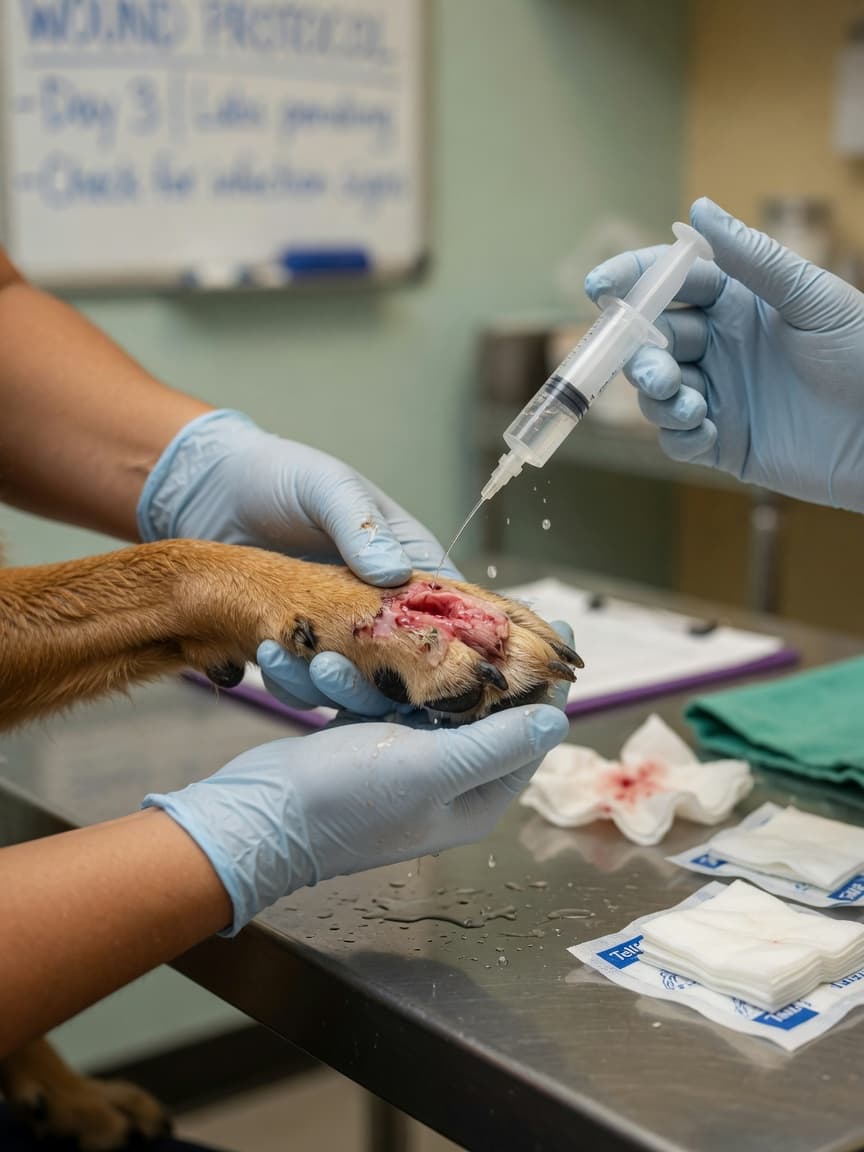
For superficial grazes, small punctures, and shallow cuts, gentle cleaning is the priority. The safest and most effective cleaning solution is sterile saline — either commercially purchased wound wash or made at home by dissolving half a teaspoon of salt in a cup of cooled boiled water. Saline flushes debris without damaging tissue.
Clean tap water is a reasonable alternative when saline is not available. The key is volume and gentle pressure: use a syringe or squeeze bottle to irrigate the wound rather than scrubbing, which pushes bacteria deeper into tissue.
What to Avoid
Hydrogen peroxide, undiluted iodine, alcohol, and many human antiseptic products are cytotoxic — they destroy the cells the body needs to repair the wound. Tea tree oil, in particular, is toxic to cats and dogs and must never be applied to skin. Resist the instinct to use whatever antiseptic is in the bathroom cabinet. When in doubt, saline alone is safer than the wrong antiseptic.
Hair Around the Wound
If hair is matted into the wound, carefully clip it away with blunt-ended scissors. This prevents bacteria from being drawn into the wound and makes it easier to monitor healing. Work slowly and keep the scissors flat against the skin.
Dressing the Wound
Many minor wounds on pets heal well uncovered, particularly in dry, clean indoor environments. However, wounds on paws, wounds your pet is likely to lick, or wounds in areas prone to contamination benefit from a light dressing.
Apply a thin layer of sterile non-adherent dressing directly over the wound, then wrap loosely with a conforming bandage. The bandage should be snug enough to stay in place but never tight enough to restrict circulation — you should be able to slip two fingers beneath it. Check the limb or area beyond the bandage hourly for swelling, coldness, or changes in colour, which indicate the bandage is too tight.
An Elizabethan collar, commonly called a cone, is often the most effective tool for preventing licking and interference. Licking introduces oral bacteria into a wound and significantly increases the risk of infection.
Signs of Infection to Watch For
Even a wound that initially looks clean can become infected within twenty-four to forty-eight hours. Check the wound at least twice daily and contact your vet if you notice any of the following:
- Increasing redness or swelling around the wound edges
- Warmth to the touch in the surrounding tissue
- Discharge that is cloudy, yellow, green, or has an unpleasant smell
- The wound appearing to open further rather than close
- Your pet becoming lethargic, losing appetite, or running a temperature
Puncture wounds from bites or thorns are particularly prone to becoming infected because the entry point is small and seals quickly, trapping bacteria beneath the surface. These should always be assessed by a vet even if they appear minor.
When to Go Straight to the Vet
Home care is appropriate only for genuinely superficial wounds. The following situations require professional assessment without delay:
- Bleeding that does not slow after five minutes of firm, continuous pressure
- Wounds caused by animal bites, regardless of how small they appear
- Any wound near the eye, mouth, ear, or genitals
- Wounds with visible deep tissue, bone, or foreign objects embedded in them
- Wounds accompanied by limping, difficulty breathing, or collapse
- Lacerations longer than two centimetres that are likely to require sutures
- Any wound in a very young, elderly, or immunocompromised animal
When transporting a wounded animal, keep them as calm and still as possible. Muzzle a dog in pain if needed — even the gentlest animal may bite when frightened and hurting. Wrap cats in a towel to reduce stress and prevent further injury.
Practical Summary
- Assess before you act: identify whether the wound is minor or needs immediate vet care
- Irrigate with saline or clean water — avoid human antiseptics, especially hydrogen peroxide and tea tree oil
- Clip hair away from the wound with blunt scissors
- Dress loosely if needed and use a cone to prevent licking
- Monitor twice daily for signs of infection
- Any bite wound, deep wound, or wound with uncontrolled bleeding warrants a vet visit the same day
When in doubt, call your vet. A brief phone consultation can save you — and your pet — a great deal of unnecessary suffering.