
One Sting, Very Different Outcomes
Most dogs that chase bees will experience a sting at some point. For the majority, the result is localised discomfort that resolves within a few hours with minimal intervention. For a small but significant number, a single sting triggers a systemic allergic reaction that can be fatal within minutes. The difficulty is that there is no reliable way to predict which category your pet falls into until a sting occurs — which is why every owner needs to know the difference between a normal reaction and an emergency.
What Happens When a Pet Is Stung
Bees and wasps inject venom through a stinger. Bee stingers are barbed and typically detach from the bee after a sting, remaining embedded in the skin and continuing to pump venom until removed. Wasp stingers are smooth and can sting repeatedly. The venom of both contains compounds that cause immediate pain and inflammation at the site, and in sensitised individuals, trigger a broader immune response.
Most stings occur on the face, paws, or inside the mouth — all areas where curious dogs tend to investigate insects. Stings inside the mouth or throat carry additional risk regardless of allergic reaction, as localised swelling can compromise the airway.
Normal Reactions: What to Expect and How to Help
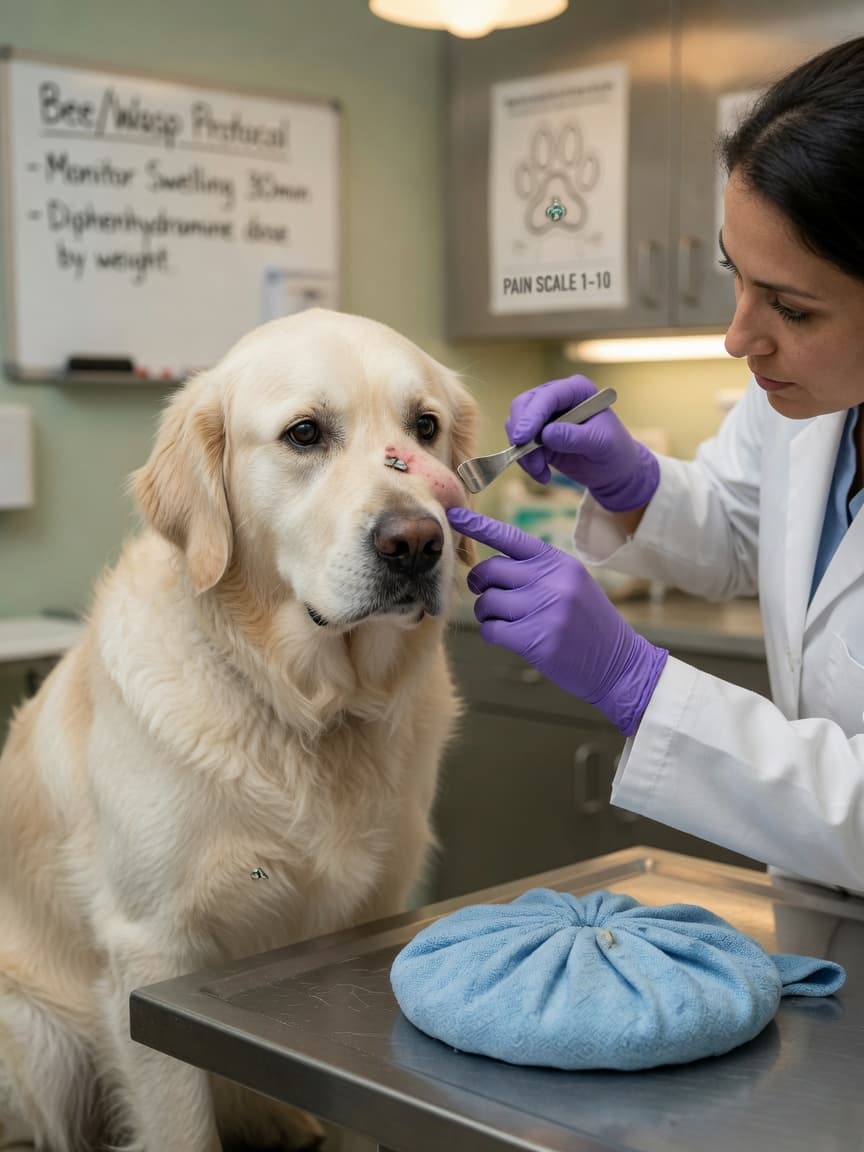
A normal, localised reaction includes immediate pain, yelping, pawing at the affected area, and visible swelling or a raised welt at the sting site. The area may be warm and red. This type of reaction is uncomfortable but not dangerous for most pets.
If a bee stinger is visible in the skin — it looks like a small dark speck — remove it as quickly as possible by scraping it out sideways with a flat edge such as a credit card or your fingernail. Do not use tweezers or pinch it, as squeezing the venom sac injects more venom. Applying a cool compress wrapped in a cloth to the affected area for ten to fifteen minutes can reduce swelling and provide some relief.
Do not apply any human antihistamine creams or gels without veterinary guidance. Oral antihistamines exist that are safe for dogs in appropriate doses, but the correct dose depends on your pet's weight and health status. Contact your vet for specific advice before administering anything.
Allergic Reactions: Recognising the Signs
An allergic reaction occurs when the immune system overreacts to the venom beyond the site of the sting. Signs typically appear within twenty to thirty minutes of the sting but can develop more slowly or, rarely, several hours later. They include:
- Swelling spreading beyond the sting site, particularly facial swelling and puffy eyes
- Hives — raised, itchy welts that may appear across the body
- Excessive drooling or vomiting
- Pale or white gums
- Rapid or laboured breathing
- Weakness, stumbling, or sudden collapse
- Diarrhoea
The presence of any of these signs following a sting is a veterinary emergency. Call your vet or an emergency animal hospital immediately and describe what you are seeing. Do not wait to see whether the symptoms improve on their own.
Anaphylaxis: When It Becomes Life-Threatening
Anaphylaxis is the most severe form of allergic reaction and can progress to cardiovascular collapse and death within minutes. In dogs, it primarily affects the gastrointestinal system, causing vomiting, bloody diarrhoea, and sudden weakness. In cats, respiratory symptoms tend to predominate — severe breathing difficulty, open-mouth breathing, and collapse. Both presentations require immediate emergency veterinary treatment with adrenaline (epinephrine) and supportive care.
If your pet has had a severe reaction to a sting previously, your vet may prescribe an emergency kit for home use, including injectable epinephrine. Discuss this option at your next routine appointment, particularly if you live in an area with abundant bees and wasps, or if your pet has a history of insect-related reactions.
Special Situations: Mouth Stings and Multiple Stings
A sting inside the mouth, on the tongue, or at the back of the throat is potentially dangerous even without an allergic reaction, because swelling in a confined space can obstruct the airway. Signs to watch for include drooling, difficulty swallowing, pawing at the mouth, or any change in breathing after your pet has been snapping at insects. Contact your vet immediately in this situation.
Multiple stings also present a higher risk than a single sting, as the cumulative volume of venom can cause toxicity even in animals with no prior allergic history. A dog that has disturbed a wasps nest and sustained numerous stings should be seen by a vet promptly, regardless of how well it appears initially.
Practical Summary
- Remove a visible bee stinger by scraping sideways — do not pinch or use tweezers
- Apply a cool compress to a localised sting for ten to fifteen minutes
- Do not administer any medication without veterinary advice
- Monitor for allergic signs for at least an hour after a sting
- Any facial swelling, breathing difficulty, vomiting, pale gums, or collapse is an emergency — call the vet immediately
- Stings in the mouth or throat, and multiple stings, require prompt veterinary assessment regardless of apparent severity
- If your pet has previously reacted badly to a sting, speak to your vet about an emergency treatment plan in advance
The best outcome after a sting is always one where a vet is involved sooner rather than later. When in doubt, phone first and let the professionals guide your next step.