
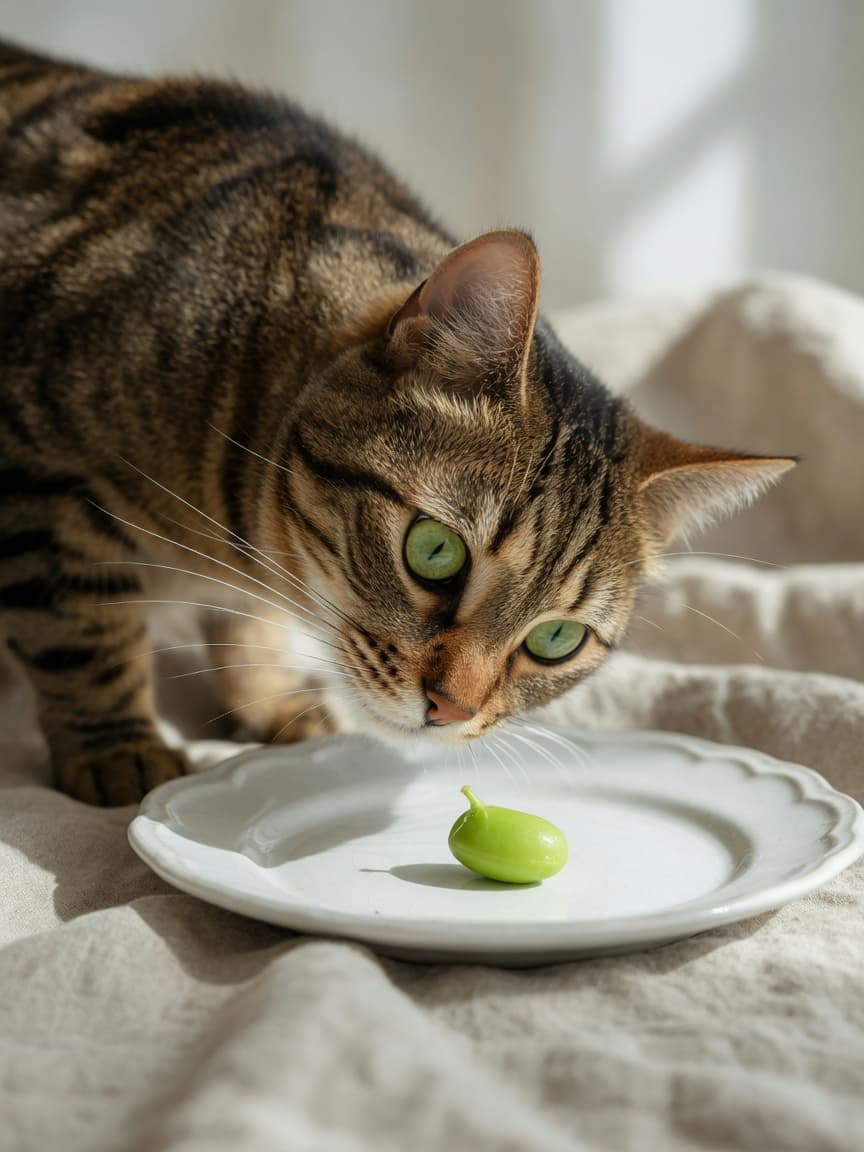
Can cats eat edamame?
Yes, cats can eat edamame in moderation. Edamame—young soybeans in the pod—is generally safe for cats as an occasional treat, though it should never replace their regular meat-based diet. If you're thinking of offering your cat a few edamame beans, understanding how to serve them safely and why moderation matters is important for keeping your pet healthy.
Why edamame can be a safe occasional treat
Edamame is non-toxic to cats and contains some nutrients that are harmless in small quantities. The beans are a source of plant-based protein and fibre, though cats cannot utilise plant proteins the way humans do. As obligate carnivores, cats require amino acids found primarily in animal-based proteins, so edamame will never be a nutritionally complete snack for them. However, a small amount as an occasional treat poses no safety risk to most healthy adult cats.
Nutritional considerations
Whilst edamame is safe, it offers limited nutritional value for your cat. Cats have evolved to thrive on meat, and their digestive systems are optimised to break down animal proteins and fats. Plant-based foods like edamame can be processed by cats, but they don't provide the complete amino acid profile that feline bodies need. This means edamame works best as a simple, low-calorie treat rather than something meant to boost your cat's diet.
How much edamame can you safely give your cat?
If you decide to offer edamame, keep portions very small. A single bean or two, offered occasionally, is appropriate for most cats. Because cats are much smaller than humans, even small foods represent a proportionally larger intake. Edamame should make up no more than 10 per cent of your cat's daily caloric intake, and ideally should be given only once or twice per week at most. Think of it as an occasional curiosity rather than a regular snack.
How to serve edamame safely
Preparation is essential when offering edamame to your cat. Always remove the beans from the pod—pods themselves are a choking hazard and shouldn't be given to cats. Raw edamame can be offered, but many cats find cooked, unsalted beans easier to eat. Never serve edamame with salt, garlic, onion, or any other seasonings, as these can be harmful. Steamed or boiled edamame (with no added ingredients) is the safest option.
Check that beans are soft enough for your cat to chew comfortably, especially if your cat is older or has dental issues. Cool the beans to room temperature before offering them, as hot food can burn your cat's mouth.
When to be cautious
Whilst edamame is generally safe, some cats may have sensitivities or digestive upset after eating beans. If your cat has a sensitive stomach, food allergies, or is on a special diet prescribed by your vet, check with your veterinary surgeon before introducing edamame. Additionally, if your cat has any underlying health conditions, your vet can advise whether treats like edamame are appropriate.
Watch for signs of digestive discomfort after offering edamame, such as vomiting, diarrhoea, or loss of appetite. If any of these occur, discontinue the treat and contact your vet if symptoms persist.
Better treat alternatives for cats
If you're looking for healthy treats to offer your cat, meat-based options are always the better choice. Small pieces of cooked chicken, turkey, or fish (without seasoning or bones) align much better with your cat's nutritional needs. Commercial cat treats designed for feline diets are also formulated to be nutritionally appropriate.
The bottom line
Edamame is safe for cats in moderation, but it's not a necessary or particularly beneficial addition to their diet. If your cat shows interest and you'd like to offer a bean or two as an occasional treat, prepare them properly by removing pods and seasoning. However, prioritise meat-based treats and your cat's regular balanced diet to keep them healthy and thriving. When in doubt, your veterinary surgeon is always the best resource for personalised advice about your cat's diet and treats.