
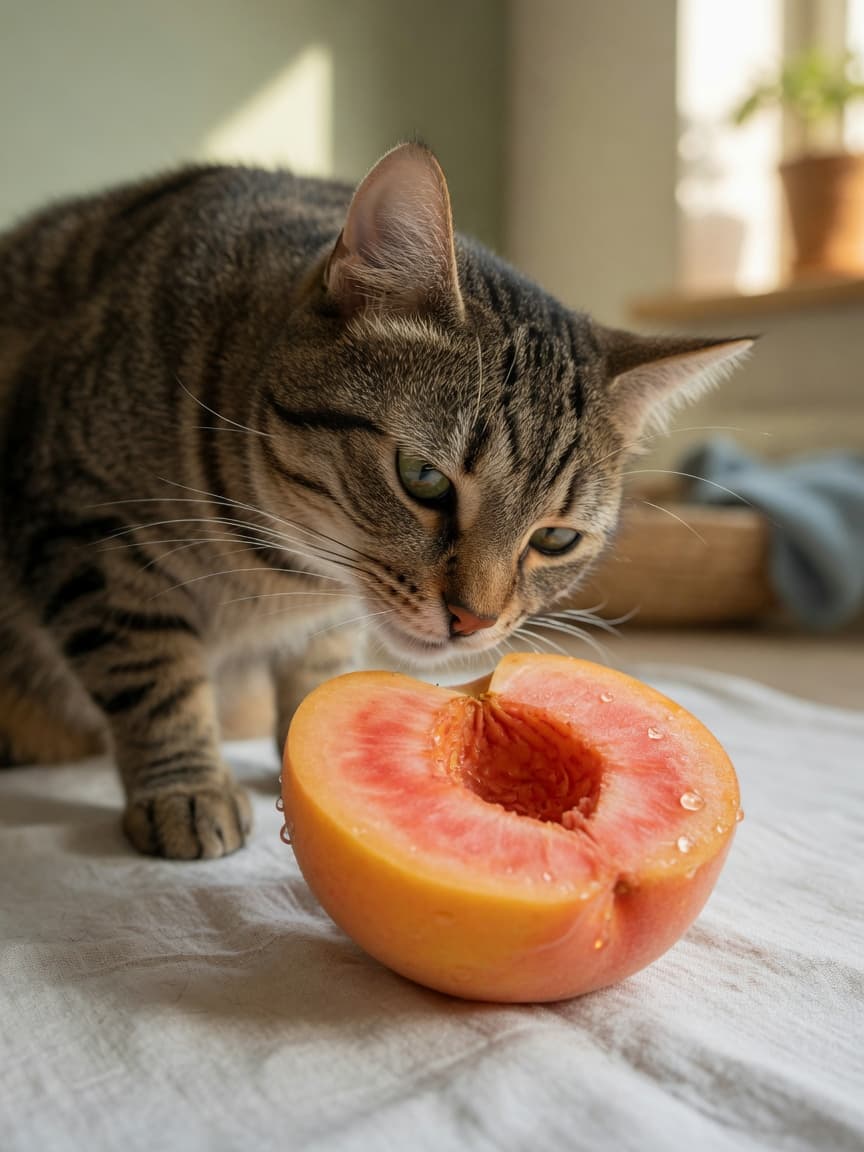
Can Cats Eat Peaches?
Yes, cats can eat peaches in moderation as an occasional treat. However, peaches should never become a regular part of your cat's diet or replace their proper nutrition. If you're considering offering your cat a small piece of peach, there are important safety guidelines to follow to keep your feline friend healthy and safe.
Are Peaches Safe for Cats?
Peaches themselves are non-toxic to cats. The fruit flesh contains no compounds that are poisonous to felines. However, there are several aspects of peaches that require careful attention before serving them to your pet.
The stone (pit) of a peach is a serious hazard and must always be removed completely before offering any peach to your cat. Peach pits contain small amounts of cyanogenic compounds and can also pose a choking risk or cause intestinal blockage if swallowed. Additionally, the pit is simply too hard for cats to digest safely.
Peach leaves and stems should also be avoided, as they contain trace amounts of compounds that are better left out of your cat's diet entirely.
Nutritional Considerations for Cats
It's important to remember that cats are obligate carnivores. This means their bodies are designed to obtain essential nutrients—particularly taurine, an amino acid vital for heart and eye health—from animal protein. Cats have minimal nutritional need for fruits and vegetables, including peaches.
While peaches do contain some vitamins and fibre, these nutrients are not necessary in your cat's diet if they're eating a balanced, high-quality cat food. Peaches are relatively high in natural sugars, which cats don't require and which can contribute to weight gain and dental problems if offered too frequently.
How Much Peach Can Cats Have?
If you decide to give your cat peach as a treat, keep portions very small. A piece no larger than a thumbnail is appropriate for most adult cats. This should be an occasional treat—perhaps once every few weeks at most—not something offered regularly.
Kittens, senior cats, cats with diabetes, or cats with sensitive digestive systems should have peach avoided altogether, as their systems are more vulnerable to upset from unusual foods.
How to Safely Serve Peach to Your Cat
If you've decided to offer your cat a tiny taste of peach, follow these safety steps:
First, thoroughly wash the peach under running water to remove any pesticide residues. Next, cut the peach in half and carefully remove the entire pit. Make sure no fragments of the pit remain embedded in the flesh. Cut away a very small piece of the soft fruit flesh—aim for roughly the size of a small pea or thumbnail. Avoid the skin if possible, as it can be difficult for cats to chew and digest properly.
Offer the small piece to your cat and supervise them while they investigate it. Not all cats will be interested in fruit, and that's completely normal and healthy. If your cat shows no interest, don't persist or try to encourage them to eat it.
Signs of Digestive Upset
After offering peach, monitor your cat for any signs of digestive upset over the next 24 hours. These might include vomiting, diarrhoea, loss of appetite, or unusual lethargy. If your cat displays any of these symptoms, contact your veterinary surgeon. Most cats will have no reaction to a small amount of peach, but individual sensitivities do vary.
Better Treat Alternatives
If you're looking to treat your cat or add variety to their diet, consider options that are more aligned with their carnivorous needs. Cooked chicken, turkey, or fish make excellent occasional treats. Some cats also enjoy specially formulated cat treats designed to be nutritionally appropriate.
The Bottom Line
Peaches are safe for cats in very small, occasional amounts, provided the pit and leaves are completely removed. However, they offer no nutritional benefit to your cat and aren't necessary. Your cat's health and happiness depend far more on a consistent, high-quality diet of meat-based cat food than on occasional fruit treats. When in doubt, always consult your veterinary surgeon before introducing any new food to your cat's diet.