
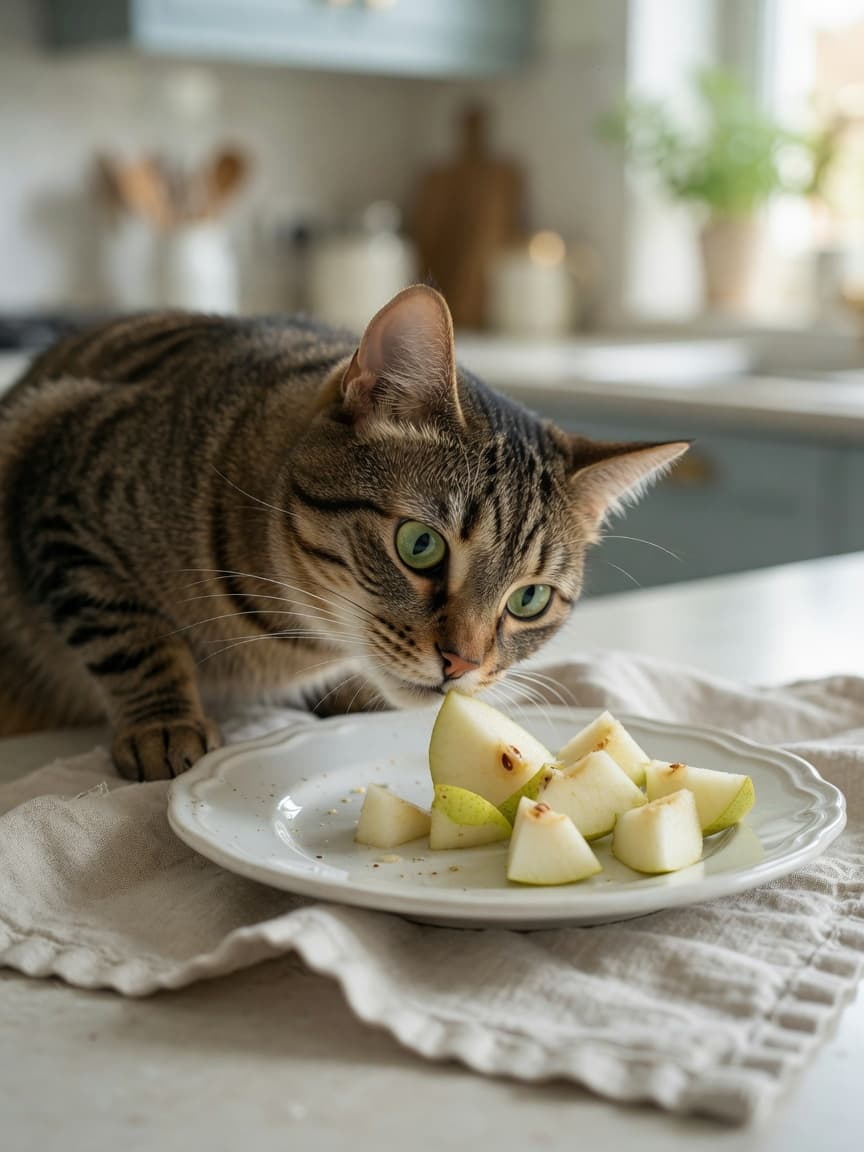
Can cats eat pears?
Yes, cats can eat pears in moderation as an occasional treat. Pears are generally safe for cats and can be offered in small quantities without causing harm. However, since cats are obligate carnivores, pears should never replace their regular meat-based diet and should only be given occasionally.
Are pears nutritionally beneficial for cats?
Pears do contain some nutritional value, including fibre and vitamin C. However, cats don't require these nutrients from fruit sources the way humans do. Cats are obligate carnivores, meaning their bodies are designed to obtain all necessary nutrients from animal protein. Their digestive systems are not optimised to process plant-based foods efficiently.
That said, the fibre in pears may offer minor digestive benefits for some cats, and the natural sweetness can make pears an appealing occasional treat. The water content in pears is also reasonably high, which can contribute to hydration—though cats typically get sufficient moisture from their regular diet.
How much pear can you safely give your cat?
Pears should be an occasional treat only, offered in small quantities. A few small pieces once or twice per week is appropriate for most cats. Treats, including pears, should make up no more than 10% of your cat's daily calorie intake, with the remaining 90% coming from complete, balanced cat food.
If your cat has never eaten pear before, start with just one or two small pieces to observe how they respond. Some cats may not be interested, and that's perfectly normal.
How to prepare and serve pears safely
Remove the seeds: Pear seeds contain compounds that can be harmful to cats, so it's essential to remove all seeds before offering any pear to your pet.
Wash thoroughly: Always wash the pear under running water to remove any pesticide residues or dirt.
Remove the skin (optional): The skin is safe but can be stringy and difficult for cats to chew. Peeling the pear and offering only the flesh may be easier for your cat to eat.
Cut into small pieces: Chop pear into bite-sized pieces appropriate for your cat's mouth size. This reduces choking risk and makes it easier for them to eat.
Serve plain: Never give your cat pear with added sugar, honey, or other sweeteners. Avoid canned pears in syrup, which contain excess sugar.
Fresh is best: Offer only fresh pear. Processed or preserved pears may contain additives unsuitable for cats.
Important caveats and considerations
Whilst pears are generally safe, there are circumstances when you should avoid offering them to your cat. If your cat has diabetes or is overweight, the natural sugars in pears could be problematic. Consult your veterinary surgeon before introducing pears to a cat with a health condition.
Some cats may experience mild digestive upset if they consume too much pear, including diarrhoea or constipation. If this occurs, stop offering pear and contact your vet if symptoms persist.
Watch for signs of choking, particularly if your cat doesn't chew food thoroughly. If your cat shows difficulty swallowing, drooling excessively, or gasping after eating pear, seek immediate veterinary attention.
Not all cats enjoy fruit, and that's completely fine. There's no nutritional requirement for your cat to eat pears or any other fruit. If your cat simply isn't interested, there's no need to encourage them.
What about other parts of the pear tree?
Only the flesh of the pear itself should be given to cats. Pear leaves, stems, and seeds should all be avoided, as seeds particularly contain potentially harmful compounds.
Final thoughts
Pears can be a safe, occasional treat for cats when prepared properly and offered in small quantities. However, they should always be considered a bonus rather than a dietary staple. Your cat's primary nutrition should come from high-quality cat food formulated to meet their obligate carnivore needs. If you have any concerns about introducing new foods to your cat's diet, or if your cat has underlying health conditions, speak with your veterinary surgeon before offering pears.