
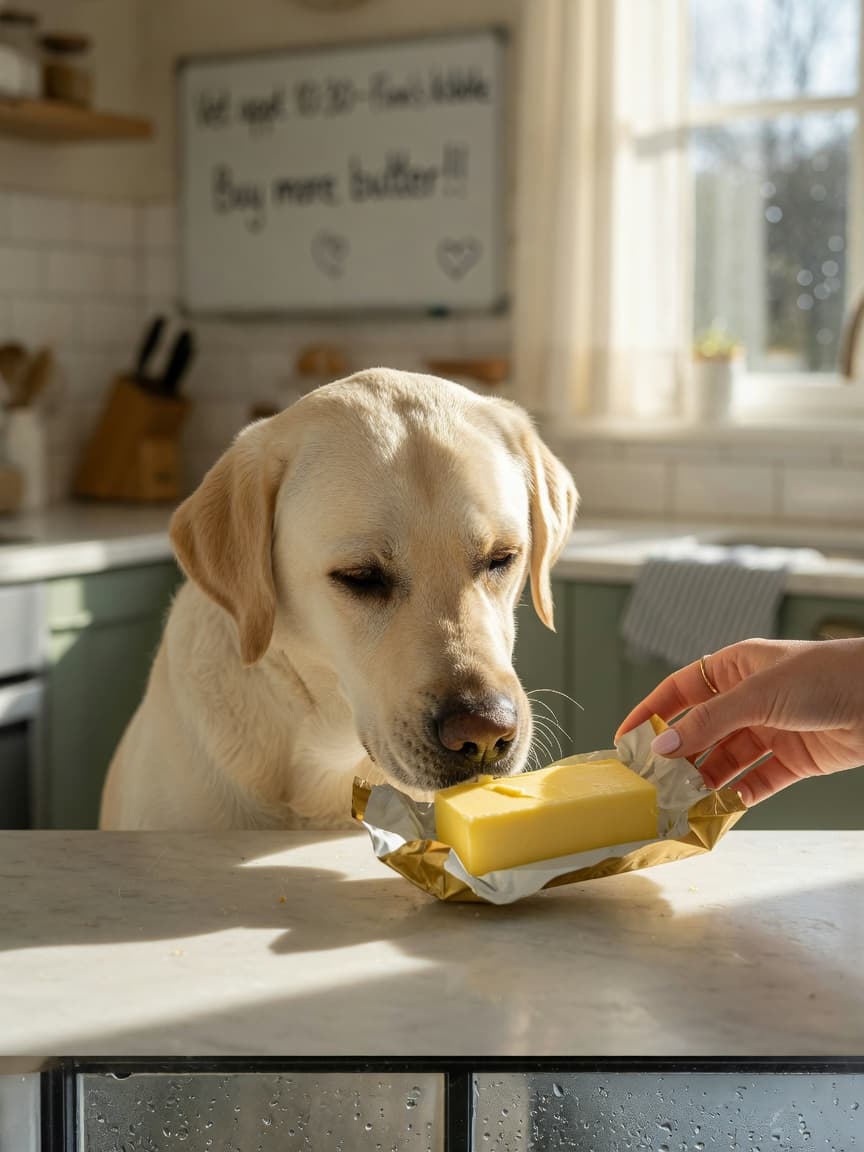
Can Dogs Eat Butter? Verdict: Caution — Not Recommended Regularly
Butter is not acutely toxic to dogs in the way that chocolate, xylitol, or grapes are. A small lick from a dropped knife or a piece of toast that hits the floor is very unlikely to cause a crisis. However, butter is far from a harmless treat. Its composition — roughly 80% fat with residual lactose — creates two distinct but overlapping problems for dogs: acute digestive upset from lactose intolerance, and a serious risk of pancreatitis from its concentrated saturated fat content. Veterinary advice across Europe is clear: butter should not be a deliberate part of your dog's diet.
The Biology of Lactose Intolerance in Dogs
Dogs are not obligate dairy consumers. Like most adult mammals, they experience a natural decline in intestinal lactase activity after weaning. Lactase is the enzyme responsible for cleaving lactose — milk sugar — into glucose and galactose, which can then be absorbed through the gut wall. When lactase levels fall, as they do in most adult dogs, undigested lactose passes into the colon where gut bacteria ferment it. This fermentation produces gases including hydrogen, carbon dioxide, and methane, as well as short-chain fatty acids and osmotically active compounds that draw water into the bowel.
The practical result is bloating, flatulence, loose stools, and diarrhoea — the classic signs of lactose intolerance. Butter contains less lactose than whole milk or cream (roughly 0.1 g per 100 g compared to 4.7 g in whole milk), because most lactose remains in the whey during churning. This means butter is less likely to cause lactose-driven symptoms than, say, a splash of milk. However, it is not lactose-free, and sensitive individuals can still react to even small amounts.
The Fat Problem: Saturated Fat and Pancreatitis Risk
The more serious concern with butter is its fat content. Standard unsalted butter is approximately 80% fat by weight, the majority of which is saturated. Dogs, like humans, have a pancreas that secretes lipase to digest dietary fats. When a large fat load arrives suddenly in the small intestine, the pancreas responds with a surge of enzyme secretion. In predisposed dogs — particularly middle-aged, overweight dogs, and certain breeds including Miniature Schnauzers, Cocker Spaniels, and Yorkshire Terriers — this surge can spiral into pancreatitis.
Acute pancreatitis occurs when pancreatic enzymes activate prematurely within the gland itself, initiating a process of autodigestion. The condition ranges from mild and self-limiting to severe, haemorrhagic, and life-threatening. A tablespoon of butter (approximately 14 g) contains around 11 g of fat — a significant proportion of the daily fat allowance for many dogs, delivered in a single moment with no fibre or other moderating nutrients to slow gastric emptying.
Salted Butter: An Additional Risk
Most butter sold in European supermarkets is available in both salted and unsalted forms. Salted butter adds sodium chloride at concentrations of around 1.5–2% — equating to roughly 90–100 mg of sodium per 14 g serving. This may not sound dramatic, but combined with the fat risk, it makes salted butter even less appropriate for dogs. Dogs with heart disease, kidney disease, or hypertension face particular danger from additional dietary sodium, as their compromised organ systems cannot regulate electrolyte balance efficiently.
EU Food Safety and Regulatory Context
The European Food Safety Authority (EFSA) does not issue guidance on dairy fats specifically for companion animals, but its assessments of saturated fat intake and cardiovascular risk in humans inform veterinary nutritional thinking across the EU. FEDIAF's nutritional guidelines for complete and complementary pet food set specific upper limits on crude fat content in dog diets, recognising that chronically high fat intake drives obesity, pancreatitis, and associated metabolic disease. Butter, as a concentrated fat source with no accompanying protein, fibre, or micronutrients relevant to canine health, fits into no recommended dietary category under FEDIAF frameworks.
When Dogs Should Not Eat Butter Under Any Circumstances
- Dogs with a history of pancreatitis — even a tiny amount of concentrated fat can trigger relapse
- Dogs currently classified as overweight or obese
- Dogs with known dairy sensitivity or irritable bowel conditions
- Dogs with kidney disease, particularly when on a sodium-restricted diet
- Dogs with heart disease or diagnosed hypertension
- Dogs with hyperlipidaemia (elevated blood triglycerides or cholesterol)
- Puppies, whose developing digestive systems are particularly vulnerable to rich foods
What About Ghee or Clarified Butter?
Ghee, popular in South Asian cooking and increasingly found in European kitchens, is butter with the milk solids and water removed, leaving almost pure fat. It contains negligible lactose, which addresses one of butter's problems. However, it is even more concentrated in fat than regular butter — approximately 99–100% fat by weight — which makes the pancreatitis risk even more pronounced. Ghee is not a safer alternative for dogs; it is simply a different risk profile.
Healthier Alternatives for Dogs Who Love Rich Tastes
If you want to add something to your dog's food to increase palatability — a common approach for dogs recovering from illness or with reduced appetites — there are far safer options than butter. A small amount of plain, unseasoned bone broth (low sodium) can be drizzled over kibble. Alternatively, a few drops of salmon oil provide omega-3 fatty acids that actively benefit coat health and joint function, unlike the predominantly saturated fat in butter. Many European pet food retailers, including Zooplus, stock purpose-formulated food toppers and broths designed to enhance palatability without the risks associated with human dairy products.
How Much Butter Is Safe?
There is no genuinely safe regular serving of butter for dogs. In the context of an accidental ingestion — a lick of a buttered piece of toast, for instance — a healthy adult dog of average weight is unlikely to suffer serious harm. Monitor for vomiting, diarrhoea, or signs of abdominal pain over the following 24 hours. If your dog consumes a larger quantity, such as half a block of butter, contact your vet promptly regardless of whether symptoms appear immediately, as pancreatitis can develop over several hours.
Conclusion
Butter occupies an uncomfortable middle ground: not acutely poisonous, but genuinely harmful when given regularly or in quantity. Its high saturated fat content puts dogs at real risk of pancreatitis — a painful, potentially fatal condition — and its residual lactose can cause unpleasant digestive symptoms in lactose-sensitive animals. There is no nutritional reason to include butter in your dog's diet. Stick to purpose-formulated treats and approved dietary supplements for a healthier, happier pet.