
Why Annual Vet Checks Are Essential for Cats
Cats are remarkably good at hiding illness. This is not stubbornness — it is an evolutionary survival mechanism. In the wild, a visibly sick cat is a vulnerable one, so the instinct to mask pain and weakness is deeply ingrained. The practical consequence for cat owners is that by the time a cat shows obvious symptoms, a disease may already be significantly advanced. Conditions including chronic kidney disease, hyperthyroidism, hypertension, and dental disease — all extremely common in cats, particularly older ones — are frequently first detected not by owners at home but by vets during routine health checks. Annual examinations provide the opportunity to identify problems early, establish individual baseline values, and build a longitudinal health record that makes changes over time much easier to interpret.
What Happens at a Cat Health Check
A standard annual cat health check combines a thorough head-to-tail physical examination with a review of vaccinations and preventive care. Here is what your vet will typically assess during the appointment.
Weight and Body Condition Score
Your vet will weigh your cat and assess their body condition score (BCS) on a standardised scale. Weight changes in cats are often meaningful — a gradual loss of body weight in a senior cat frequently signals hyperthyroidism, kidney disease, or intestinal disease, even when the cat is eating normally or even more than usual. Equally, weight gain and obesity in cats increases risk of diabetes mellitus, hepatic lipidosis, and joint disease. Tracking weight at each visit makes it possible to identify gradual trends that would be easy to miss at home.
Heart and Lung Auscultation
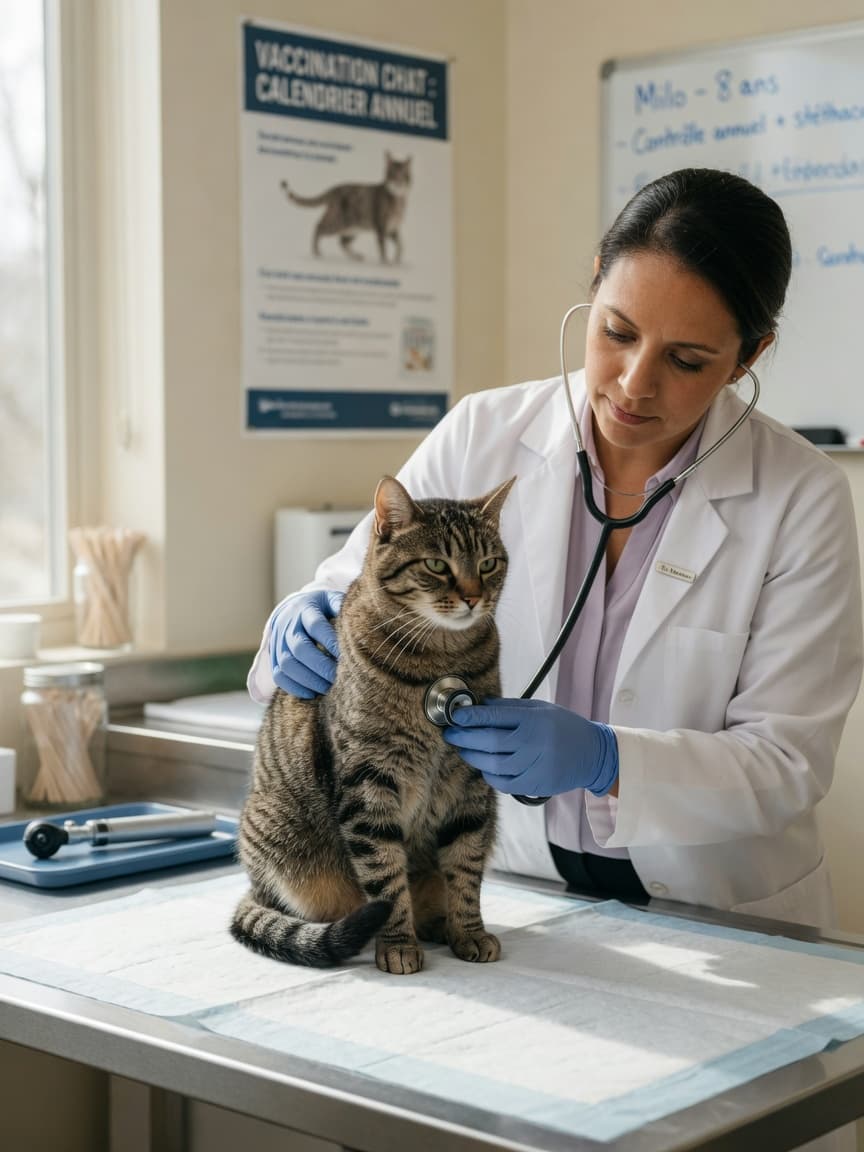
Using a stethoscope, your vet will listen to your cat's heart and lungs. Hypertrophic cardiomyopathy (HCM) — a thickening of the heart muscle — is one of the most common cardiac conditions in cats and can cause sudden death or congestive heart failure if undetected. Certain breeds, including Maine Coons, Ragdolls, and British Shorthairs, have a higher genetic predisposition to HCM. A heart murmur or abnormal rhythm detected at a routine check is the starting point for further investigation, typically an echocardiogram, before the disease becomes critical.
Dental Examination
Dental disease is extremely prevalent in cats — studies suggest more than 70 per cent of cats over three years of age have some degree of periodontal disease. Tooth resorption, a painful condition in which the tooth structure is progressively destroyed, affects a significant proportion of adult cats. Gingivitis and stomatitis can make eating painful, yet cats often continue eating despite significant discomfort. Your vet will examine the teeth, gums, and oral cavity and advise on professional cleaning under general anaesthetic if disease is present.
Eye Examination
One aspect of the feline eye examination that is unique to cats is the assessment of the iris for pigmented spots. Diffuse iris melanoma is a malignant tumour that begins as flat, darkly pigmented areas within the iris and can be difficult to distinguish from benign iris freckling. Vets monitor any pigmented iris changes for growth, spread, or other suspicious characteristics. If malignancy is suspected, enucleation (surgical removal of the eye) may ultimately be the only way to prevent systemic spread. Early identification during routine checks gives the best outcome.
Ear Examination
The ears are examined for signs of infection, ear mites, polyps, and inflammation. Ear infections in cats can involve the middle ear and cause neurological signs if untreated, so identifying them at routine checks is worthwhile even when the cat is not showing obvious discomfort.
Thyroid Gland Palpation
Hyperthyroidism is one of the most common endocrine diseases in senior cats. It is caused by a benign enlargement of the thyroid gland that causes excessive production of thyroid hormone, leading to weight loss despite increased appetite, vomiting, hyperactivity, and heart disease if untreated. Your vet will palpate both sides of the cat's neck, just below the larynx, to feel for thyroid nodules. An enlarged thyroid gland in a senior cat warrants a blood test to measure thyroid hormone levels.
Abdominal Palpation
Gentle abdominal palpation allows your vet to assess organ size and identify abnormalities. The kidneys are specifically assessed for size and shape — small, irregular kidneys suggest chronic kidney disease, which affects a very high proportion of cats over the age of fifteen. Intestinal thickening or masses may suggest inflammatory bowel disease or intestinal lymphoma. Bladder size is also assessed, as some cats present with urinary retention without obvious signs at home.
Vaccinations
The annual check is the standard occasion for reviewing your cat's vaccination status. Core vaccines in the UK protect against feline herpesvirus, feline calicivirus (together causing cat flu), and feline panleukopenia. Feline leukaemia virus (FeLV) vaccination is strongly recommended for cats with outdoor access or contact with unknown cats, as FeLV is a significant cause of immune suppression and cancer in cats. Your vet will advise on which vaccines are due based on your cat's individual lifestyle and risk factors.
Microchipping has been mandatory for all cats in England since June 2024. If your cat is not yet microchipped, the annual health check is an ideal opportunity to have this done. Ensure your contact details on the microchip database are kept up to date.
Senior Cats: Enhanced Monitoring from Age Ten
The World Small Animal Veterinary Association (WSAVA) recommends bi-annual health examinations for senior cats — typically from around ten years of age — in recognition of the faster pace at which age-related conditions develop and progress. Senior cat health checks include additional diagnostics beyond the physical examination.
Blood pressure monitoring is particularly important in senior cats. Systemic hypertension is common in older cats and is frequently secondary to chronic kidney disease or hyperthyroidism. Severely elevated blood pressure can cause sudden blindness due to retinal detachment — an outcome that is preventable with early detection and treatment. Blood pressure measurement in cats is non-invasive and takes only a few minutes. Blood and urine tests assess kidney function, thyroid hormone levels, blood glucose, liver enzymes, and complete blood count, providing a comprehensive metabolic picture that complements the physical examination.
How to Prepare for the Appointment
- Note any changes in drinking, eating, urination, or litter box habits — increased thirst and urination in senior cats are important symptoms worth recording
- Observe your cat's behaviour — are they sleeping more than usual, less willing to jump, or hiding more than before?
- Bring your cat's vaccination records if you are visiting a new practice
- Use a secure, well-ventilated carrier and consider spraying it with a synthetic feline pheromone such as Feliway an hour before the appointment to reduce anxiety
- Write down any questions in advance — appointment time passes quickly and it is easy to forget things once in the consulting room
Daily Observation: Spotting Problems Between Visits
The most effective way to catch problems early is to know what your individual cat's normal looks like. Pay attention to how much they typically eat and drink, how often they use the litter tray, and their usual energy level. Contact your vet promptly if you notice any of the following:
- Sudden weight loss or noticeable thinning, particularly in senior cats
- Marked increase in thirst or urination — a strong early indicator of kidney disease, diabetes, or hyperthyroidism
- Sudden changes in vision, bumping into objects, or dilated pupils that do not respond to light
- Difficulty breathing, open-mouth breathing, or rapid abdominal breathing
- Blood in urine, straining to urinate, or frequent visits to the litter box without producing urine — the latter can indicate urethral obstruction in male cats, which is a veterinary emergency
- Persistent vomiting or complete loss of appetite for more than 24 hours
- Collapse, seizures, or sudden extreme weakness
Annual — and for senior cats, bi-annual — health checks give you and your vet the information needed to protect your cat's health proactively. Combined with daily observation at home, they represent the foundation of responsible, preventive cat ownership.