
Average Vet Costs in the UK: A Realistic Overview
Veterinary costs in the UK vary by region, practice type, and the complexity of treatment required. The figures below represent typical ranges at general practice level; specialist and referral centres charge considerably more. These are averages — your vet's fees may differ, and it is always worth asking for an estimate before treatment begins.
Consultations and Diagnostics
A standard consultation with a vet typically costs between £40 and £70. This covers the appointment time and a physical examination but not any tests or treatments carried out during the visit. An out-of-hours emergency consultation at a specialist facility can cost £150 or more before any treatment is administered.
A basic blood panel — used to assess organ function, blood cell counts, and indicators of infection or illness — typically costs between £80 and £150. More comprehensive panels ordered by specialist vets can exceed this significantly. Urine analysis adds a further £30 to £60 in most practices.
X-rays (radiographs) usually cost between £150 and £300, depending on how many views are taken and whether sedation is required. Ultrasound scans, which give a real-time image of internal organs, typically cost between £200 and £400 at a general practice. At a specialist centre, the cost for a full abdominal ultrasound with a specialist interpretation can reach £500 or beyond.
MRI scanning, required for neurological conditions and soft tissue injuries not visible on X-ray, typically costs between £1,500 and £2,500. This almost always requires referral to a specialist centre and general anaesthetic.
Surgical Costs
Routine neutering (spay) for a female dog costs between £200 and £500 depending on the size of the dog and your location. Castration is generally cheaper. Cat neutering is less expensive, usually £100 to £250 for a female and £60 to £150 for a male.
Cruciate ligament repair — one of the most common orthopaedic surgeries in dogs — is one of the most significant costs many owners face. Depending on the surgical technique used, you can expect to pay between £2,000 and £5,000 or more per leg, with rehabilitation costs on top. Larger breeds often require the higher end of this range.
Cancer treatment costs vary enormously depending on the type, stage, and treatment pathway. Surgery alone may cost £1,000 to £4,000. Chemotherapy and radiation therapy can add a further £3,000 to £10,000 or more over the course of treatment. Some cancers are treated with surgery alone if caught early; others require a combination of approaches managed by an oncology specialist.
Intensive care unit (ICU) admission for critically ill pets, including overnight monitoring, intravenous fluids, and nursing care, typically costs between £500 and £1,500 per day at a referral centre.
Why Vets Charge What They Do
Veterinary fees are a frequent source of frustration for pet owners, but they reflect genuine costs that are often poorly understood. A veterinary degree in the UK takes five years to complete and is one of the most academically demanding programmes at any university. Newly qualified vets carry substantial student debt and earn salaries that are often modest relative to their training. Experienced vets and specialists command higher salaries that are factored into practice costs.
The equipment in a well-equipped veterinary practice — digital X-ray machines, ultrasound units, in-house blood analysers, anaesthetic monitoring equipment, surgical suites — represents a very large capital investment that must be serviced and replaced over time. The drugs used in veterinary medicine are subject to the same licensing requirements as human pharmaceuticals and carry corresponding costs.
Continuing education (CE) is mandatory for veterinary professionals and represents an ongoing cost for both the individual vet and the practice. Business overheads — premises, staffing, insurance, laboratory fees, clinical waste disposal — all contribute to the final bill.
Payment Plans and Financial Assistance
Many practices offer payment plans through third-party finance providers such as Carefree Credit or similar services. These allow you to spread the cost of a large vet bill over several months, often interest-free for an initial period. Ask your vet's reception team about payment options before treatment begins rather than after, as some practices require agreement in advance.
The PDSA (People's Dispensary for Sick Animals) provides free and subsidised veterinary care for pet owners on qualifying means-tested benefits, including Universal Credit, Housing Benefit, and Council Tax Reduction. Eligibility is assessed at the local PDSA Pet Aid Hospital, and you must live within the catchment area of a participating branch. The Blue Cross similarly offers subsidised care at its animal hospitals to those who cannot afford standard veterinary fees.
Some veterinary charities also assist specific groups — the Service Dogs Trust, for example, supports working dog owners, and several breed clubs maintain welfare funds for owners of their specific breed. It is worth researching what assistance is available before assuming there is none.
Asking Your Vet for an Itemised Estimate
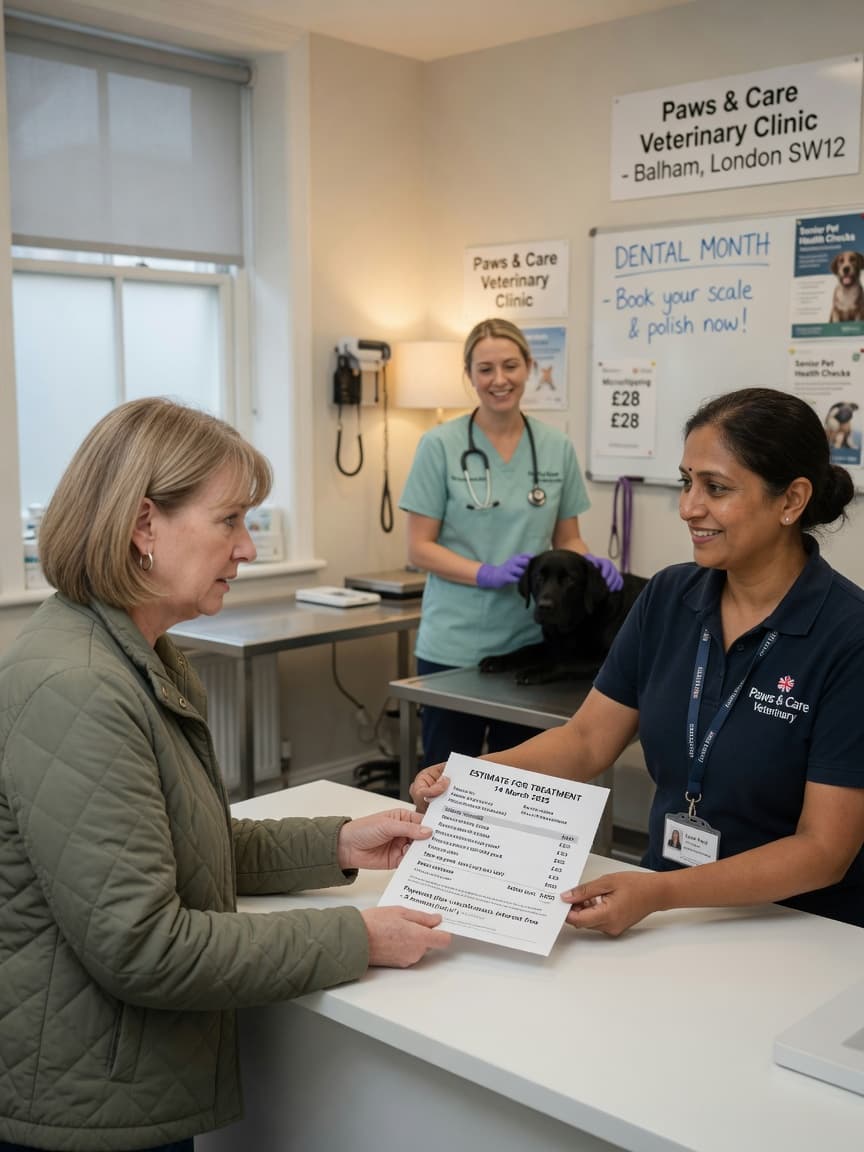
You are entitled to request an itemised written estimate before agreeing to any treatment. A reputable practice will provide this without hesitation. Understanding what each line item represents allows you to have an informed conversation with your vet about priorities if the total exceeds what you can afford. Vets deal with financial constraints regularly and can often discuss staged treatment plans or identify which elements of care are most urgent. Being honest about your budget is always better than delaying the conversation until after treatment has begun.