
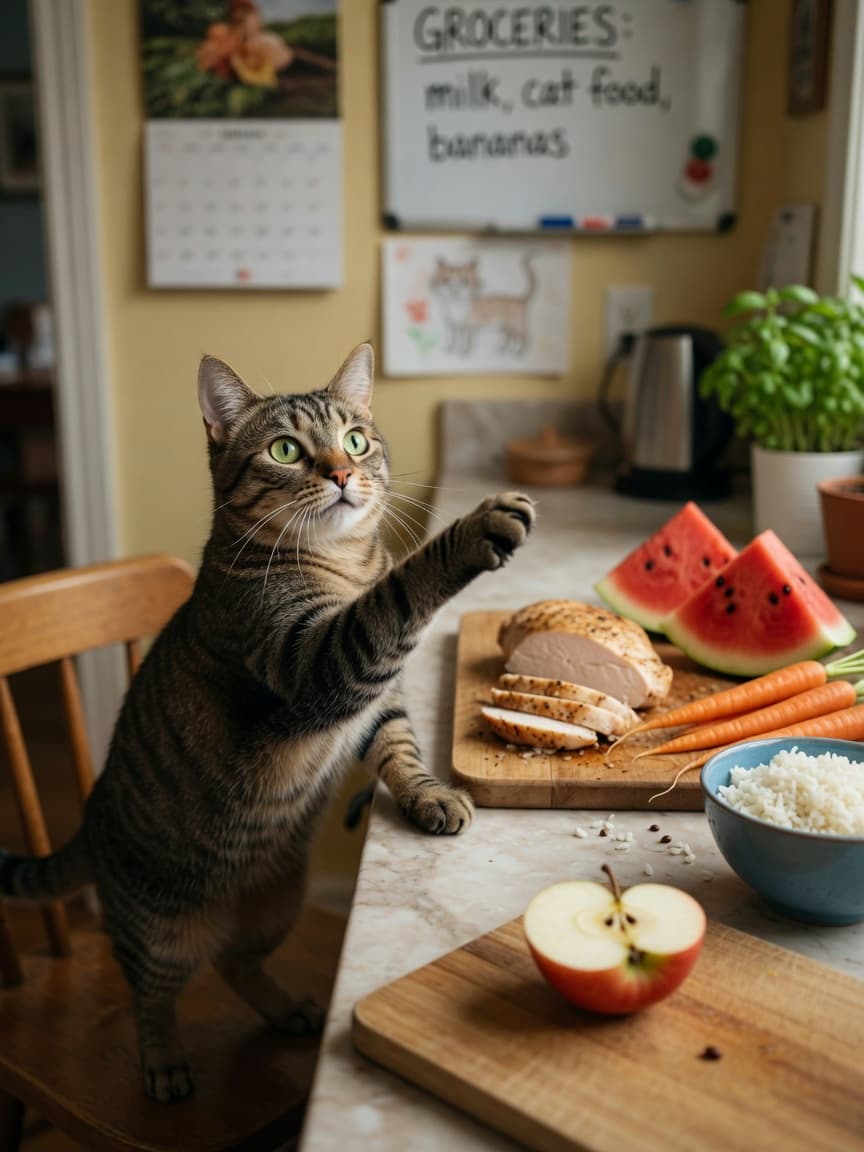
What Can Cats Eat? Safe Human Foods & Toxic Ingredients
As a cat owner, you've probably wondered whether it's safe to share your meals with your feline friend. While cats are obligate carnivores with specific nutritional needs, several human foods can be offered as occasional treats—and just as importantly, many common household items can cause serious harm. Understanding what's safe and what's dangerous is essential for keeping your cat healthy and preventing accidental poisoning.
Safe Human Foods for Cats
Cats can enjoy a variety of human foods in small quantities, provided they're prepared plainly without seasoning, salt, or added fats:
- Cooked chicken and turkey – excellent protein sources, completely safe when unseasoned
- Cooked fish – rich in omega-3 fatty acids; offer occasionally rather than regularly
- Eggs – a complete protein; serve boiled or scrambled without butter or seasoning
- Small amounts of cooked pumpkin – beneficial for digestive health
- Carrots – can be given raw or cooked; low-calorie treat option
- Watermelon – hydrating and safe in small pieces, without seeds
- Apples – remove seeds first, as they contain trace amounts of cyanide
- Plain rice or pasta – digestible carbohydrates for occasional treats
Always introduce new foods gradually and in very small portions to monitor for any adverse reactions.
Strictly Toxic Foods to Avoid
Several human foods are genuinely dangerous for cats and should never be offered, even in tiny amounts:
- Chocolate and caffeine – contain theobromine and caffeine, which can cause tremors, seizures, and heart problems
- Onions and garlic – destroy red blood cells and cause haemolytic anaemia, whether raw, cooked, or powdered
- Grapes and raisins – cause acute kidney failure; the exact toxic compound remains unknown
- Xylitol – an artificial sweetener found in sugar-free products that causes dangerous drops in blood sugar and liver damage
- Avocado – contains persin, which can cause vomiting and diarrhoea
- Alcohol – even small amounts cause intoxication, liver damage, and respiratory problems
- Raw dough and yeast – expand in the stomach and can cause bloating and alcohol production
- Raw fish – may contain parasites and thiaminase, which destroys vitamin B1
Foods Requiring Caution
Some foods aren't strictly toxic but should be given only occasionally and in moderation:
- Dairy products – most adult cats are lactose intolerant; small amounts of cheese or yoghurt may be tolerated
- Tuna – safe occasionally but shouldn't become a dietary staple due to mercury concerns and potential thiamine deficiency
- Nuts, particularly macadamia – high in fat and can cause digestive upset or pancreatitis
- Tomatoes – unripe tomatoes are potentially toxic; ripe ones are safer but offer little nutritional benefit
Emergency Action: What to Do If Your Cat Eats Something Toxic
If you suspect your cat has ingested a toxic substance, contact your veterinary surgery immediately, even if symptoms haven't appeared yet. Some toxins work over hours or days. Have the following information ready: what was eaten, approximately how much, and when. Your vet may induce vomiting or recommend activated charcoal, depending on the substance.
Key Takeaways for Feeding Your Cat
Your cat's primary nutrition should come from high-quality cat food specifically formulated to meet their unique needs as obligate carnivores. Human foods should account for no more than 10% of daily caloric intake and should never replace complete and balanced cat nutrition. When in doubt about whether a food is safe, consult your veterinary surgeon before offering it. Remember that cats have different metabolic requirements from humans and dogs, so what's safe for your golden retriever may be dangerous for your cat. By understanding safe and toxic foods, you can confidently share moments with your feline companion while protecting their health and wellbeing.