
What Is Addison's Disease?
Addison's disease, or hypoadrenocorticism, is the opposite of Cushing's disease. Where Cushing's involves excessive cortisol production, Addison's occurs when the adrenal glands fail to produce sufficient quantities of cortisol and, in most cases, aldosterone. These two hormones are essential for life. Cortisol supports the stress response and regulates metabolism, while aldosterone controls sodium and potassium balance, which directly affects blood pressure and heart function.
Without adequate adrenal hormones, dogs become critically vulnerable to stress, dehydration, and electrolyte imbalance. The condition is less common than Cushing's disease but significantly more dangerous when undiagnosed. It is sometimes called "the great pretender" in veterinary medicine, owing to its habit of mimicking a wide range of other conditions and frequently going undetected until a crisis occurs.
Who Gets Addison's Disease?
Addison's disease can affect dogs of any age, including young adults, though it is more frequently diagnosed in dogs between four and seven years of age. Females appear to be at slightly higher risk than males. Certain breeds show genetic predisposition, including standard poodles, Portuguese water dogs, West Highland white terriers, wheaten terriers, and Bearded collies.
The most common cause is immune-mediated destruction of the adrenal cortex, where the dog's own immune system attacks and progressively damages the hormone-producing tissue. Less commonly, Addison's disease results from infection, infarction, granulomatous disease, or — importantly — the abrupt withdrawal of long-term corticosteroid medication, which suppresses natural adrenal function during use.
A small subset of dogs have atypical Addison's disease, where only cortisol is deficient and aldosterone production remains intact. These dogs present with a slightly different clinical picture and can be more challenging to diagnose.
Why It Mimics So Many Other Conditions
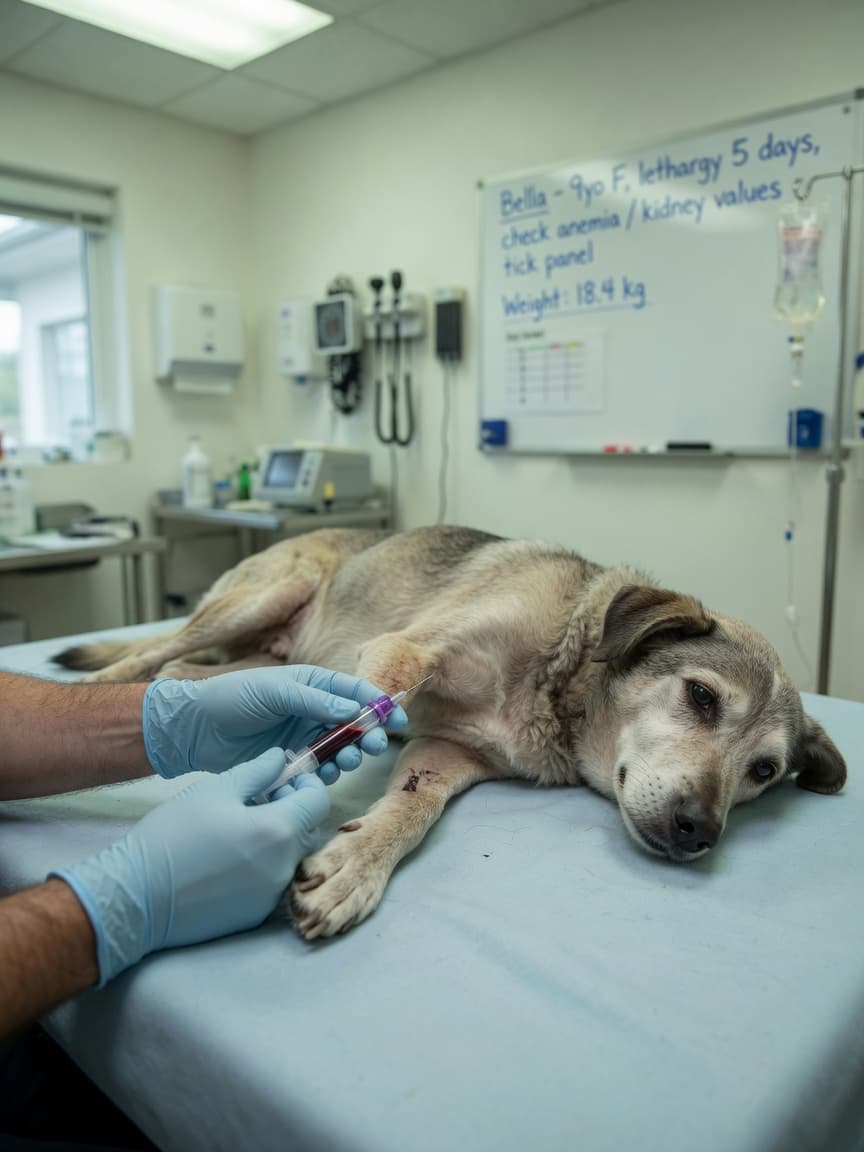
The symptoms of Addison's disease are genuinely non-specific, which is the core reason diagnosis is so frequently delayed. A dog with Addison's disease might present to a vet with lethargy, reduced appetite, intermittent vomiting or diarrhoea, weight loss, and general weakness. These are symptoms shared by dozens of common conditions, from gastrointestinal disease to kidney problems to infections.
What makes Addison's particularly deceptive is its waxing and waning nature. Many dogs experience episodes of feeling unwell followed by apparent recovery, often without any specific treatment. This pattern, sometimes called episodic illness, can persist for months or years before the diagnosis is made. Owners frequently describe their dog as having "a sensitive stomach" or "off days," not realising the root cause is adrenal insufficiency.
Vets sometimes refer to an Addisonian dog as one that "sucks at being sick" — meaning the degree of depression and weakness is disproportionate to what the presenting complaint alone would suggest. A dog who seems far more unwell than a case of gastroenteritis should warrant broader investigation.
The Addisonian Crisis
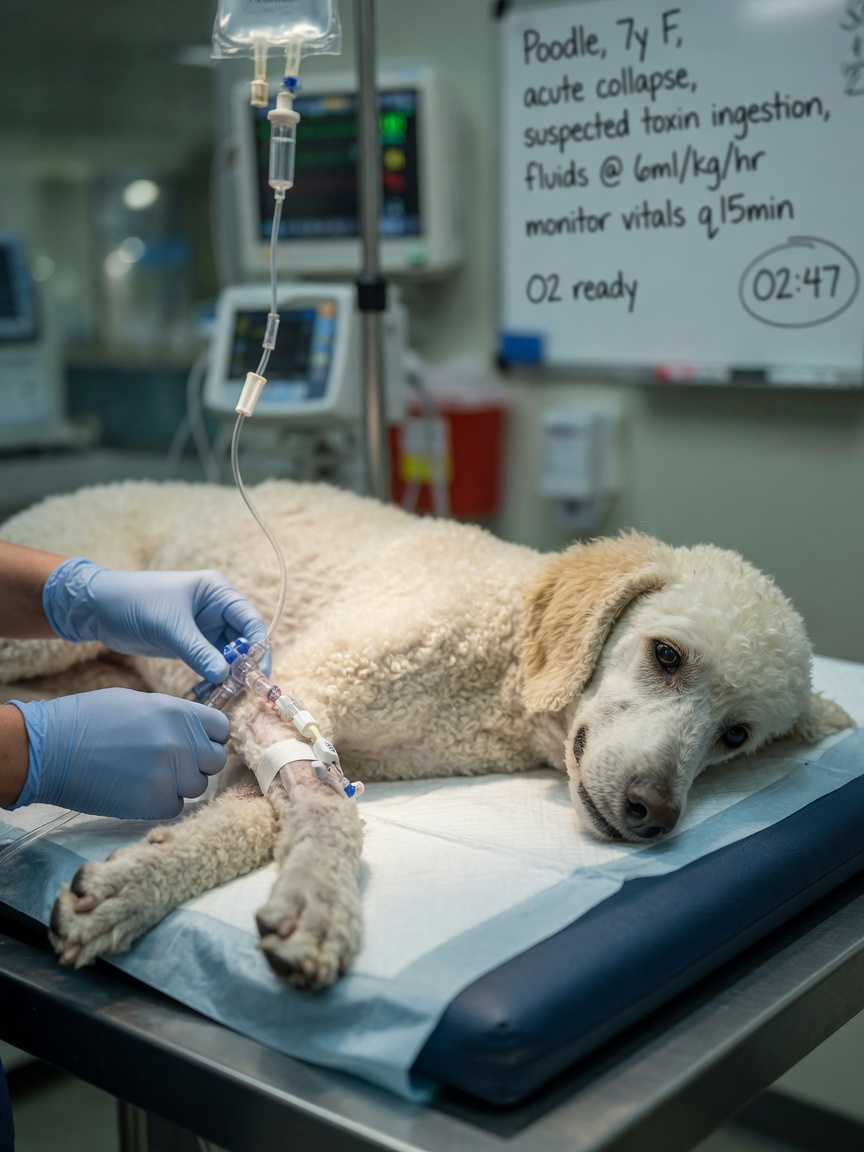
If Addison's disease remains undiagnosed, the dog is at risk of an Addisonian crisis — a potentially fatal acute emergency in which the body can no longer compensate for the hormonal deficit, particularly during periods of physiological or emotional stress. Common triggers include illness, surgery, injury, kennelling, or any significant disruption to routine.
During a crisis, the dog collapses, becomes severely weak and unresponsive, may develop bradycardia (abnormally slow heart rate), and can go into circulatory shock. Electrolyte disturbances — particularly high potassium and low sodium — can cause life-threatening cardiac arrhythmias. This constitutes a veterinary emergency requiring immediate intravenous fluid therapy and steroid supplementation.
Some dogs are diagnosed with Addison's disease for the first time during a crisis. Survival depends on rapid recognition and aggressive initial treatment.
Diagnosing Addison's Disease
Routine blood tests in a dog with Addison's disease often show characteristic abnormalities, though these are not always present. Classic findings include elevated potassium, reduced sodium, elevated urea, and mild anaemia. A sodium to potassium ratio below 27 is considered suspicious and should prompt further testing.
The definitive diagnostic test is the ACTH stimulation test. A baseline cortisol sample is taken, synthetic ACTH is administered, and cortisol is measured again one hour later. In a healthy dog, cortisol rises substantially in response. In a dog with Addison's disease, the adrenal glands cannot respond, and cortisol remains low at both time points.
Abdominal imaging may reveal small adrenal glands in immune-mediated cases, contrasting with the enlarged glands seen in Cushing's disease. Electrocardiography may identify cardiac changes associated with hyperkalaemia during an acute crisis.
Long-Term Treatment and Management

The good news about Addison's disease is that once diagnosed, it is highly manageable. Treatment involves lifelong hormone replacement, and with appropriate medication, most dogs go on to live full, normal lives with an excellent long-term prognosis.
Standard treatment for typical Addison's disease (both cortisol and aldosterone deficient) involves:
- Mineralocorticoid replacement: Desoxycorticosterone pivalate (DOCP, sold as Zycortal in the UK) is given as an injection every 25 to 30 days, replacing aldosterone's role in sodium and potassium regulation.
- Glucocorticoid replacement: Prednisolone at a low physiological dose is given daily to replace cortisol.
For atypical Addison's disease, prednisolone alone may be sufficient initially, though some dogs eventually develop aldosterone deficiency and require mineralocorticoid therapy as well.
Monitoring involves regular electrolyte checks to ensure DOCP dosing is appropriate and periodic assessment of general health. Many dogs stabilise on a consistent protocol and require only routine monitoring once their maintenance dose is established.
Stress Dosing: A Critical Owner Responsibility
One of the most important aspects of living with an Addisonian dog is understanding stress dosing. During times of significant physical or emotional stress — illness, surgical procedures, major disruptions, travel — the normal physiological response is to produce more cortisol. A dog with Addison's disease cannot do this.
Owners are typically advised to double or triple the daily prednisolone dose during periods of stress and to seek veterinary guidance before any planned procedures. Ensuring that emergency vets treating the dog in a crisis are aware of the diagnosis — ideally through a tag, collar note, or veterinary record alert — can be genuinely life-saving.
With this awareness in place, and with consistent medical management, dogs with Addison's disease are not limited in their quality of life. They run, play, and thrive alongside their owners — as long as their condition is known and respected.