
The Condition Most Cat Owners Miss Entirely
Feline arthritis is one of the most underdiagnosed and undertreated conditions in veterinary medicine. Studies using radiographic imaging have found that up to 90% of cats over the age of 12 show X-ray evidence of degenerative joint disease, yet the majority of these cats are never diagnosed, let alone treated. The reason is simple: cats hide pain extraordinarily well, and the signs of arthritis in cats look nothing like the signs we expect from dogs.
A limping cat is relatively rare. Instead, an arthritic cat becomes quieter, jumps less, grooms differently, and withdraws from family life. These changes are easily misread as a cat simply getting older.
How Arthritis Develops in Cats
Osteoarthritis in cats most commonly affects the elbows, hips, stifles (knees), and the joints of the spine. The cartilage that cushions the joint surfaces gradually breaks down, leading to inflammation, bony changes, and pain during movement. Unlike dogs, who often develop arthritis secondary to conditions like hip dysplasia, feline arthritis tends to arise from normal wear and tear over a long lifespan.
Overweight cats are at significantly higher risk, as excess body weight accelerates cartilage degradation. Previous injuries, even minor ones, can also predispose specific joints to earlier or more severe arthritis.
Recognising Arthritis in Your Cat
Because cats rarely display obvious lameness, you need to look for more subtle behavioural shifts. A validated clinical tool called the Feline Musculoskeletal Pain Index was developed specifically to help owners recognise pain-related behaviour changes at home.
- Reduced jumping height or frequency, or using intermediate steps to reach previously accessible surfaces
- Reluctance to use the litter tray, particularly if it has high sides, or accidents outside the tray
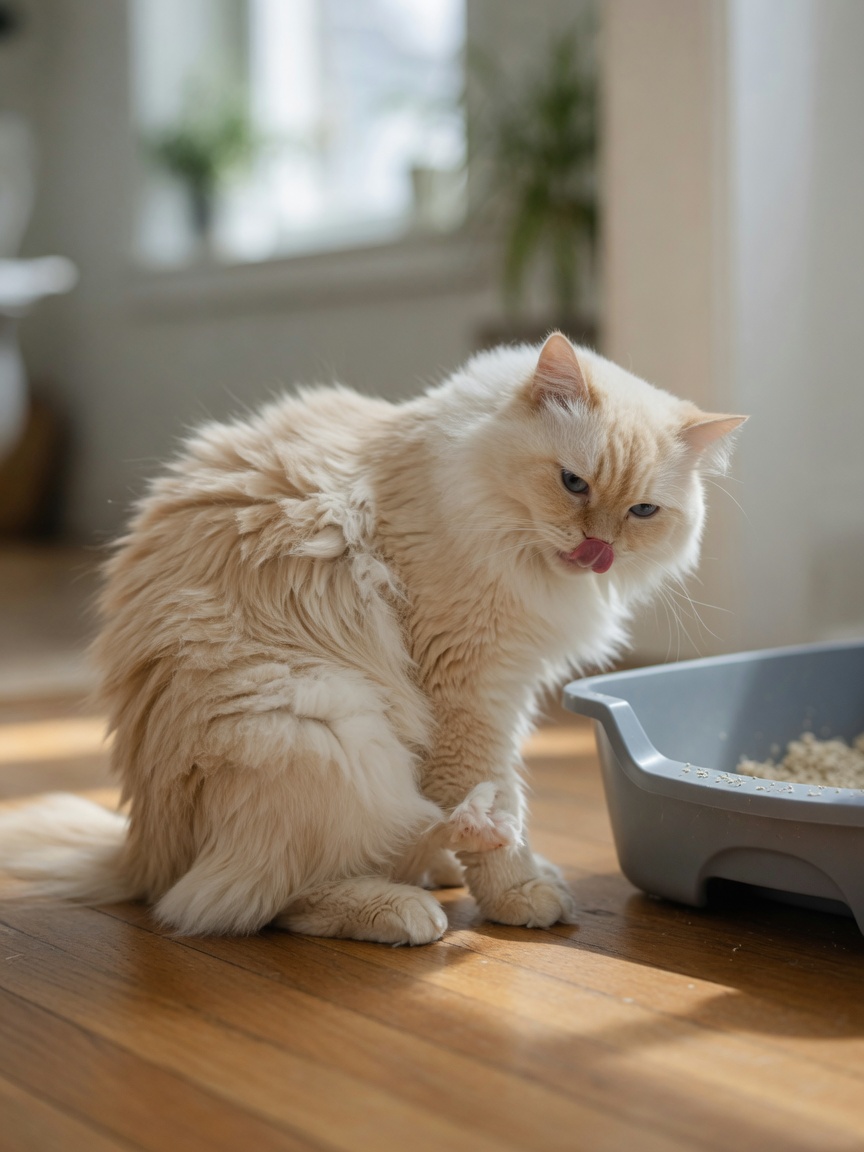
- Changes in grooming: either matting and poor coat condition due to difficulty reaching certain areas, or over-grooming painful joints
- Decreased activity and play, sleeping in different positions or more unusual locations
- Increased irritability, especially when touched around painful joints
- Reduced social interaction with humans or other pets in the household
If you are seeing several of these changes in an older cat, a veterinary assessment for musculoskeletal pain is warranted.
Veterinary Diagnosis
Your vet will perform an orthopaedic examination, assessing joint range of motion and pain response. X-rays can confirm the presence and extent of bony changes, though it is worth noting that radiographic severity does not always correlate perfectly with clinical pain — some cats with significant X-ray changes cope remarkably well, whilst others are clearly uncomfortable despite milder imaging findings.
Blood and urine tests are important in older cats to assess kidney and liver function, as this directly influences which pain management options are safe to use.
Pain Medication: What Is Available
This is where feline arthritis management diverges significantly from canine management, and it matters enormously.
NSAIDs
Non-steroidal anti-inflammatory drugs are the mainstay of arthritis pain management in dogs but must be used with great caution in cats. Cats lack certain liver enzymes that metabolise NSAIDs, making them far more susceptible to toxicity. Meloxicam is licensed for long-term use in cats in the UK and Europe at low doses with regular monitoring. Robenacoxib is another option. These medications require ongoing blood work to monitor kidney function and should only ever be used under veterinary supervision.
Monoclonal Antibody Therapy
Frunevetmab (sold as Solensia) represents a significant advance in feline pain management. It is a monthly injectable monoclonal antibody that targets nerve growth factor, a key mediator of pain signalling. Clinical trials showed meaningful improvements in mobility and pain-related behaviour in arthritic cats, with an excellent safety profile even in cats with kidney disease. For cats who cannot tolerate NSAIDs, this is often now the first-line recommendation.
Gabapentin
Gabapentin is increasingly used in feline pain management, particularly for neuropathic or chronic pain. It works on calcium channels in the nervous system to reduce pain signal transmission. It is generally well-tolerated in cats, though sedation can occur at higher doses. It is often used alongside other treatments rather than as a standalone option.
Environmental Modifications That Make a Real Difference
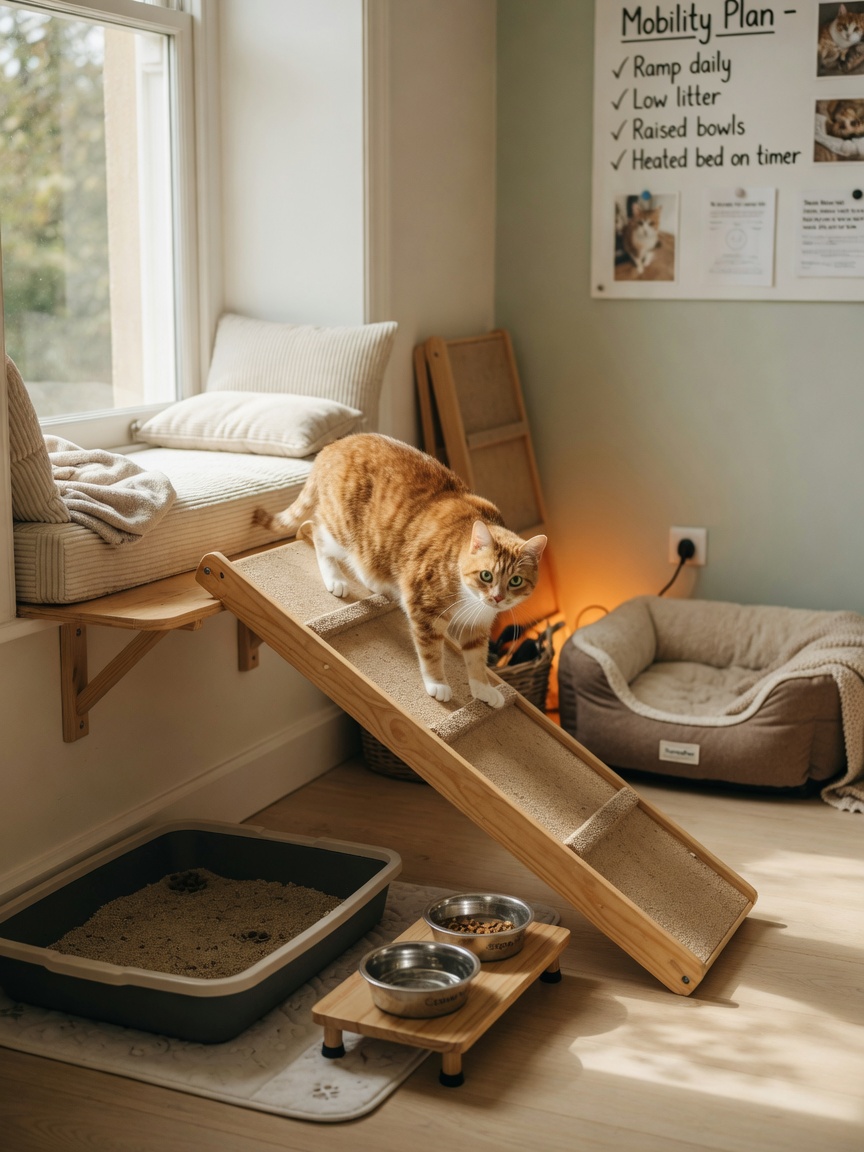
Medication is only part of the picture. Adapting your cat's environment to reduce the physical demands placed on painful joints can dramatically improve their comfort and independence.
- Provide ramps or steps to reach favoured sleeping spots, window perches, and sofas
- Switch to a litter tray with a low entry point or cut a lower entrance into a standard tray
- Ensure food, water, and the litter tray are all on the same level so the cat does not need to navigate stairs multiple times a day
- Provide a warm, well-padded sleeping area away from draughts, as cold temperatures worsen joint stiffness
- Raise food and water bowls slightly so your cat does not need to bend their neck and spine uncomfortably to eat
Weight Management
If your arthritic cat is overweight, weight loss is one of the single most impactful interventions possible. Every gram of excess body weight translates into additional load on already-compromised joints. Even modest weight reduction — as little as 6 to 8% of body weight — has been shown to produce measurable improvements in mobility and pain scores in arthritic cats. Your vet can calculate a target weight and recommend an appropriate calorie-controlled diet.
Nutritional Support
Omega-3 fatty acids, particularly EPA and DHA from marine sources, have anti-inflammatory properties and are supported by clinical evidence in both cats and dogs. Look for products specifically formulated for joint health rather than generic fish oil supplements, and choose those that have been tested for heavy metal contamination.
Green-lipped mussel extract contains glycosaminoglycans and has been studied as a joint supplement in cats with some positive results, though the evidence base is less robust than for omega-3s.
Physiotherapy and Acupuncture
Veterinary physiotherapy and hydrotherapy are more established in dogs than cats, largely because most cats do not tolerate these interventions well. However, some cats do accept gentle physiotherapy techniques, and there is a small but growing evidence base for veterinary acupuncture in feline pain management. If your cat is exceptionally tolerant, these may be worth discussing with a specialist.
Arthritis is not a minor inconvenience in cats — it is a significant source of chronic pain that profoundly affects quality of life. The good news is that with the right combination of medication, environmental adaptation, and nutritional support, many cats experience meaningful improvement and can remain comfortable and engaged well into old age.