
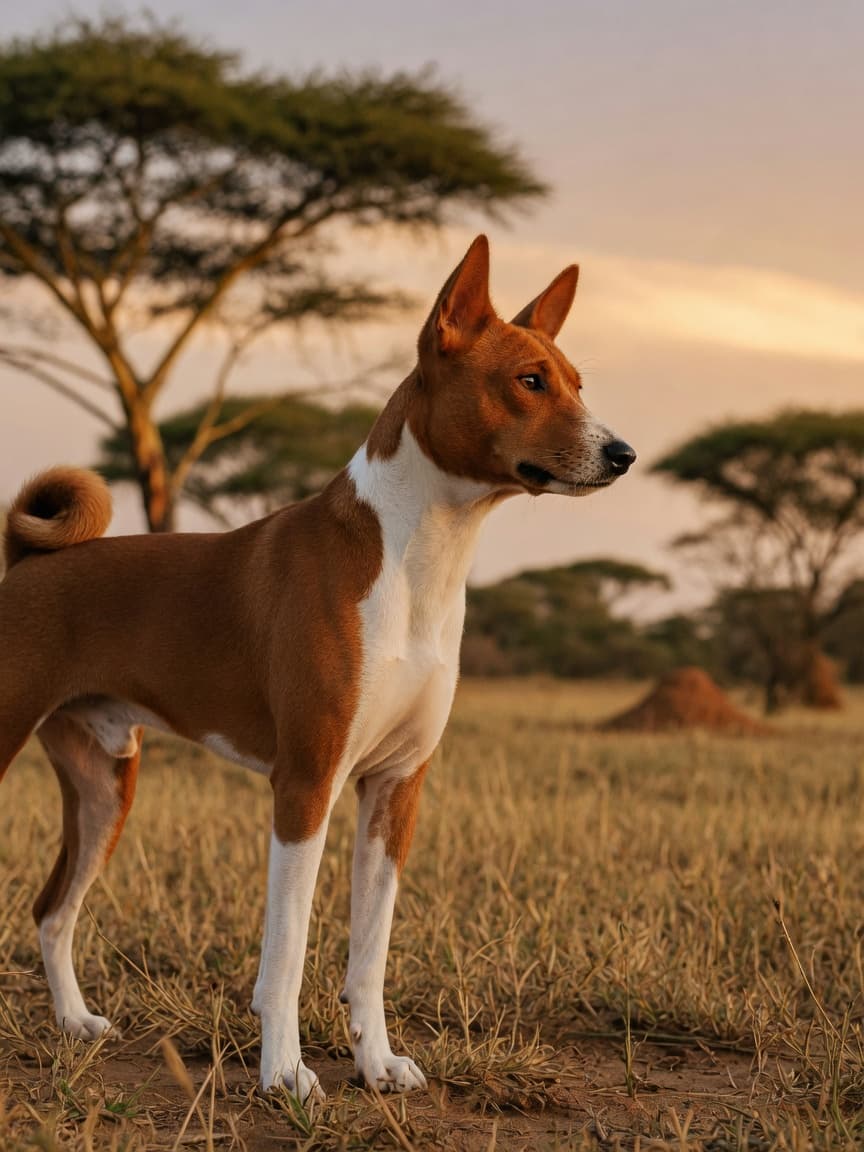
Basenji Breed Guide: The Barkless Dog From Central Africa
The Basenji is one of the most unusual dog breeds in existence. Ancient in origin, cat-like in behaviour, and uniquely unable to bark, this compact hunting dog from central Africa captures the attention of everyone it meets. The Basenji is a breed of contradictions — deeply affectionate with family yet stubbornly independent, low-shedding yet fastidiously self-grooming, gentle in the home yet a relentless hunter outdoors. Owning a Basenji is a genuinely distinctive experience, and understanding the breed thoroughly before acquiring one is essential.
Origin and History
The Basenji is widely regarded as one of the oldest dog breeds on earth. Archaeological evidence suggests that dogs closely resembling the modern Basenji existed in ancient Egypt, and carvings found in Egyptian tombs date back over 5,000 years. The breed originated in the Congo Basin of central Africa, where it was used by indigenous hunters to flush game into nets and to hunt small prey. African hunters prized the Basenji for its intelligence, speed, and silence — a barking dog in the jungle could alert prey or enemies.
The Basenji was introduced to the Western world in the late 19th and early 20th centuries, with early attempts at importation complicated by the breed's susceptibility to distemper. Successful breeding programmes were established in the United Kingdom in the 1930s, and the breed was recognised by the Kennel Club shortly thereafter.
The Basenji's Unique Voice
Perhaps the most famous characteristic of the Basenji is that it cannot bark. This is not a training outcome — it is a result of the breed's unusually shaped larynx. Rather than barking, the Basenji produces a remarkable range of vocalisations including a distinctive sound known as a "barroo," which is a melodious yodelling or howling call. Basenjis also whine, growl, crow, and chortle. They are not silent dogs — but they are certainly different.
Temperament and Personality
The Basenji has a personality that surprises many people expecting a typical dog. It is independent, curious, and decidedly cat-like in its approach to life. It grooms itself with its paws in a manner very similar to a cat, climbs to elevated positions to survey its territory, and can be aloof with strangers while remaining devoted to its close family. The Basenji is not a dog that lives to please — it will comply with requests when it sees a reason to, but blind obedience is not in its nature.
This independence makes the Basenji a challenging breed to train. Short, varied, reward-based training sessions work best. Repetitive drilling quickly leads to boredom and disengagement. The breed is highly intelligent and learns quickly, but requires creative and patient handling.
Basenjis can be good with older children who understand how to interact respectfully with dogs. They are often best kept in single-dog or same-sex households, as they can be assertive with other dogs. Their very high prey drive means they are not reliably safe with cats or small pets.
Exercise Requirements
The Basenji is a sighthound at heart and has the speed to match. It requires one to two hours of exercise daily, with the opportunity to run freely in a fully enclosed and secure area. A Basenji off the lead in an unsecured environment is a significant flight risk — once it locks onto a scent or sight it will run and may cover considerable distances before it can be recalled. The garden or exercise area must have very secure, high fencing, as Basenjis are also accomplished climbers and jumpers.
Common Health Conditions
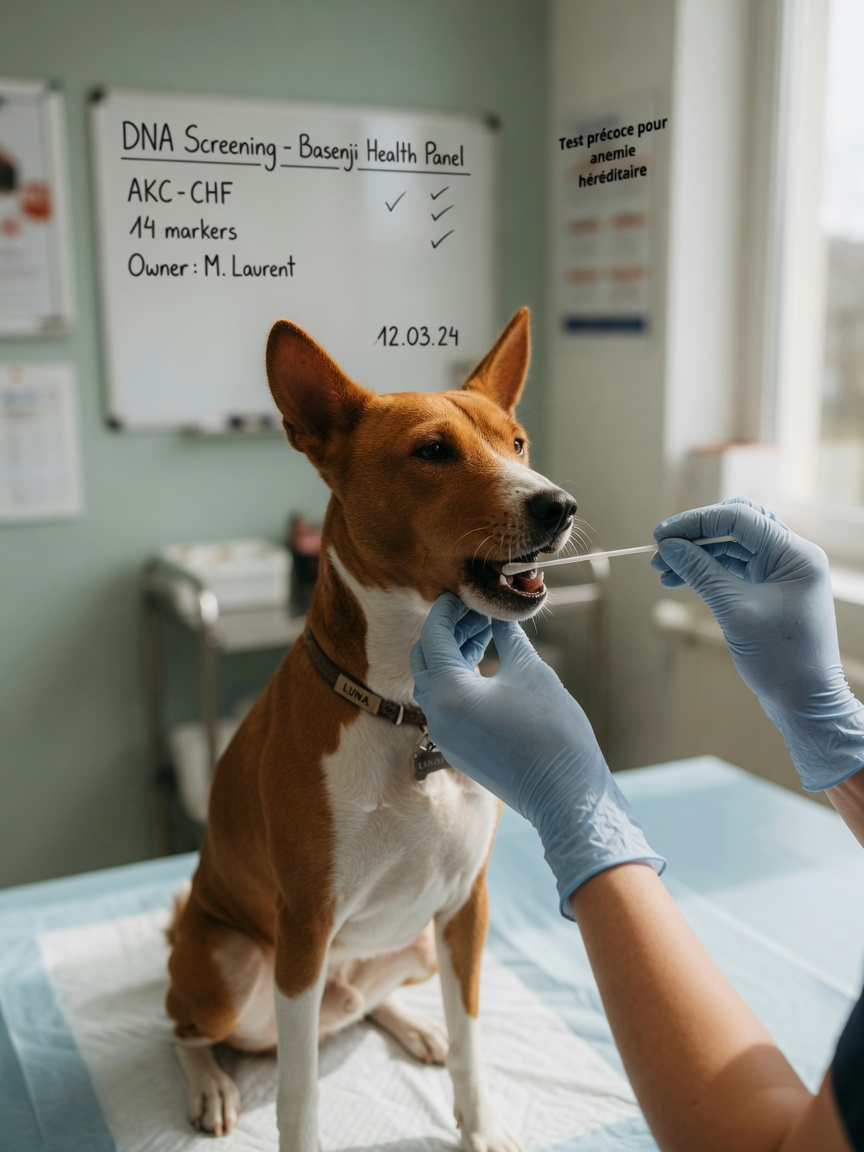
Fanconi Syndrome
Fanconi syndrome is the most critical health concern associated with the Basenji breed and should be understood thoroughly by any prospective owner. It is a hereditary kidney disease in which the renal tubules fail to reabsorb glucose, amino acids, electrolytes, and other essential substances. As a result, these nutrients are lost in the urine, leading to metabolic acidosis, muscle wasting, weakness, and eventually kidney failure. Affected dogs typically show signs between four and eight years of age, though onset varies. Crucially, a DNA test for Fanconi syndrome is available and its use is considered essential before purchasing a Basenji puppy or using a dog for breeding. Any reputable breeder should be able to provide proof of clear DNA test results for both parents. Affected dogs can be managed with a supplementation protocol, but the condition cannot be cured.
Progressive Retinal Atrophy
Progressive retinal atrophy (PRA) causes the retina to degenerate progressively, leading to night blindness followed by complete loss of vision. A DNA test is available for PRA in Basenjis and should form part of routine pre-breeding health screening. There is currently no treatment, but early awareness allows owners to adapt the dog's environment and management appropriately.
Hip Dysplasia
Although less common in Basenjis than in larger breeds, hip dysplasia does occur and should be considered in breeding decisions. Hip scoring of breeding stock helps to reduce the incidence across generations.
Hypothyroidism
An underactive thyroid can develop in Basenjis, causing weight gain, coat changes, lethargy, and a tendency to feel the cold. Blood testing confirms the diagnosis and daily thyroid hormone supplementation is effective.
Basenji Enteropathy
Basenji enteropathy is an inflammatory bowel condition unique to the breed, also referred to as protein-losing enteropathy. Affected dogs lose protein through the gut wall, leading to weight loss, chronic diarrhoea, and hypoalbuminaemia. Management includes dietary modification, immunosuppressive therapy, and close veterinary monitoring.
Grooming
The Basenji is a remarkably low-maintenance breed in terms of grooming. Its short, fine coat is naturally kept clean by the dog's own fastidious self-grooming behaviour, and it sheds very little. A weekly wipe-down with a damp cloth or soft rubber mitt is generally all that is needed. The breed has minimal doggy odour. Regular nail trimming, ear cleaning, and dental care complete the grooming routine.
Diet and Nutrition
The Basenji has no specific dietary requirements beyond those of any small to medium-sized active dog. A high-quality, complete diet appropriate to the dog's age and activity level supports good health. Given the breed's predisposition to enteropathy, a diet that is easily digestible and not overly rich may be beneficial. Fresh water should always be available.
Lifespan
The Basenji typically lives between 13 and 16 years, making it a long-lived breed. Dogs that are clear of Fanconi syndrome and other hereditary conditions, and that receive good nutrition and regular veterinary care, can enjoy active, healthy lives well into their senior years.
Is a Basenji Right for You?
The Basenji is a breed for experienced, patient dog owners who appreciate independence and can invest time in creative, engaging training. It is not suitable for first-time dog owners or for households with small furry pets. Prospective buyers must insist on DNA health testing for Fanconi syndrome and PRA before purchasing any puppy.
- Ideal for: Experienced owners, those who appreciate an independent and characterful dog, households without small pets
- Not ideal for: First-time owners, families with cats or rabbits, anyone without access to a secure exercise area
- Key requirement: DNA-tested parents for Fanconi syndrome and PRA; secure, high fencing essential