
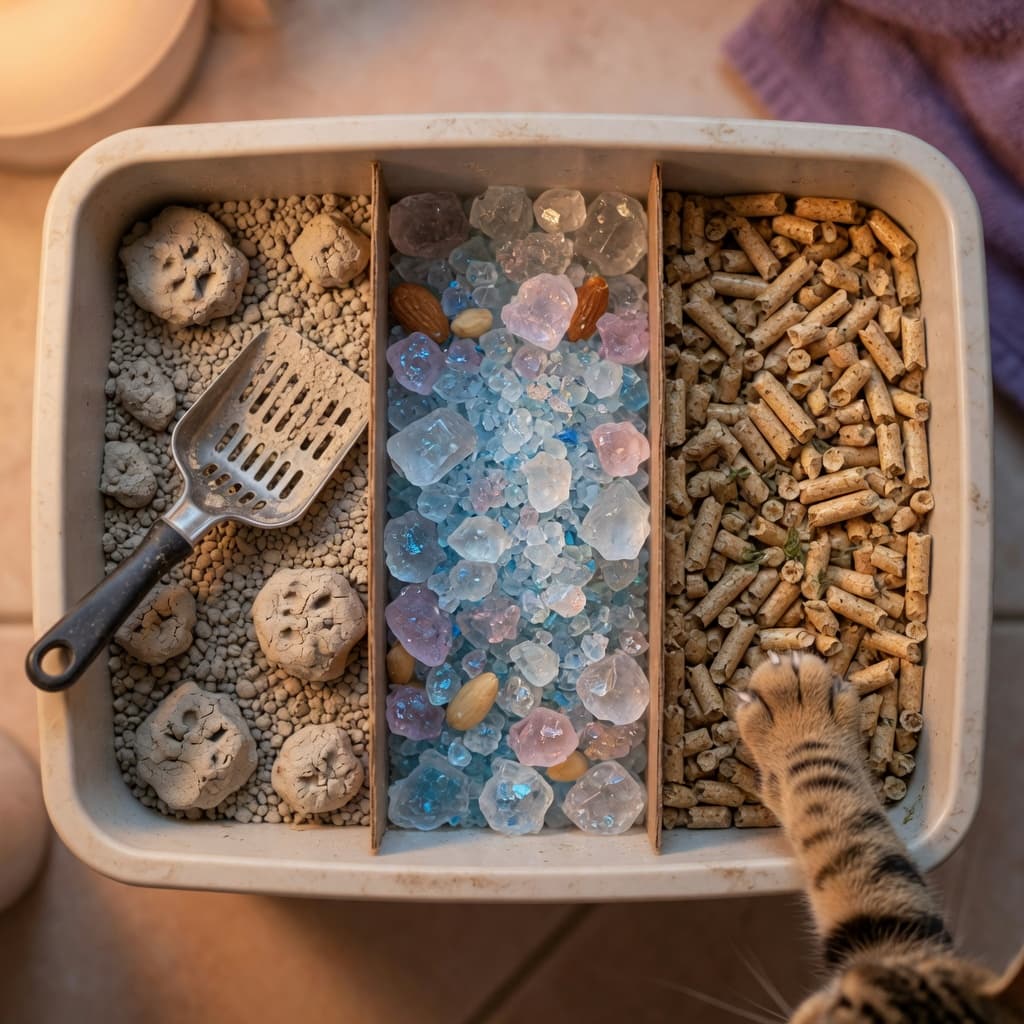
Best Cat Litter 2026: Clumping vs Crystal vs Natural Compared
By Sarah Bennett, Certified Animal Nutritionist | Updated June 2026
Why Cat Litter Choice Matters More Than You Think
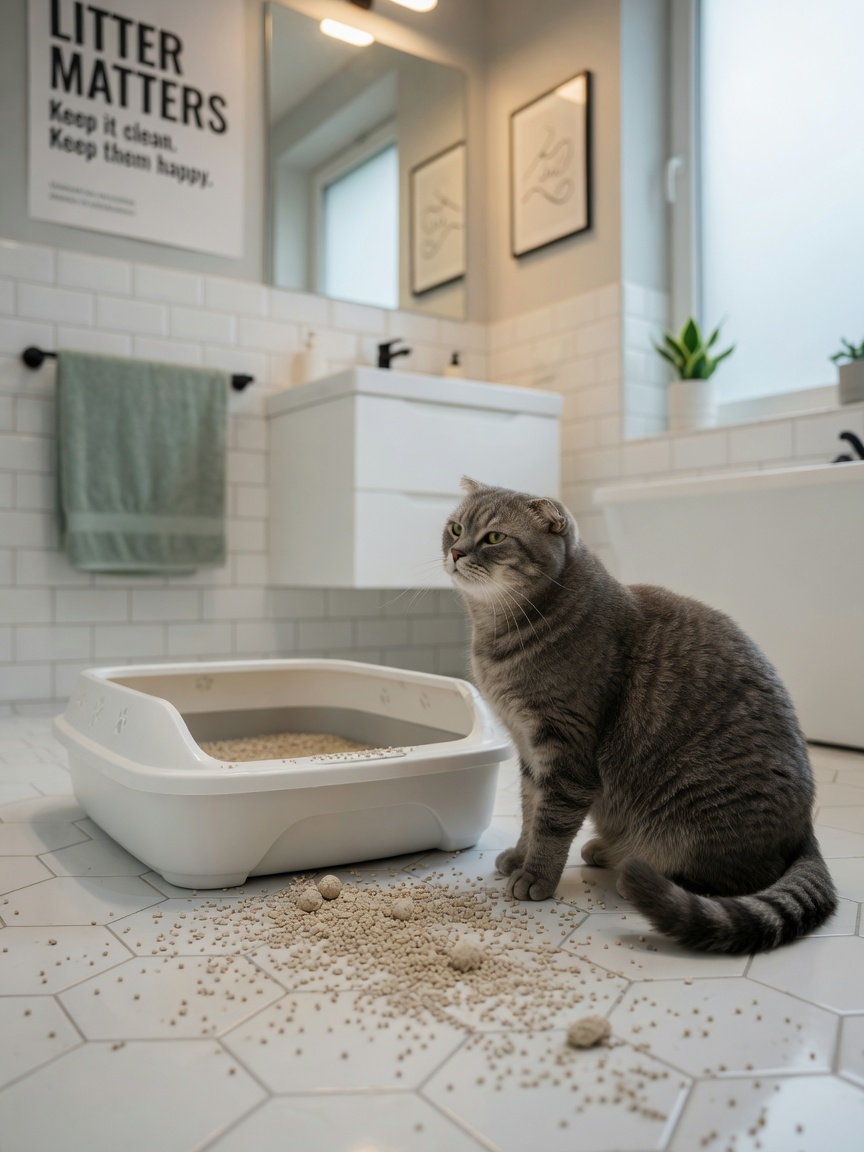
Most cat owners treat litter as a commodity purchase — buy whatever is cheapest or most convenient. But the choice of litter has real implications for your cat's health, your household air quality, and whether your cat actually uses the box consistently. Inappropriate elimination (urinating or defecating outside the litter box) is one of the most common behavioral complaints in cats, and litter texture, scent, and dust level are among the most frequent contributing factors.
Research from veterinary behaviorists has consistently shown that cats prefer unscented, fine-textured litter — closer in feel to the loose soil or sand they would naturally use. Heavily perfumed litters that smell pleasant to humans can be actively aversive to cats with their far more sensitive noses. If your cat has started avoiding the box, changing litter type before assuming a behavioral problem is always the right first step.
Key Factors to Evaluate
When comparing cat litters, five factors matter most: Clumping ability (does urine form tight, scoopable clumps or does it spread?), Odor control (does it neutralize ammonia and fecal odor without heavy artificial fragrance?), Dust level (fine dust particles can cause respiratory irritation in both cats and owners, and are particularly dangerous for French Bulldog, Pug & Bulldog Guide">French Bulldog, Pug & Bulldog Guide">French Bulldog, Pug & Bulldog Guide">brachycephalic breeds), Tracking (granule size and shape determine how much litter ends up across your floor), and Environmental impact (clay litter is not biodegradable; natural alternatives carry a much lower environmental footprint).
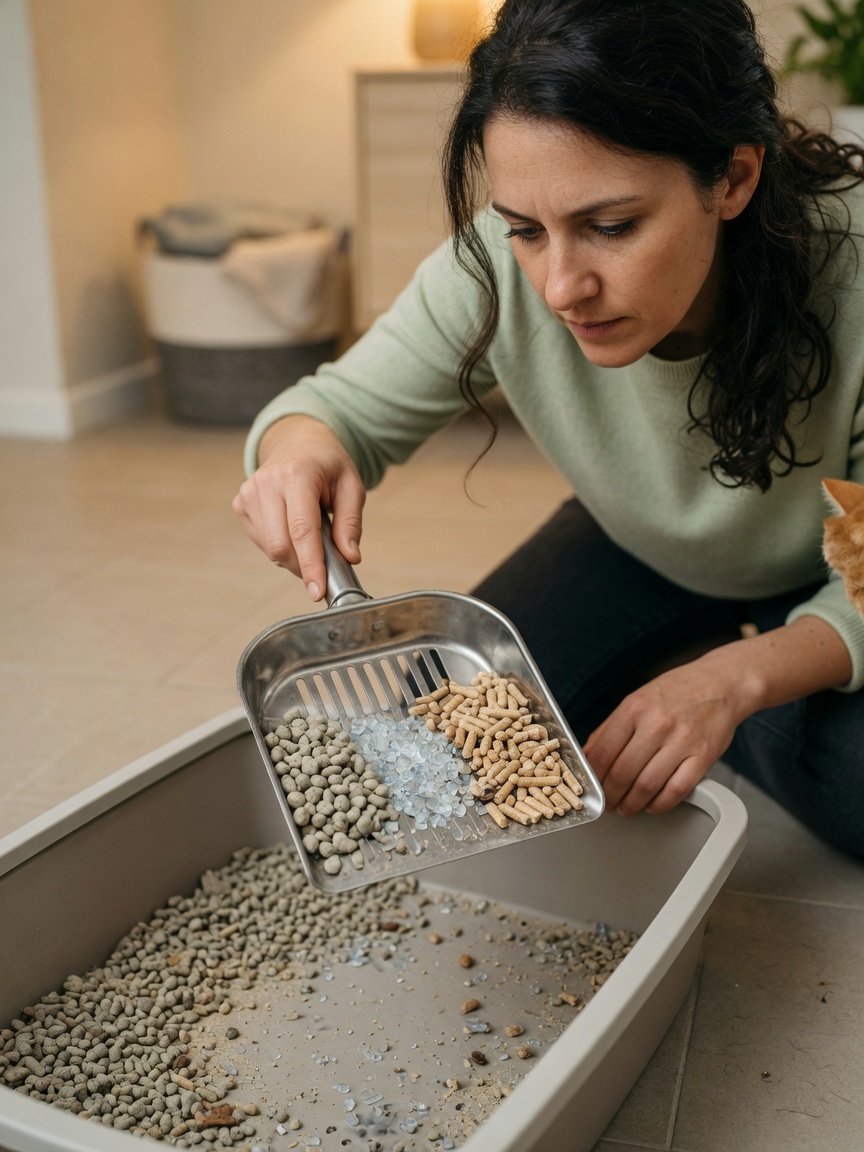
Head-to-Head Comparison
| Product | Type | Clumping | Odor Control | Dust Level | Price/month (approx.) |
|---|---|---|---|---|---|
| Dr. Elsey's Ultra | Clumping Clay | Excellent — firm, tight clumps | Very Good — unscented but absorbs well | Low (99.9% dust-free claim) | €15–€22 |
| PrettyLitter | Silica Crystal | None — absorbs & dehydrates | Excellent — absorbs moisture completely | Very Low — large crystals don't dust | €35–€45 |
| ökocat Natural Wood | Natural Wood Fiber | Good — softer clumps than clay | Good — natural wood odor control | Very Low — no silica dust | €20–€30 |
| World's Best Cat Litter | Corn (Natural) | Very Good — surprisingly firm for corn | Good — natural odor neutralization | Low-Moderate | €22–€32 |
| Arm & Hammer Clump & Seal | Clay with Baking Soda | Excellent — seals odor inside clump | Excellent — best overall odor control in clay | Moderate — more dust than Dr. Elsey's | €12–€18 |
Dr. Elsey's Ultra: The Clinician's Choice
Dr. Elsey's was founded by a feline veterinarian and it shows. The Ultra formula is unscented, low-dust, and uses medium-grain clay that forms exceptionally firm clumps — meaning less crumbling during scooping and less urine seeping to the bottom of the box. It's the litter most commonly recommended by veterinarians for cats with respiratory sensitivity or those being treated for urinary conditions, because the low-dust formula won't irritate healing tissue and the unscented formula doesn't mask symptoms that vets need to detect.
The main downside is environmental: it's sodium bentonite clay, which is strip-mined and not biodegradable. For eco-conscious owners, this is a significant drawback. Tracking is also moderate — the medium grain tracks somewhat on hard floors. But for multi-cat households where reliability and cat acceptance are paramount, Dr. Elsey's Ultra is difficult to beat.
PrettyLitter: The Health-Monitoring Crystal
PrettyLitter is the most innovative product in this comparison. Made from silica gel crystals, it works by absorbing urine moisture and dehydrating solid waste — you only scoop solids daily; the box gets fully replaced monthly (for one cat). The crystals change color in response to urine pH: blue or dark green can indicate blood in the urine; orange can signal metabolic acidosis; dark yellow to olive signals alkaline urine consistent with UTIs or bladder crystals.
The health-monitoring feature is genuinely useful — several PrettyLitter users report their cat's early-stage urinary blockage or renal disease was flagged by color change before any clinical symptoms appeared. The silica crystals also produce virtually no dust, are very lightweight compared to clay, and have extremely low tracking because the large crystal size doesn't stick to paws.
The downsides: it's the most expensive option by a significant margin, available primarily through subscription. Some cats take time to adjust to the texture of crystals, which feels very different from clay. And the color-change system requires owners to pay active attention to the litter box daily — which, for busy households, sometimes means changes go unnoticed.
ökocat Natural Wood: The Environmental Leader
ökocat uses reclaimed wood fiber that is free of dyes, chemicals, and synthetic additives, making it the most genuinely environmentally sustainable option in this comparison. It's flushable and biodegradable. The wood fiber forms clumps when wet — not as firm as clay, but scoopable and workable. Natural wood odor neutralization is good for 1–2 cat households managed with daily scooping, though it can fall short in high-traffic multi-cat boxes.
One specific advantage: ökocat is safe for cats recovering from surgery or declawing procedures, where clay dust in paw wounds is a real veterinary concern. The soft fiber texture is also gentle on sensitive paws. The primary limitation is clump integrity — ökocat clumps are softer and more prone to breaking apart during scooping, which increases waste. Some cats also need transition time to accept the wood scent and texture.
World's Best Cat Litter: The Corn-Based Compromise
World's Best Cat Litter uses whole-kernel corn — which, counterintuitively, forms surprisingly firm clumps and controls odor through natural corn absorption chemistry. It's flushable (though plumbing advice varies by region), lightweight, and significantly less dusty than standard clay. The natural grain scent is mild enough not to bother most cats, and the clumping is among the best of any non-clay formula.
The main concern with corn-based litters is aflatoxin risk: if stored in humid conditions, corn can develop mold. Always store World's Best in a cool, dry place and don't buy more than a 2-month supply at a time. It also carries a moderate risk of attracting pests if stored in garages. Despite these caveats, it's a strong middle-ground option — better odor control than ökocat, more eco-friendly than clay, and genuinely good clumping performance.
Arm & Hammer Clump & Seal: The Odor Control Champion
For households where odor management is the primary concern — particularly apartments, homes with guests, or multi-cat households in smaller spaces — Arm & Hammer Clump & Seal performs better than any other clay litter in this comparison. The baking soda technology neutralizes ammonia odor at the source, and the "sealing" mechanism creates a harder clump shell that traps odor inside rather than letting it escape into the air.
The tradeoff is dust: Arm & Hammer Clump & Seal produces more fine clay dust than Dr. Elsey's Ultra, which can be a respiratory concern for cats with asthma or brachycephalic breeds. It also contains fragrance in some variants — always choose the unscented version for cats. At €12–€18 per month, it's the most affordable option in this comparison, which makes it a strong practical choice for multi-cat households managing costs across several boxes.
Multi-Cat Households: Special Considerations
The general rule for litter boxes is one per cat, plus one extra. In a three-cat household, that's four litter boxes. At that scale, both the cost and the time investment for high-end litters like PrettyLitter become significant. For multi-cat households, Dr. Elsey's Ultra or Arm & Hammer Clump & Seal tend to be the most practical choices — reliable clumping, manageable cost, and wide cat acceptance. If environmental impact matters, World's Best Cat Litter scales reasonably well.
Cat preference studies, including research from veterinary behaviorists at Ohio State University, consistently find that cats prefer unscented, soft-texture, clumping litters. If you have multiple cats with different preferences, the safest default is always unscented fine-grain clay — even if it's not your first personal preference.
Key Takeaways
- Cats consistently prefer unscented, fine-textured, clumping litter — match litter choice to cat preference, not human preference
- PrettyLitter's color-change health monitoring can flag urinary tract issues, blood in urine, and pH imbalances before symptoms appear
- Dr. Elsey's Ultra is the most recommended by vets for general use — low dust, unscented, reliable clumping
- Clay litters (sodium bentonite) are not biodegradable; ökocat and World's Best are significantly more eco-friendly
- Multi-cat households should have one litter box per cat plus one extra — at that scale, cost efficiency matters
- If a cat starts avoiding the litter box, changing litter type and texture should be the first troubleshooting step before assuming behavioral issues
- Arm & Hammer Clump & Seal offers the best odor control of any clay litter but produces more dust — avoid for cats with asthma
References
- Neilson JC. "Feline House Soiling: Elimination and Marking Behaviors." Veterinary Clinics of North America: Small Animal Practice. 2003;33(2):287–301. PMID: 12701515
- Horwitz DF. "Behavioral and Environmental Factors Associated with Elimination Behavior Problems in Cats: A Retrospective Study." Applied Animal Behaviour Science. 1997;52(1–2):129–137. doi:10.1016/S0168-1591(96)01134-1