
Why a Seed-Only Diet Is Not Enough for Your Pet Bird
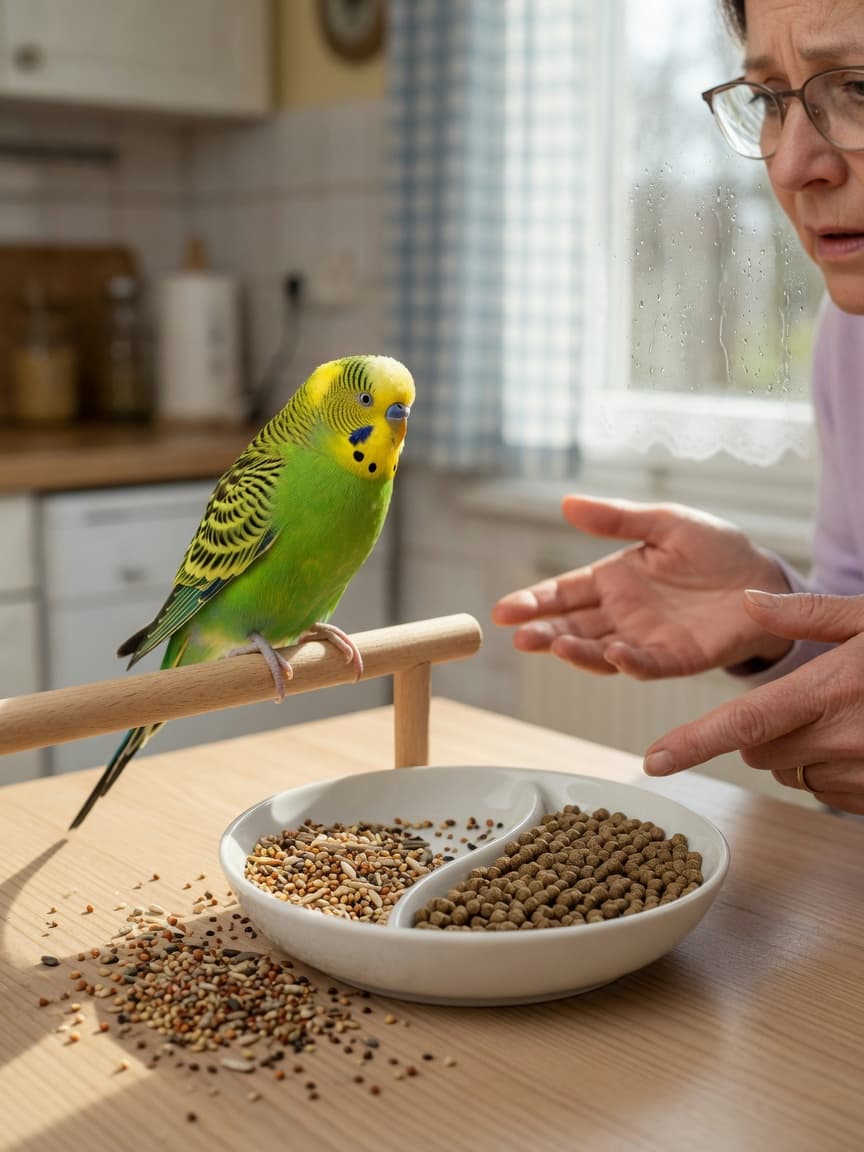
Many bird owners across Europe grew up with the image of a budgie eating millet from a small pot of mixed seeds. It looks natural, and birds clearly enjoy seeds. The problem is that seeds alone are dangerously inadequate as a complete diet. A seed-heavy diet is high in fat and carbohydrates but critically low in vitamins A, D3, B12, calcium, and several essential amino acids. Over time, birds fed exclusively on seed develop fatty liver disease, calcium deficiencies that lead to brittle bones, poor feather quality, and a weakened immune system that leaves them vulnerable to infection.
Feather problems are one of the earliest visible signs of nutritional deficiency. Birds that are not receiving adequate vitamins and minerals may develop dull, frayed, or discoloured feathers, and in some cases begin to over-preen or pluck their own feathers due to skin irritation caused by poor nutrition. Obesity is another common consequence, particularly in budgerigars and cockatiels kept indoors with limited flight space.
Pellets: The Gold Standard in Avian Nutrition
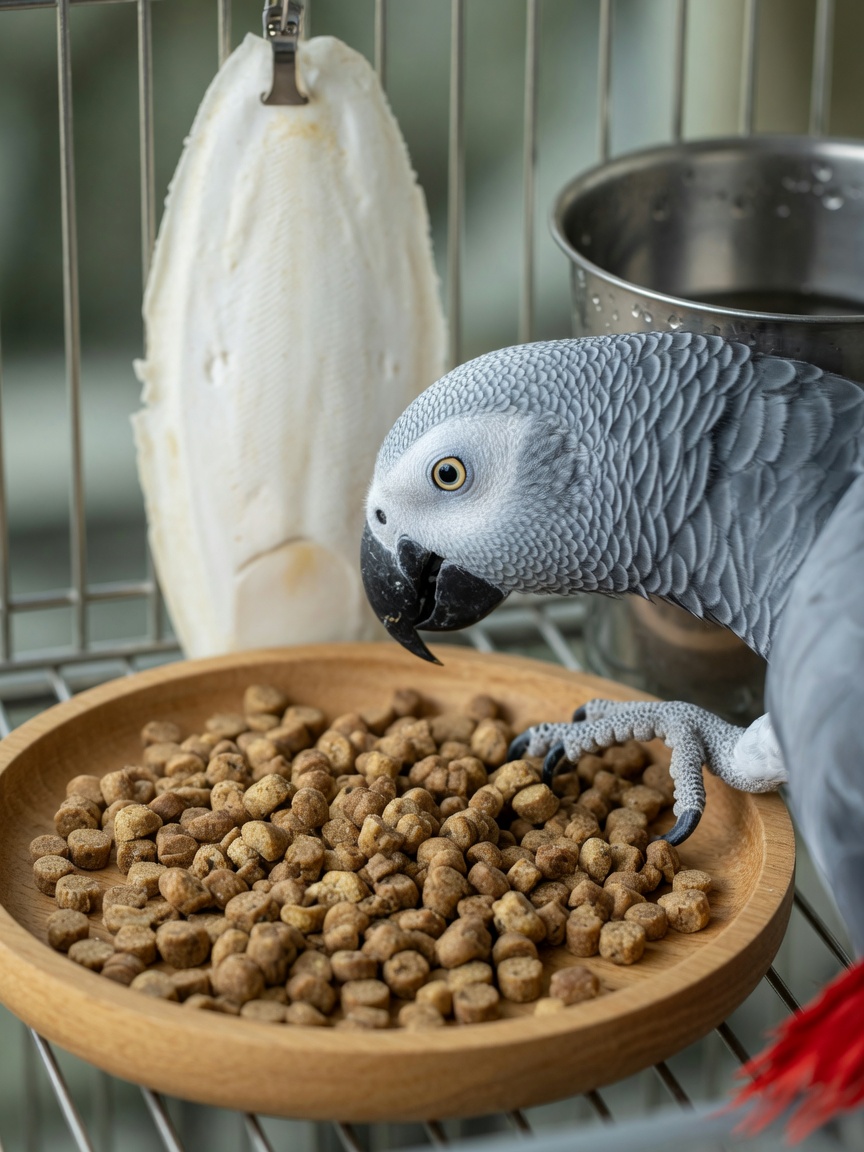
Avian nutrition specialists and exotic animal vets consistently recommend formulated pellets as the foundation of a pet bird's diet. Unlike seeds, pellets are nutritionally balanced and designed to meet a bird's full dietary requirements in every bite. The most reputable brands available to European owners through online retailers such as Zooplus include Harrison's Bird Foods, Roudybush, and Zupreem. Harrison's Bird Foods is a certified organic option and is particularly well regarded by avian vets. Roudybush offers formulations for different life stages. Zupreem produces both natural and fruit-flavoured varieties that can be useful during dietary transitions.
Pellets should ideally make up between 60 and 80 percent of your bird's diet depending on the species. The remaining portion should come from fresh foods. Seeds can still be offered occasionally as a training treat, but they should not form the dietary base.
Species Differences in Nutritional Needs
Not all birds have the same requirements. Budgerigars and cockatiels are both members of the parrot family but have somewhat different needs. Cockatiels tend to be more prone to vitamin A and calcium deficiencies and benefit from a diet rich in dark leafy greens. Larger parrots such as African greys, amazons, and macaws require a more varied diet with a wider range of fresh foods alongside pellets. Softbills such as mynahs and toucans have very different digestive systems and are particularly sensitive to high-iron foods. If you keep a softbill, consult an avian specialist for dietary guidance, as general parrot advice does not apply.
Safe Fresh Foods for Pet Birds
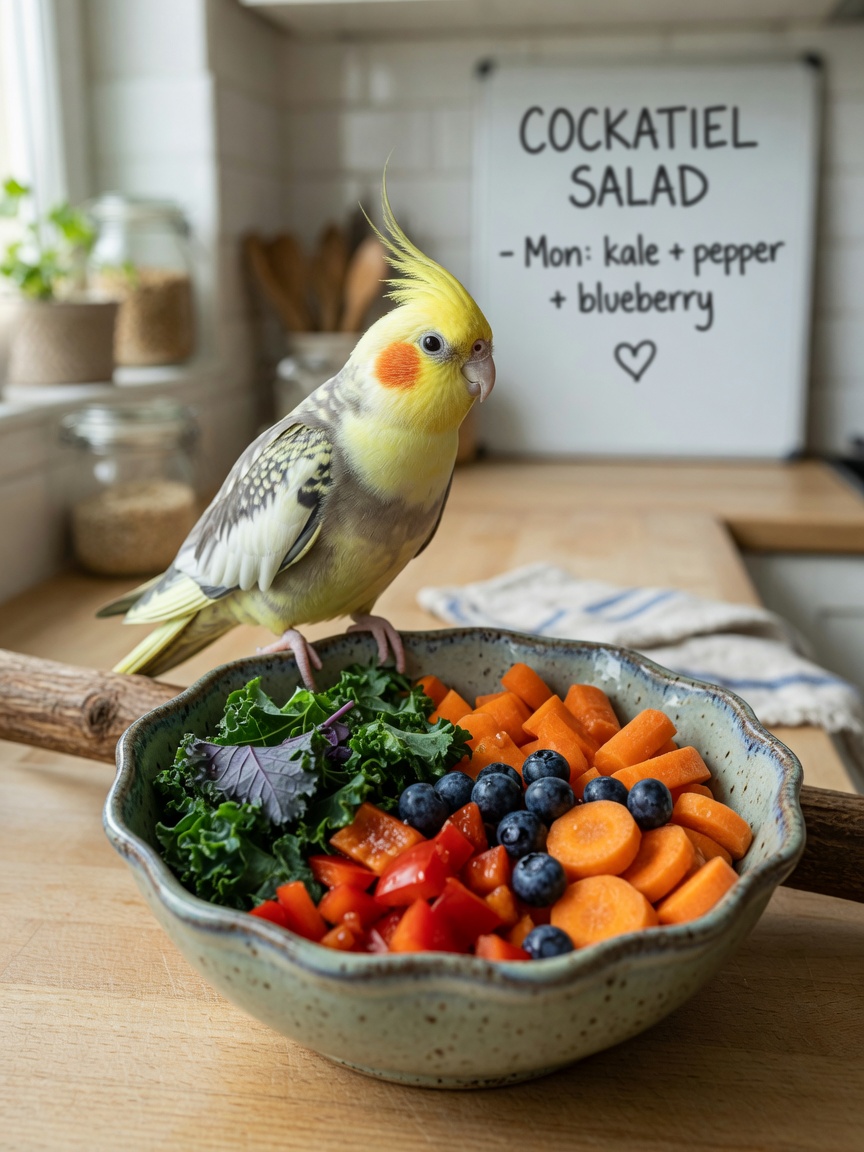
Fresh foods play an important role in providing enrichment alongside nutrition. Many vegetables are excellent for birds and can be offered daily. Good choices include:
- Dark leafy greens such as kale, spinach in small amounts, rocket, and Swiss chard
- Cooked sweet potato, broccoli, and carrots
- Bell peppers of any colour, which are rich in vitamin A
- Courgette and cucumber
Fruits can be offered in smaller quantities due to their natural sugar content. Suitable options include apple (without seeds), pear, melon, mango, papaya, and blueberries. Wash all fresh produce thoroughly and remove any uneaten food within a few hours to prevent bacterial growth.
Foods That Are Toxic to Birds
Several foods that are harmless to humans are highly toxic to birds and must never be offered under any circumstances. These include:
- Avocado — all parts, including the skin and stone, contain persin, which causes heart failure in birds
- Chocolate and any cocoa-containing foods
- Onion and garlic, both raw and cooked
- Xylitol, an artificial sweetener found in sugar-free products
- Caffeine from coffee, tea, or energy drinks
- Alcohol in any form
- Apple seeds, cherry stones, and other fruit pits, which contain cyanide compounds
- Salt in excess quantities
Keep birds away from the kitchen during cooking, as fumes from overheated non-stick cookware containing PTFE can be lethal to birds within minutes.
Calcium Sources and Mineral Supplementation
Calcium is essential for bone health, feather production, and egg laying in female birds. Cuttlebone is the most practical calcium supplement and should be available to pet birds at all times. It can be attached to the cage bars and birds will use it as needed. Mineral blocks serve a similar function and also provide trace minerals. If your bird is eating a nutritionally complete pellet diet and receiving a variety of fresh vegetables, additional vitamin supplementation is generally not necessary and can sometimes cause toxicity. Always consult an avian vet before adding supplements to a bird's diet.
Water: Fresh Daily Is Non-Negotiable
Birds should have access to fresh, clean water at all times. Change the water at least once daily and clean the water container thoroughly. Do not add vitamins, minerals, or flavouring to the water. Flavoured water can encourage bacterial growth and discourage birds from drinking adequate amounts. Some birds prefer a shallow dish for bathing separately from their drinking water, and this should also be refreshed daily.
How to Transition a Seed-Addicted Bird to Pellets
Birds that have been eating seeds their whole lives often resist pellets initially because they do not recognise them as food. Transition gradually over a period of several weeks. Start by mixing a small amount of pellets into the seed bowl so the bird becomes familiar with the appearance and smell. Over time, slowly increase the ratio of pellets to seeds. Never attempt a sudden switch, as a bird may go without eating rather than try something unfamiliar.
If your bird stops eating during the transition or appears lethargic, contact an avian vet immediately. Some birds, particularly older individuals, need closer monitoring during dietary changes.
Psittacosis and the Link Between Nutrition and Immunity
Psittacosis is a bacterial infection caused by Chlamydia psittaci that can be carried by parrots and other birds and can occasionally be transmitted to humans, causing respiratory illness. While vaccination is not available for birds, good nutrition directly supports a healthy immune system, reducing the likelihood of a bird succumbing to infections including psittacosis. If your bird develops respiratory symptoms, discharge from the eyes or nostrils, or unusual lethargy, seek advice from an ECZM-qualified avian vet promptly. Always inform your doctor if you own birds and develop unexplained respiratory symptoms.
Feeding your bird correctly is one of the most meaningful ways you can improve its quality of life and longevity. A well-nourished bird is more active, more vocal, has better plumage, and is far less likely to develop the chronic illnesses that shorten the lives of so many pet birds across Europe.