
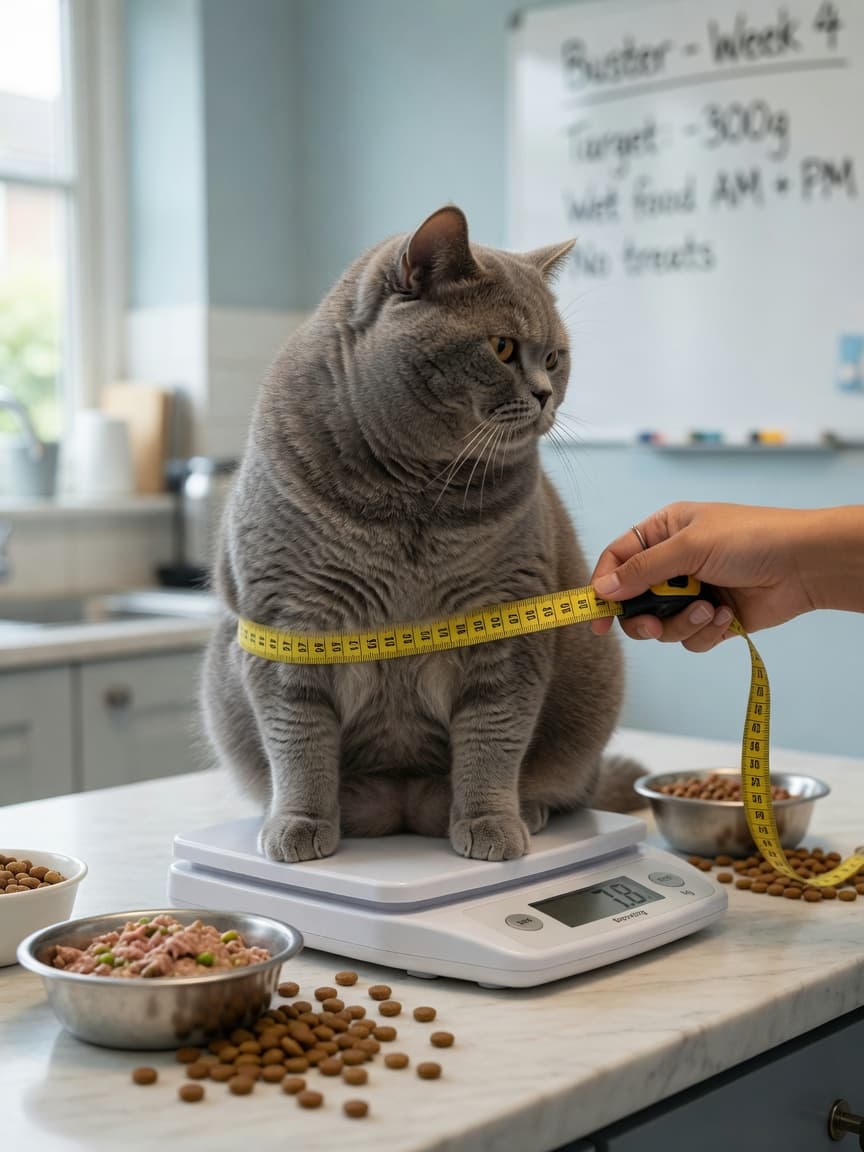
Why Diet Matters More for British Shorthairs
The British Shorthair is the UK's most popular pedigree cat breed, beloved for their round face, dense plush coat, and characteristically calm, easy-going temperament. That same calm nature, however, combined with their naturally stocky, muscular build, makes them one of the breeds most susceptible to obesity. A British Shorthair that is moderately overfed and under-exercised — which is an easy state to arrive at with an indoor cat of this disposition — can gain weight rapidly, and that excess weight has significant consequences for joint health, heart function, and longevity.
The British Shorthair Cat Club UK advises that the breed's weight should be monitored carefully throughout their life, with dietary adjustments made proactively rather than reactively. Understanding what and how much to feed your British Shorthair at each life stage is one of the most important contributions you can make to their long-term health.
Ideal Weight Ranges for British Shorthairs
British Shorthairs are a naturally large, solidly built breed, and healthy weights reflect that. Typical ranges are:
- Adult males: 5 to 9 kg, with most healthy males falling in the 6 to 8 kg range
- Adult females: 4 to 6 kg, with most healthy females around 4.5 to 5.5 kg
These ranges are broad because there is genuine variation in frame size within the breed. A large-framed male British Shorthair at 8 kg may be perfectly healthy, while a smaller-framed female at the same weight could be clinically obese. This is why bodyweight alone is an insufficient measure of condition — body composition matters far more than the number on the scales.
Body Condition Scoring: A More Useful Tool
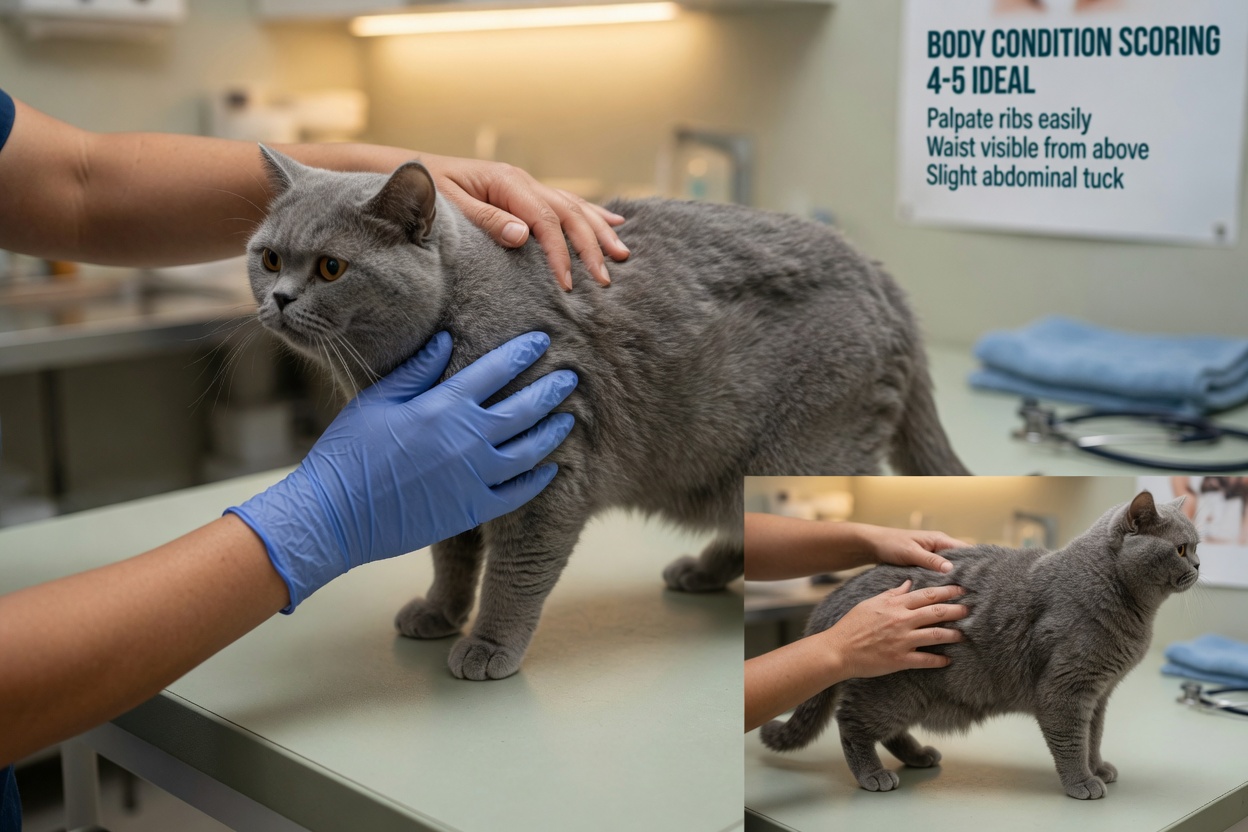
Body Condition Scoring (BCS) is the standard veterinary method for assessing whether a cat is underweight, ideal, or overweight, and it works by assessing the amount of fat covering key anatomical landmarks rather than relying on scale weight. Most veterinary practices use a nine-point BCS scale, where a score of four or five is considered ideal.
To assess your British Shorthair at home, use the following checks:
- Run your hands along the ribcage. You should be able to feel the ribs easily with light pressure — they should feel like the back of your hand when you make a loose fist. If you cannot feel the ribs without pressing firmly, the cat is likely carrying excess fat cover.
- View the cat from above. A cat at a healthy weight should have a visible waist — a slight narrowing behind the ribcage. British Shorthairs are naturally round-bodied, so this can be subtle, but it should be discernible.
- View the cat from the side. The belly should have a slight upward tuck, not hang level with or below the chest.
Monthly BCS checks at home, supplemented by annual veterinary weigh-ins, allow early detection of weight creep before it becomes a significant problem.
The Case for High-Protein Nutrition
Cats are obligate carnivores, and the British Shorthair is no exception. Their dietary requirements are met by animal-based protein, not plant-derived carbohydrates. A high-protein diet helps maintain lean muscle mass — important for a breed that can lose muscle condition under excess fat — and supports metabolic health.
When selecting food for a British Shorthair, look for products where named meat or fish (chicken, turkey, salmon, tuna, duck) appears as the first ingredient. Avoid foods where cereals, maize, or rice dominate the ingredient list, as these provide energy but little nutritional value for a cat and can contribute to weight gain in less active individuals.
Zooplus carries an extensive range of high-protein cat foods, including grain-free options and raw-inspired diets from brands such as Animonda, Smilla, and Real Nature Wilderness — all available with EU-wide delivery. Comparing ingredient lists across brands is straightforward on their product pages.
Wet Food vs Dry Food: What the Evidence Suggests
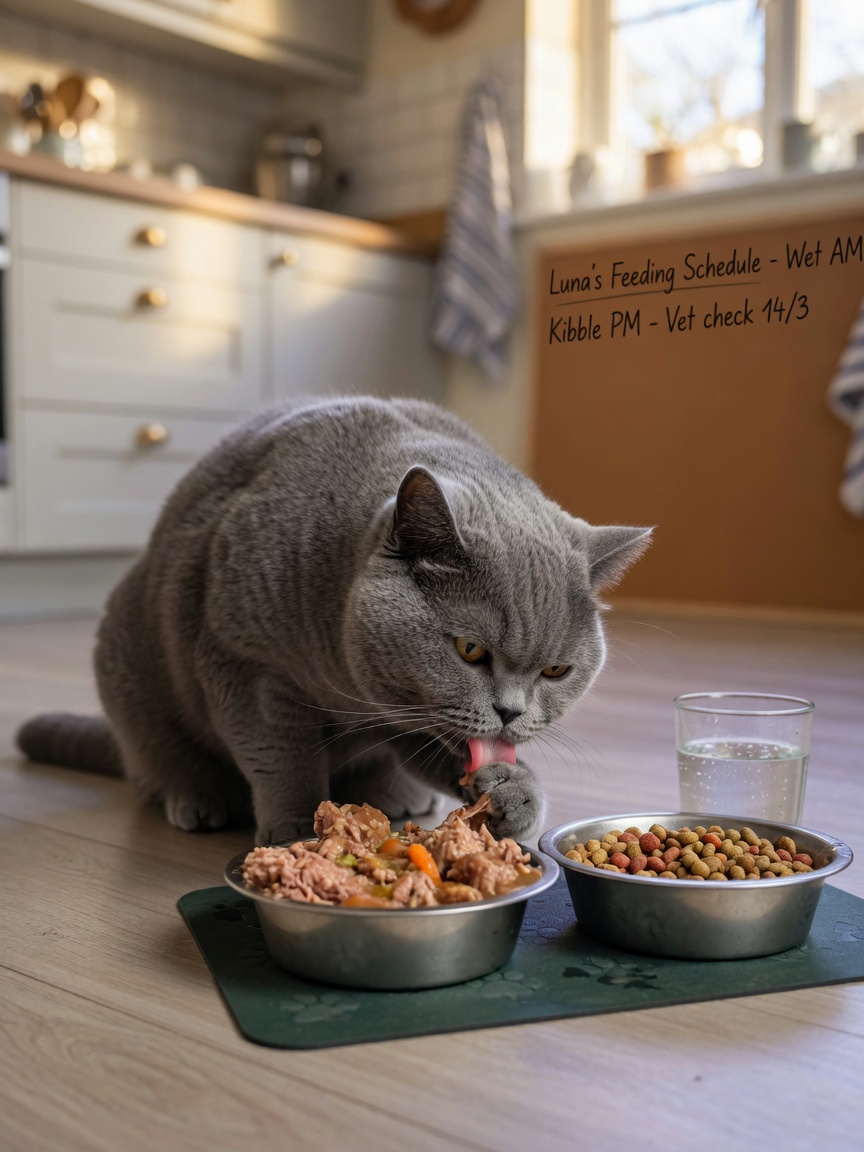
The wet versus dry food debate is ongoing in feline nutrition circles, but for British Shorthairs specifically, there are good reasons to favour wet food or a combination of both. Wet food has a significantly higher moisture content (typically 70 to 80 per cent water) compared to dry kibble (around eight to ten per cent), which supports kidney health and helps maintain adequate hydration in a breed that may not drink enthusiastically from a water bowl.
Dry food has the advantage of convenience and, in some formulations, supports dental health through the mechanical action of chewing. However, the caloric density of kibble is much higher per gram than wet food, making portion control critical. Free-feeding dry food — leaving a bowl topped up throughout the day — is a significant risk factor for obesity in British Shorthairs and is best avoided.
Many owners adopt a combination approach: wet food as the primary diet for hydration and palatability, with a small measured portion of high-quality dry food. This can work well provided total caloric intake is calculated and managed carefully.
Portion Control and Treats
Even with an excellent-quality food, overfeeding will cause weight gain. Always follow the feeding guide on the packaging as a starting point, then adjust based on your cat's BCS rather than their appetite. British Shorthairs are often very food-motivated and will continue to eat beyond their caloric needs if given the opportunity.
Treats should be factored into the daily caloric allowance rather than added on top of it. As a general rule, treats should account for no more than ten per cent of daily caloric intake. Many owners use a portion of the cat's daily dry food ration as treats for training and enrichment rather than buying additional snacks.
Age-Specific Nutritional Needs
Nutritional requirements shift meaningfully across a British Shorthair's life stages:
- Kittens (up to twelve months): Require a diet specifically formulated for growth, with higher protein and caloric density to support rapid development. British Shorthairs grow slowly for a large breed, and some breeders recommend keeping males on kitten food until eighteen months.
- Adults (one to seven years): Transition to an adult maintenance diet. Monitor weight closely during this phase, as the combination of post-neutering metabolic changes and reduced activity can cause rapid weight gain if feeding amounts are not adjusted.
- Seniors (seven years and over): Older British Shorthairs may benefit from a senior-formula food with adjusted protein quality, added joint support (glucosamine and chondroitin), and easily digestible ingredients. Regular blood and urine testing from around age eight helps detect kidney changes early, allowing dietary adaptation in response.
A well-fed British Shorthair at a healthy weight is a picture of contentment — calm, glossy-coated, and physically robust. With attentive portion management and age-appropriate nutrition, this wonderfully characterful breed can thrive well into their late teens.